
Northeast Market Reports

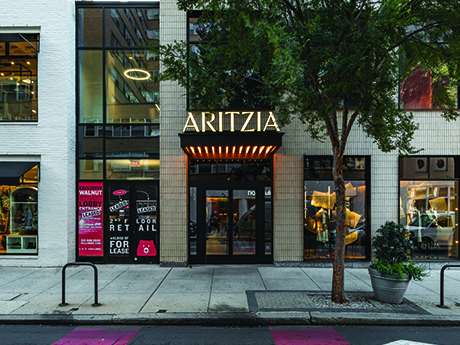
Aritzia-Rittenhouse-Square-Philadelphia

By Taylor Williams “People are still spending money.” That’s what Nick Skeparnias, principal at Agora Commercial Realty Partners, a full-service advisory and development firm, identifies as the single-biggest point of optimism about the state of the greater Philadelphia retail market. According to data from the U.S. Commerce Department, U.S. retail sales totaled roughly $774 billion in August, a 1.2 percent increase over the previous month. The Wall Street Journal also reports that spending in discretionary categories of retail, namely electronics and appliances, rose by 1.6 percent in August versus July. And according to both The Journal and Breitbart, the actual volume of retail sales in August exceeded economists’ expectations by anywhere from 40 to 70 basis points. Within Skeparnias’ simple, five-word declarative statement, there’s no question that “still” is the operative term. “Retail is only as good as the money that people have to spend on it,” he elaborates. “So when you consider the biggest concerns for this asset class, there’s nothing specific to retail itself, but issues that are more global. There’s always going to be something at the retail level; first it was e-commerce, then COVID-19. Now we have AI [artificial intelligence], and if that starts taking people’s …
FacebookTwitterLinkedinEmail
Shops-at-Chestnut-Hill

By Taylor Williams Ask a local retail broker or landlord to name tenants that are currently expanding aggressively in the greater Boston area and throughout New England as a whole, and odds are that “Ross Dress for Less” will come up within the first minute.  Of course, the California-based discount retailer has been crushing it for some time now. Ross announced in mid-March that it had opened 17 new stores, including four under its dd’s Discounts brands, in the first quarter — openings that followed the rollout of 36 new stores last fall. According to USA Today, these new stores came as part of Ross’ broader plan to grow its store count by about 200 units over the course of 2025 and 2026. These new store openings included locations in New York and New Jersey, but at the time, that appeared to be the northbound extent of the expansion. Not surprising, given that the discount apparel market in New England has long been dominated by TJX Cos., the metro Boston-based parent company of both T.J. Maxx and Marshalls, with Burlington also routinely capturing a respectable share of that market.  The fact that Boston proper was — and still is — …

FacebookTwitterLinkedinEmail
Stone-Pull-Quote

By Jack Stone, managing director, Greysteel In the last week of June, two things happened in the American multifamily market that belong side by side: New York City froze rents, and the Dallas Fed confirmed  that Texas is drowning in apartments. One of those scenarios involves a market correcting itself. The other is a market being told to stop. In New York City, the Rent Guidelines Board voted seven to one to freeze rents on roughly 1 million rent-stabilized apartments, including zero percent increases on one- and two-year leases, the first two-year freeze in the board’s history. That action impacts about a quarter of all housing inventory in the city and roughly 40 percent of its rental units. In Texas, markets have kept doing what they’ve been doing for two years: bleeding. Both states are wrestling with the same underlying problem. Rents got too high for many people to afford. The difference is what each one decided to do about it, and that difference is the whole story. Texas is in pain, and the pain is honest. The Dallas Fed put numbers to it this spring. A pandemic-era construction boom, cheap money and aggressive bank lending dumped a historic wave …

FacebookTwitterLinkedinEmail
Northland-Workforce-Training-Center-Buffalo

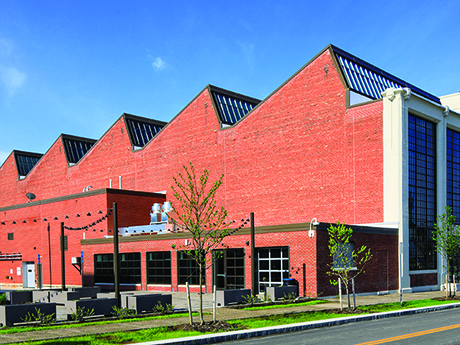
By Rebecca Gandour, executive vice president, Buffalo Urban Development Corp. America’s economic engine was once largely fueled by its industrial might, with manufacturing powerhouses found throughout the Midwest and Northeast and producing billions of dollars worth of goods. But when factories closed and production moved overseas, many communities were left staring at empty buildings, foreclosed homes and decaying public infrastructure. By losing massive employment anchors, neighborhoods were unable to attract private investments, with developers hesitant to invest in communities that did not provide a clear route to profit. As hesitancy began, the situation grew worse, eroding confidence even further. Unable to fully rely on traditional real estate developers, Buffalo has found opportunities to embrace a nonprofit-led redevelopment for restoring long-overlooked industrial assets and creating conditions where future private investment becomes possible. The Northland Corridor on Buffalo’s East Side in particular demonstrates what can happen when mission-driven organizations are given the flexibility to think long term, assemble funding and prioritize community outcomes to provide financial stability and opportunity. Private developers serve an essential role in urban revitalization, but they also operate under a model that prioritizes profitability and providing returns for investors. In distressed markets, where redevelopment may provide limited promise …

FacebookTwitterLinkedinEmail
Livingston-Town-Center

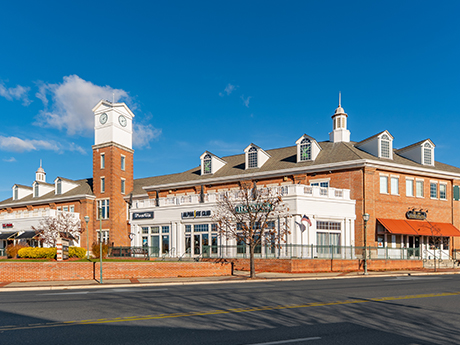
By Taylor Williams Much like the two major cities that border its northern and southern ends, New Jersey is, for retailers, restaurant groups and entertainment operators that are serious about establishing and growing national footprints, a market that checks every key box.  Yet for all the similarities between the Manhattan or Center City Philadelphia retail markets that also apply to New Jersey — tight availability of space, high rents, time-consuming regulatory processes, strong residential density, healthy disposable incomes — brokers and owners that call the Garden State home also know that it’s a market unto itself.  “Northern New Jersey is not the same as New York City,” confirms John Azarian, CEO of The Azarian Group, a longtime owner-operator of shopping centers in New Jersey and New York. “Retailers that want to venture into New York City want a different environment, and while we have a lot of density in Northern New Jersey, it’s just not the same as New York City. But if retailers are willing to do deals with different [store] formats, their businesses can do just as well here.” Kevin Pelio, Azarian’s executive vice president of leasing, says that tenants that started in other parts of the country …

FacebookTwitterLinkedinEmail
Penighetti-Pull-Quote-1

By Jason Penighetti of Forchelli Deegan Terrana Whenever commercial property owners challenge their real estate tax assessments, two critical dates are significant: the taxable status date and the valuation date. While the  two dates sound as if they could be interchangeable, each serves distinct purposes and is firmly established in law. More to the point, confusing the two can derail even the strongest assessment challenge. The taxable status date is the point in time when assessors determine the property’s ownership and physical condition. This process serves to answer two questions: who owns the property, and what does it look like?  This date typically falls early in the calendar year. Many New York jurisdictions utilize a March 1 taxable status date, as does Connecticut. In New Jersey, the key date is Oct. 1 of the prior year, while in Massachusetts, it falls on Jan 1.  As of that day, assessors look at two components: the ownership of the parcel and its condition. Events occurring afterward generally do not affect the current year’s assessment. If a new addition is completed after the taxable status date, it will not increase that year’s value.  Likewise, if a property suffers catastrophic damage or partial demolition …

FacebookTwitterLinkedinEmail
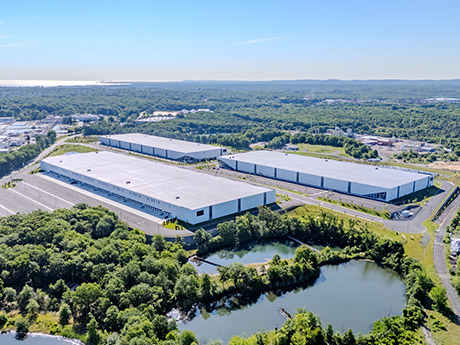
Arsenal-Trade-Center-Sayreville-New-Jersey

By Taylor Williams Nobody likes a vacant building, but symbolically, they do have some usefulness. A handful of empty structures here and there can be illustrative of a market that’s actually balanced and healthy, one in which tenants have some options and flexibility. In addition, vacant buildings can serve as warnings to future developers of what not to do and when not to do it.  Attaching this allegorical significance to the New Jersey industrial market might seem odd, given that this sector has been and should continue to be one of the strongest segments in the country, in terms of both the geography and the asset class. The residential density, highly developed infrastructure and proximity to major ports and transit hubs will likely never lose their appeal to industrial investors and developers. But even the strongest markets can overheat from time to time, and it typically takes a couple years for the high to completely wear off such that indicators of market normalcy can become readily visible.  That’s what appears to be taking shape throughout the Garden State’s industrial market. And without naming names or picking on specific projects, sources say that there are undoubtedly some buildings in New Jersey …

FacebookTwitterLinkedinEmail
Gotham-Cannabis-Dispensary-&-Delivery-Manhattan

By Greg Tannor, executive managing director, and Jessica Gerstein, director, Lee & Associates NYC For much of the past three years, the rollout of legal cannabis in the state of New York has been defined by headlines about licensing delays, regulatory hurdles and political infighting.  That phase is largely over. Hundreds of adult-use dispensaries are now open across the state, and the market is entering a far more consequential — and less discussed — stage. Cannabis retail in New York is no longer constrained primarily by licenses. It is constrained by real estate. On the ground, the industry is moving rapidly out of its novelty phase and into a performance-driven phase where locational quality, operational discipline and realistic deal structures are separating winners from losers. This shift has major implications, not only for operators, but also for landlords, lenders and brokers who are navigating the sector for the first time. Compliance, Not Curiosity, Is The New Bottleneck Demand from licensed dispensary operators remains strong, particularly in New York City. But truly viable retail locations that meet state and local requirements while also making economic sense remain scarce. In Manhattan, the challenge is especially acute. Buffer zones restricting proximity to schools, houses of worship …

FacebookTwitterLinkedinEmail
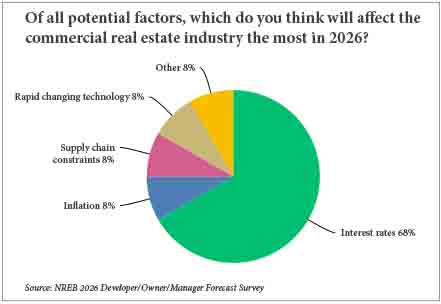
NREB-2026-Survey-Chart1

By Taylor Williams The roller coaster ride continues.  That’s more or less the joint takeaway from Northeast Real Estate Business’ annual reader forecast surveys for commercial brokers and developers/owners. For if the past 12 months have revealed anything about the economic and geopolitical factors that impact deal volume, investor sentiment and overall industry health, it’s that those dynamics are wildly unpredictable and highly subject to change.  In last year’s survey, respondents across both groups expressed optimism — albeit guarded — for better business prospects in 2025. The incoming Trump administration was viewed as pro-business, and the previous year had ended with a trio of long-awaited cuts to short-term interest rates. Capital sources on both the debt and equity sides of the market envisioned a new, more prosperous chapter in 2025 as 2024 closed with subsided inflation, healthy job growth and less volatility in the 10-year Treasury yield.  Editor’s note: In mid-November, Northeast Real Estate Business sent email invitations to participate in the annual online survey to three separate groups — brokers; developers, owners and managers; and lenders and financial intermediaries. The survey was held open through mid-December. Invitations to participate were also included in the Northeast Real Estate Business e-newsletter, as …

FacebookTwitterLinkedinEmail
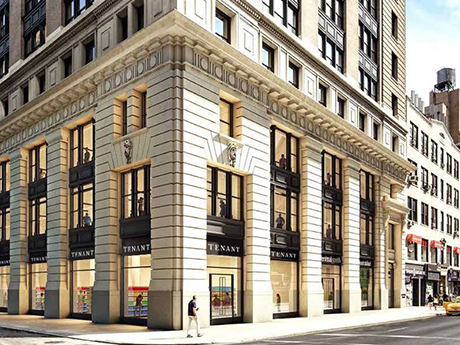
315-Park-Avenue-South

“If you can make it in New York, you can make it anywhere.” Martin Scorsese, Frank Sinatra and Jay-Z probably weren’t thinking about brick-and-mortar retail real estate when they penned and recorded the iconic song lyric, but that doesn’t make the expression any less applicable to that particular subject.  The notion of merchandisers, restaurateurs and entertainment operators needing a certain and precise combination of savvy, moxie and pizzazz to succeed in New York City isn’t so much new as it is resurrected. That’s because it’s only been a few years since the asset class was left for dead. But retail resiliency is now an established and proven narrative that underpins commercial real estate investment.  “Brick-and-mortar retail is truly here to stay,” proclaims Beth Rosen, executive vice president at RIPCO Real Estate. “Over the years, retailers have gotten so much more savvy and are now entering into smarter deals. There’s a lot of positive sentiment about the sector, which has seen its share of ups and downs. Rents got really out of control at one point, and if the economy wasn’t strong, retailers didn’t survive. But now, it’s really more about partnerships between tenants and landlords.” Limited Options That said, owners …

FacebookTwitterLinkedinEmail
Newer Posts