

Louisville’s office market is turning a page. If the first act of the market’s rightsizing was defined by COVID-era downsizing, where companies shed space as remote work took hold, the second act looks different and harder to sum up in a single storyline. Today, several forces are pulling in different directions at once. Some companies are still reducing their footprints as leases renew. Others are expanding as employees return to the office and spend more days per week at their desks. Additionally, a wave of expiring pandemic-era leases is forcing tenants to make fresh decisions about how much space they need and where they want it. The result is a busy market moving in several directions simultaneously. So what does a “right-sized” Louisville office look like in 2026? Flight to quality continues More than anything, tenants are still chasing quality. Well-located, highly amenitized buildings continue to win the deals, and there is now significantly fewer premium space available than there was a couple of years ago. Many tenants have already made that move as their leases have come up for renewal. That demand is showing up in rents. The best-positioned buildings, with the right amenity mix in the right location, …
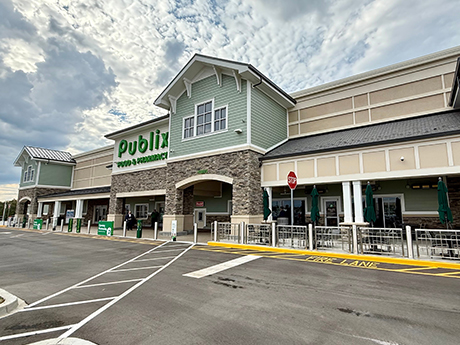
Retail investment gained meaningful momentum during the first half of 2026, reflecting growing confidence in market fundamentals and long-term consumer demand. While the national vacancy rate sits at 6 percent, Louisville’s current vacancy rate for retail is at 3.9 percent, according to the “Q2 2026 Cushman & Wakefield National Retail Report.” The Louisville market continues to demonstrate many of the characteristics that retail investors value: established trade areas, strong grocery-anchored corridors, limited new construction and a growing number of national retailers making long-term commitments to the market. Retail real estate remains particularly strong in the eastern and northeastern portions of Louisville, with grocery-anchored space continuing to perform well. Cushman & Wakefield research also points to continued investment and new development taking shape across the market. Louisville has seen roughly $165 million in shopping center transactions close over a recent 12-month stretch, driven heavily by private capital and 1031 exchange buyers. The properties that consistently attract attention are those with strong visibility, established traffic patterns, durable tenancy and demographics that support long-term consumer spending. Publix reshapes map Perhaps the clearest example of where Louisville retail is heading is Publix. From an investment perspective, we believe the significance of Publix goes well …
The Louisville MSA remains a leading logistics and manufacturing hub in the Midwest and Southeast. While growth continues, the market is transitioning from the rapid expansion and speculative development that followed the pandemic toward a more measured and sustainable pace. Louisville’s appeal begins with its strategic location. UPS Worldport, direct access to Interstates 64, 65 and 71, and a deep regional labor pool reinforce the market’s attractiveness to occupiers serving both national and regional supply chains. Manufacturers, automotive suppliers, e-commerce companies and third-party logistics providers increasingly view Louisville as a cost-effective alternative to larger and more expensive distribution markets. Like many industrial markets across the country, Louisville is currently absorbing a significant amount of new inventory delivered throughout 2025 and the first half of 2026. As a result, vacancy has risen to approximately 5.6 percent, up from the low- to mid-3 percent range that characterized the market for several years following the pandemic. Even so, leasing activity remains healthy, particularly among users seeking modern Class A facilities with higher clear heights, trailer storage capacity and convenient access to major transportation corridors. One of the most notable trends in 2026 has been the slowdown in speculative construction starts. This is a …
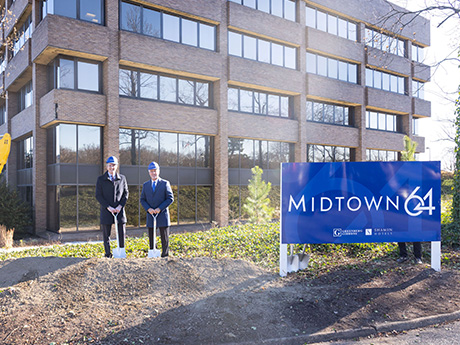
Richmond’s retail market continues to be one of the bright spots in commercial real estate, and it’s not difficult to understand why. While many markets across the country are still working through elevated vacancies and changing consumer habits, Richmond continues to benefit from steady population growth, a diverse economy and a retail inventory that remains remarkably full. Retailers continue to expand here. Investors continue to buy here. And perhaps most importantly, consumers continue to support both national brands and local businesses in a meaningful way. The result is a market that feels healthy, active and well-positioned for future growth. Quality space is hard to find If there’s one thing everyone in can agree on today, it’s that quality retail space is increasingly difficult to find in Richmond. Vacancy throughout the region remains exceptionally low, particularly in established corridors, hovering at around 3.6 percent in the second quarter. Areas like Short Pump, Midlothian and many neighborhood shopping center locations continue to operate with very little available inventory, creating a competitive environment for retailers looking to enter the market or expand existing operations. This has caused rents to continue to trend upward, leaving the landlord with the upper hand. The interesting part …
For years, Richmond occupied an interesting position in the Mid-Atlantic multifamily landscape: large enough to attract institutional capital, but often overshadowed by bigger markets such as Washington, D.C., and Northern Virginia. That is changing. Richmond has moved considerably higher on investors’ target lists over the past several years, initially propelled by the migration patterns that emerged during the pandemic. People flocked to Richmond for its relatively affordable housing and quality of life. While that migration isn’t occurring at COVID-era levels today, those fundamentals remain. Increasingly, investors are recognizing that Richmond offers something particularly valuable in the current environment: attractive yield in a market where pricing has not necessarily caught up with the underlying fundamentals. Fundamentals hold up Richmond’s multifamily market is absorbing a meaningful amount of new supply while continuing to generate rent growth. Effective rents reached $1,658 at midyear, representing 4.1 percent growth, while occupancy stood at approximately 94 percent, according to Pyxis. The market absorbed 2,733 units over the previous 12 months, according to research from CoStar Group. Those numbers are particularly noteworthy given the recent construction cycle. Nearly 7,000 units were completed during the past 12 months. Another 5,736 are expected during the coming year, according to …
If there is one thing I have learned over the past year, it’s that retail buyers have not left Orlando. They have become more selective, and that selectivity is exposing the real issue in the market: there are not enough high-quality retail properties available for sale in the trade areas investors want most. Inventory remains near all-time lows throughout Central Florida, especially in established trade areas with strong demographics, excellent visibility and limited opportunities for new development. As a result, buyer demand continues to outpace the number of available opportunities. Orlando remains one of the strongest retail markets in the country, supported by healthy consumer spending, positive net absorption and a limited construction pipeline that continues to give investors confidence. For owners, this creates an important window. Properties with strong locations, durable tenancy and a clear growth story are standing out because buyers have fewer comparable alternatives to pursue. In this market, quality does not just protect value; it creates competition. One of the biggest changes I have noticed over the past few years is how buyers evaluate opportunities. A few years ago, investors moved much faster. Today, they spend more time underwriting acquisitions, reviewing lease structures and understanding the …
When it comes to Florida’s industrial real estate market, Orlando is often viewed as a single, high-growth distribution and operations hub. For those of us on the ground, however, the more important story is that the market is no longer moving uniformly. According to Colliers’ market reports for the second quarter of 2026, the Central Florida market reached approximately 253.6 million square feet of industrial and flex inventory, while industrial vacancy improved to 7.4 percent from 7.5 percent in the first quarter. Those figures point to stable fundamentals overall; however, the reality is that demand is becoming more concentrated in well-connected submarkets with established infrastructure and modern industrial inventory. This shift is most visible among owner-users and tenants seeking less than 100,000 square feet. For these companies, location affects labor access, delivery times and operating costs. Large regional distribution users still evaluate sites through a broader logistics lens, often considering service radiuses of 200 to 400 miles, while smaller and midsized occupiers place greater weight on immediate connectivity. Southeast Orange County Southeast Orange County remains Orlando’s strongest industrial submarket because of its transportation connectivity, established infrastructure and concentration of modern industrial space. Southeast Orange County recorded 240,815 square feet of …
Orlando’s office market is experiencing a notable resurgence, driven by strong sales volume across both owner-user transactions and institutional investment activity. This surge is helping push vacancies lower, tightening the leasing market and reinforcing investor confidence in the metro’s long-term fundamentals. Orlando is moving decisively past its post-pandemic softness and into a new phase of growth. Lease rates remained largely stable, with the market average sitting at $28.36 per square foot in the second quarter. Trophy space, meanwhile, commands average asking rents of $36.52 per square foot, a $4.20 premium over Class A product. However, several indicators suggest that stability may soon give way to upward movement. Recent owner-user sales activity, combined with high-profile leasing commitments such as TMRW Sports, the golf-technology venture backed by Tiger Woods and Rory McIlroy, signing for 40,000 square feet in downtown Orlando, points to tightening conditions and growing demand for premium space. Landlords with quality assets in well-located submarkets are increasingly positioned to push rents higher in the coming quarters. That growth is underpinned by strong population and employment gains, with particularly robust expansion in healthcare, technology and professional services. Health and education services posted a 4.5 percent increase in employment over the previous …
Richmond’s industrial real estate market has changed considerably over the past several years. What was once a relatively quiet Mid-Atlantic logistics market became one of the country’s most competitive industrial markets during the pandemic. Record leasing activity, limited availability and rapidly rising rents attracted developers and institutional capital from across the country. Today, the market is more balanced — and, in my opinion, healthier. The fundamentals remain strong, but the days of putting a sign on a warehouse and watching tenants compete for the space are behind us. For owners, developers and investors, success in Richmond’s industrial market now requires a much closer look at location, building functionality, basis and tenant demand. The numbers tell the story. Richmond entered the second half of 2026 with an industrial vacancy rate of approximately 5.5 percent, according to CBRE, while the market posted positive net absorption of 136,000 square feet during the second quarter. Average asking rents reached $8.86 per square foot, up 2.4 percent from the prior quarter. At the same time, the development pipeline has grown to approximately 12.6 million square feet under construction, of which approximately 3.9 million are speculative projects. That amount of new supply deserves attention. Richmond has …
For years, much of Memphis’ retail growth has been concentrated in the suburbs. More recently, however, redevelopment activity in East Memphis, Midtown and Downtown has created a new source of investment and retail demand. While suburban growth remains steady, some of the market’s most notable projects are occurring in established areas where older properties are being redeveloped and repositioned for new uses. As a result, some of the market’s most significant activity is occurring within existing commercial corridors rather than through large-scale retail expansion. Memphis remains a healthy retail market, although growth has become more measured than it was a few years ago. Retail vacancy is forecast to reach 5 percent in 2026, while average asking rents are projected to climb to $14.20 per square foot. New supply also remains relatively limited. After more than 400,000 square feet of retail space was delivered annually in both 2023 and 2024, just 250,000 square feet is forecast to come on line in 2026. Limited new supply has helped support rent growth across existing shopping centers. Some of the strongest examples of this trend can be found in Midtown, Downtown and East Memphis, where older sites are being transformed into new mixed-use developments. …
Newer Posts