

— By David Tabata of Marcus & Millichap — After several years of rapid expansion, elevated vacancy and shifting global trade patterns, Portland’s industrial market is entering a more balanced phase. While tariff uncertainty and evolving West Coast trade dynamics continue to influence leasing decisions, improving fundamentals are creating new opportunities for occupiers and investors. One of the market’s most encouraging developments is the gradual stabilization of activity at the Port of Portland. Following pandemic-related disruptions and reduced container traffic, port operations have begun to recover, giving industrial users greater confidence in long-term planning. Portland’s strategic location also continues to support its role as a key distribution hub for the Pacific Northwest. At the same time, the development pipeline has slowed significantly. After several years of elevated construction, new deliveries are expected to remain well below recent peaks, allowing the market time to absorb existing inventory. Although vacancy has increased, the slowdown in new supply should help ease competitive pressure and support healthier market conditions over time. Demand remains strongest for modern warehouse and distribution facilities near major transportation infrastructure, including the Interstate 5 Corridor, Interstate 84 and port-related logistics hubs. Smaller industrial buildings also continue to perform well, driven …
— By Jordan Carter and Clay Newton of Kidder Mathews — Portland’s multifamily market is showing signs of stabilization after working through one of the largest apartment construction cycles in its history, compounded by one of the most dramatic swings in lending rates in recent memory. This combination compressed investment activity, weighed on asset values and drove sales volume to decade lows. Demand remains healthy, with apartment absorption over the past 12 months totaling about 3,500 units, in line with long-term historical averages and nearly double the trough of 2023. Vacancy currently sits at 7.1 percent, down from its 2024 peak and below the national average of 8.3 percent. The most consequential shift is the rapid decline in new supply. As of mid-2026, about 2,400 units remain under construction, totaling roughly 1 percent of inventory growth. Deliveries in 2025 were half of 2024 levels, and 2026 is projected to be half of 2025. This is creating the lightest new supply environment in more than a decade as higher interest rates, rising construction costs and tighter lending standards have constrained development. Rent growth remains under pressure but should bottom out near-term as the supply demand balance continues to tighten. Asking rents …
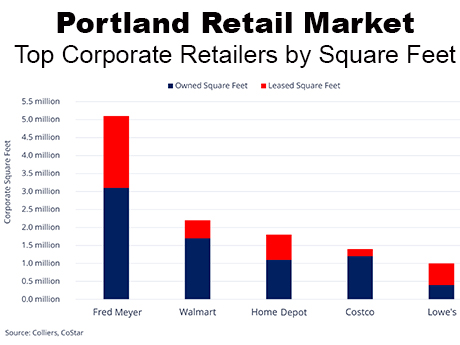
— By Austin McElroy of Colliers — Portland’s retail market is performing better than the headlines suggest. With vacancy sitting at 4.6 percent and triple-net rents averaging $24.45 per square foot — a 10 percent increase over just two years — the market reflects a quiet resilience built on selectivity rather than volume. The concepts and submarkets gaining traction share a common thread: they actively engage visitors, drawing people in and consistently driving repeat visits. Meanwhile, structural forces are reshaping the playing field. A suspension of the ground-floor retail mandate, a proposed vacancy tax, and a dramatic split in performance between suburban and urban submarkets are defining a leasing environment where quality of space matters more than quantity of options. Experience Outpaces Transactions The clearest trend reshaping Portland retail is the primacy of experience over pure transaction. Concepts that draw repeat visits, create community and deliver something beyond a simple purchase are generating foot traffic that traditional transactional retail cannot match. Nowhere is this more evident than at Bridgeport Village in Tualatin where the opening of a LEGO store drove a 19 percent year-over-year surge in foot traffic — a striking result for a single tenant addition. LaVerne’s Restaurant and Bar …
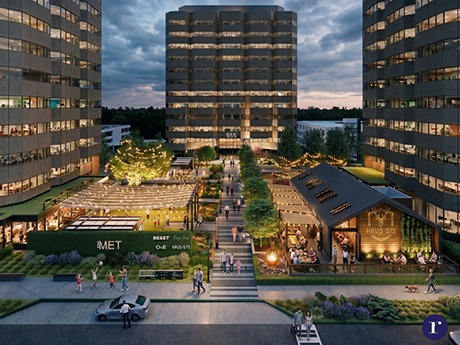
— By Diane Pritchett of South Coast Metro Alliance — How do maturing mixed-use districts stay competitive as office, retail, multifamily and hospitality demand patterns continue to shift? The experience of South Coast Metro in Orange County, Calif., offers several practical lessons. In the 1960s, developer and philanthropist Henry Segerstrom envisioned the growth of a vibrant urban center that became South Coast Metro, covering 2,500 acres within 3.5 square miles, including sections of Costa Mesa and Santa Ana. Today, the district’s continued evolution offers a useful case study for other employment centers, mixed-use districts and economic development organizations looking to remain relevant as tenant and resident expectations change. Start with a Strong Anchor, then Keep it Current When the Segerstroms developed South Coast Plaza, they believed the indoor shopping destination would become a magnet, attracting others to the area. That anchor helped establish South Coast Metro’s identity well beyond Orange County. The lesson for other districts is that an anchor only works if it continues to evolve. Tenant mix, programming, dining, public space and visitor experience all need regular attention as consumer and workforce expectations change. Make Experience Part of the Business Case Office districts can no longer rely on …
— By Wes Hunnicutt of Stream Realty Partners — The Orange County industrial market is showing signs of stabilization through the first half of 2026 after experiencing more challenging conditions throughout 2025. Vacancy has increased from the historic lows seen during the pandemic-driven expansion cycle and is currently hovering around 5.5 percent, while asking lease rates have begun to stabilize following a significant correction from the record highs achieved in 2023. Since the beginning of 2025, more than 3 million square feet of new Class A industrial inventory has been delivered throughout Orange County, representing more than 20 industrial distribution development projects. While these developments have elevated overall market availability, leasing activity within the newly delivered product has been slower than anticipated. Many of these buildings have remained vacant for 10 months or more after completion, reflecting a narrower pool of tenants able to justify the occupancy costs associated with large, modern industrial facilities. Notable leasing transactions within recently delivered Class A developments include: — Anduril Industries’ 177,766-square-foot lease at 1100 Valencia Ave. in Tustin — Anduril Industries’ 162,656-square-foot lease at 3100 South Harbor Blvd. in Santa Ana — Hyper Solutions’ 100,784-square-foot lease at 2100 East Howell Ave. in Anaheim …
— By Shane Halpern of Avison Young — The Orange County office market comprises about 1,800 buildings totaling more than 126 million square feet of inventory. After navigating a period of elevated vacancy and negative absorption between 2020 and 2023, the market has entered a measured recovery phase characterized by three consecutive quarters of positive net absorption, declining vacancy and stabilizing rental rates. Over the past decade, the Orange County office market has delivered 78 properties and 8.1 million square feet of new supply, supported by a regulatory environment that’s comparatively more business-permissive than neighboring Los Angeles County. Orange County employment grew from 1.7 million jobs in 2020 to more than 1.8 million in 2025, an 8.6 percent increase over five years. It did this despite a 1.1 percent regional population decline over the same period. Demand for office space is anchored by three industries: healthcare, government and professional services. All of these sectors have demonstrated consistent space requirements through varying market cycles. After peaking at 14.8 percent in 2023, total vacancy has compressed to 12.6 percent in the first quarter of 2026, the lowest level recorded since first-quarter 2022. The market has posted three consecutive quarters of positive net …
— By Shane Shafer of Colliers — The Orange County multifamily market continues to attract significant investor attention as buyers increasingly view the broader Southern California environment as an opportunity to acquire assets at more attractive prices following the market’s recent adjustment. Orange County has emerged as one of the most sought-after investment destinations due to its strong economic fundamentals, population growth and operational stability. This renewed confidence has led to increased transaction activity and greater competition for well-located assets throughout SoCal’s best multifamily submarkets. Looking ahead, market fundamentals are expected to continue improving. Employment growth, housing affordability challenges and limited new supply continue to support long-term apartment demand. Markets like Orange County are particularly well-positioned due to its diversified economies, high barriers to entry and strong demographic trends. These factors have contributed to stable occupancy levels and continued rent growth across much of the region, especially in urban infill submarkets. A notable trend in today’s market is the increasing number of Los Angeles-based owners seeking acquisitions in Orange County. This market allows investors to diversify geographically while remaining close to existing portfolios. Many owners view this strategy as an effective way to balance exposure across multiple Southern California markets …
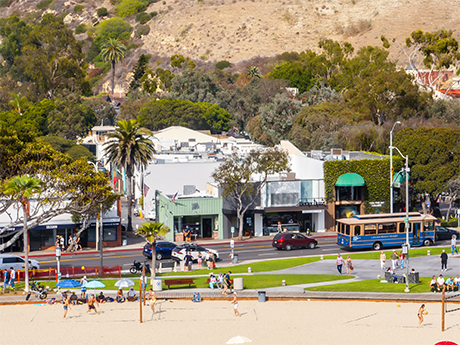
— By John Read of CBRE Retail Investment Properties-West — Often defined by its 42 miles of Pacific coastline, Orange County’s weather may not be the hottest throughout the Southern California region, but its retail performance arguably is. Orange County remains a target for retailers and investors alike, driving it to be one of the strongest retail markets in the larger region and nation. Orange County’s coastline and famously consistent weather with globally recognized theme parks — Disneyland and Knott’s Berry Farm — and retail landmarks like South Coast Plaza and Fashion Island, do contribute to the region’s exposure and appeal, but the county’s retail fundamentals are planted in its scale and demographics. Orange County’s nearly 800 square miles are home to more than 3.1 million residents and one of the most diverse populations in the U.S. with significant affluence and education. Average household income exceeds $157,000 and 46 percent of residents hold a bachelor’s degree or higher. With diversified industry sectors and major employers, including Disney, UC Irvine, Providence, Kaiser Permanente and Hoag, Orange County’s unemployment rate remains low, ending May 2026 at 3.5 percent. Together, those factors support retail fundamentals that remain stronger than many comparable markets. The …
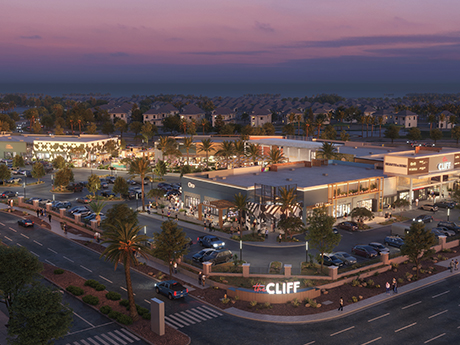
Adaptive reuse has always been an astute trend when it comes to utilizing location, existing bones, and saving a little time and money on delivery. It’s also particularly useful in submarkets like the southeast Las Vegas submarket of Henderson where strong population growth and rising household incomes outpace the availability of new retail. This long-standing unmet demand for Class A retail has inspired one developer to reshape how it views underperforming office assets. Steve Neiger, managing principal at CAST Capital Partners, is co-developing the Cliff, a 100,000-square-foot office-to-retail conversion in Henderson’s Green Valley Ranch submarket. The project involves the repositioning of a vacant, low-density suburban office property that had struggled to remain competitive as newer product and shifting workplace trends weighed on demand. Rather than pursue a traditional office lease-up or a residential conversion, the development team, which includes Partners Capital, is transforming the site into an open-air retail and dining destination designed to better align with the area’s demographics, accessibility and surrounding residential density. The repositioning reflects a broader trend in how developers are evaluating aging office assets in high-growth suburban markets, particularly where strong consumer demand is not being met by existing retail supply. Situated along Paseo Verde …
— By Mike Mixer of Colliers — Recent headlines have pointed to a “cooling” of the Las Vegas Strip, with RevPAR down, visitation below peak levels and growth moderating from 2022 and 2023 highs. On paper, the numbers look softer. But before drawing conclusions, it’s important to consider how the data is being viewed as the comparisons most often used are distorted. The Pandemic was Not a Normal Cycle COVID-19 shut down the Strip in March 2020, an unprecedented event in modern history. Southern Nevada visitor volume dropped by more than 50 percent. Resorts closed, occupancy collapsed and revenues fell sharply. The 2021 to 2023 rebound that followed was equally unusual. Pent-up demand, stimulus liquidity and limited new supply drove record ADR growth and historic RevPAR levels. Both the downturn and the surge were outliers. When those years are used as a benchmark, today’s performance appears negative. In reality, it reflects normalization. Rates Remain Elevated Even with recent moderation, Strip ADR remains materially above pre-pandemic levels. Operators have maintained rate discipline and are not aggressively discounting to chase occupancy. That suggests stability rather than weakening demand. Capital Signals Confidence If the Strip were in decline, capital would be retreating. Instead, …
Newer Posts