

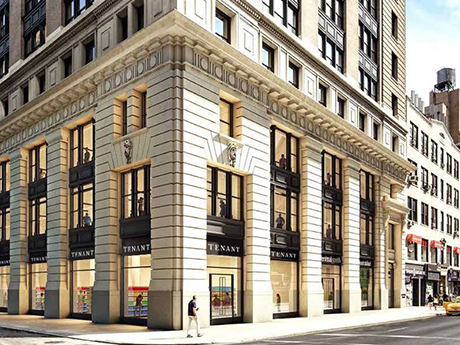
“If you can make it in New York, you can make it anywhere.”
Martin Scorsese, Frank Sinatra and Jay-Z probably weren’t thinking about brick-and-mortar retail real estate when they penned and recorded the iconic song lyric, but that doesn’t make the expression any less applicable to that particular subject.
The notion of merchandisers, restaurateurs and entertainment operators needing a certain and precise combination of savvy, moxie and pizzazz to succeed in New York City isn’t so much new as it is resurrected. That’s because it’s only been a few years since the asset class was left for dead. But retail resiliency is now an established and proven narrative that underpins commercial real estate investment.
“Brick-and-mortar retail is truly here to stay,” proclaims Beth Rosen, executive vice president at RIPCO Real Estate. “Over the years, retailers have gotten so much more savvy and are now entering into smarter deals. There’s a lot of positive sentiment about the sector, which has seen its share of ups and downs. Rents got really out of control at one point, and if the economy wasn’t strong, retailers didn’t survive. But now, it’s really more about partnerships between tenants and landlords.”
Limited Options
That said, owners of prime retail space do have the leverage, and leasing velocity and volume are on the rise while availability remains limited. Consequently, in many cases, it falls to tenants to find creative ways to adjust their store formats in order to get off the ground or expand.
According to Cushman & Wakefield’s third-quarter Manhattan retail report, more than 3 million square feet of retail leases have been inked in Manhattan on a year-to-date basis, bringing the borough’s total availability rate to 12.5 percent. That level of vacancy represents a decrease of 140 basis points year over year. In addition, the report noted that “of Manhattan’s 11 prime retail corridors, nine reported year-over-year decreases in availability, while six posted quarter-over-quarter declines, reflecting a mixed but generally tightening market.”
Jon Spadafino, vice president at SRS Real Estate Partners, says that prime retail availability across New York City has decreased by about 5 percent year-over-year, reinforcing the label of “a landlords’ market.”
“We have also seen a trend for the past few years of new-to-market retailers leasing space, which limits the supply further,” adds Spadafino. “With steady demand in New York City, which remains a premier retail destination, it has become increasingly competitive for tenants looking to secure their preferred retail spaces. This marks a shift from a few years ago, when tenants held all the cards thanks to increased vacancy and macroeconomic fear limiting competition.”
Cue the tenant rightsizing.
“We talk to tenants that want to come into the city, and we have to explain to them that if they’re not malleable and are set in their footprints, then this isn’t the place for them,” says Jackie Totolo, senior managing director in Newmark’s New York City office. “In Manhattan, it’s very typical to have a different configuration — whether that’s smaller or multi-level or whatever it may be — to get into the right area where your target consumer is. That will always be a forever trend in New York City.”
“Tenant footprints have continued to evolve in conjunction with managing occupancy costs,” adds Sean Moran, executive director in the retail services group of Cushman & Wakefield’s New York City office. “There’s less and less of what we used to call ‘loss leader’ or ‘marketing budget’ stores. Resilient retailers understand the density that’s here and have figured out how to make a four-wall profit.”
Moran points to the Fifth Avenue retail corridor, particularly the stretch between 42nd and 60th streets, as an example of a retail submarket in which the adjusted footprints and modified store formats are especially visible. For every listing that Cushman & Wakefield has in that submarket, there are at least three or four interested tenants, he says. Existing retailers in the area have already demonstrated examples of the kind of creativity that’s required to maximize sales and traffic while minimizing staggering costs of rent.
“Tenants that had 25,000 square feet between two levels are willing to downsize to 10,000 to 15,000 square feet and go vertical with a smaller ground-floor footprint as a way of rightsizing the total footprint of the store and their aggregate rent obligation,” Moran explains.
But rightsizing doesn’t necessarily mean slimming down. In fact, according to Rosen, many tenants today are opting to go bigger as a means of creating a full-on experience for shoppers.
“Nobody is opening showrooms anymore. Consumers want instant gratification and to walk out of stores with merchandise, and retailers are willing to pay more rent [to facilitate that],” she says. “Retailers want to have their entire collection [in one store], and they want to have it staffed with good customer service. They want their customers to stay in the stores and for the stores to be stocked with inventory for people to buy.”
Rosen says that the willingness to take bigger spaces is apparent across a range of retail categories, from apparel to fitness to food-and-beverage. She also notes that certain submarkets, such as The Flatiron District, Broadway in SoHo and the Fifth Avenue Plaza District corridor, tend to feature the larger store formats that appeal to retailers looking to upsize.
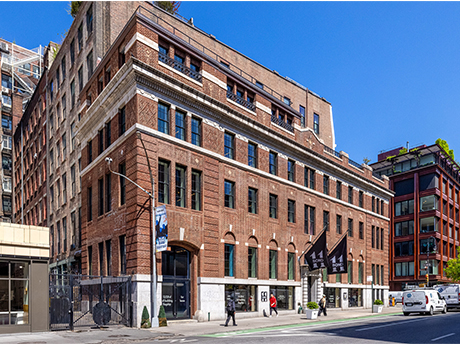
British fitness apparel and accessories retailer Gymshark signed a 15,000-square-foot lease earlier this year at 11 Bond St. in Brooklyn for its flagship U.S. store. With limited options to open or expand, some retailers are embracing the flagship store model by seeking bigger spaces that allow them to maximize inventory and shopping experiences under one roof.
Totolo agrees that tenants’ willingness to be flexible and creative with their brick-and-mortar layouts is also part of broader marketing initiatives.
“With tenants that are expanding across the country, New York City is never not on the list, but if you don’t stand out here and have a presence, then you have a limited ability to capture new customers,” she says. “Some loyal customers will still find you, because you’ve created a brand, but the point of showcasing your concept in Manhattan is to be able to have brand identity and attract new eyes.”
Of course, shaving a couple thousand square feet off a prototype or sacrificing dedicated parking or loading areas to fit into tight pockets of well-located space — that’s really just the first leg of the marathon.
From there, retailers must embrace lessons learned from e-commerce and the pandemic: imbuing the space with energy, integrating interactive shopping practices and cultivating an experience. Turning those qualitative aspirations into reality is challenging, time-consuming and expensive, but that’s what it takes to make it in the New York City retail market in 2025. If it was easy, everybody would do it.
Drugstore Dilemma
Vacated drugstores have been an intriguing storyline in the world of brick-and-mortar retail for the past couple years, though in New York City, the trendline goes back further to the pandemic-era closings of local drugstore chain Duane Reade.
The conversation picked up steam nationally with Rite Aid’s first Chapter 11 bankruptcy filing in late 2023. The Pennsylvania-based chain entered into Chapter 11 proceedings for a second time this spring before ultimately deciding to liquidate. In the middle of those events, Walgreens, the parent company of Duane Reade, announced plans to close about 1,200 stores nationwide.
Drugstore spaces are appealing to retailers because they typically occupy highly trafficked locations. On the flip side, there are a limited number of retailers whose prototypical stores fit comfortably within the average drugstore footprint, which is about 12,000 square feet, give or take. As such, backfilled drugstores have become the face of the tenant creativity movement.
“There’s very high demand for those boxes, which generally don’t stay vacant very long, and we’ve seen some interesting groups take them over, including daycares and car washes,” says Steve Gillman, executive vice president of The Shopping Center Group (TSCG). “We’ve also seen some drugstore conversions to dental clinics or dollar stores. But no matter [who the new tenant is], as a landlord, you have to accept that you’re not going to get the same rent from the next tenant that you did from the corporate drugstore operator.”
Gillman says that as a rule, it’s easier to make backfill-drugstore deals work in the boroughs of New York City than in the suburbs, where NIMBYism for certain uses tends to be stronger (NIMBY is an acronym for “not in my backyard”). In addition, he cites zoning restrictions and construction costs for new tenant build-outs as major deal complicators.
But in many cases, the speed with which a landlord backfills a vacated drugstore — as opposed to potentially marketing the building for sale — depends on who the next tenant might be and what that landlord’s financial situation is. It can also depend on who the previous tenant was; an old Walgreens store may have significant term left on the lease for corporate-guaranteed rent payments, whereas an old Rite-Aid store generates nothing.
“We’re seeing a lot of landlords who are stuck living in the past and happily collecting above-market rents on dark stores,” says Spadafino, whose firm is a part of the Walgreens’ disposition team. “Landlords in secondary and tertiary markets are insisting that the value of their property will appreciate, and part of our job has been helping them evaluate what the best course of action is today instead of in the future. Ultimately most landlords are still waiting for the right tenant, but we have seen an increase in landlords willing to do the work to divide the space and go after credit tenants with a smaller footprint.”
Either way, drugstore owners must eventually come to grips with the reality that at some point, their revenue streams are going to take hits and that they may well have to carve up the space to get the cash flowing. That’s not a fun business plan to contemplate with the threat of tariffs looming over tenant build-out costs that are already sky high, but it’s the reality of the situation, sources say.
“Landlords seem to understand that they’re unlikely to find another credit tenant to take down the totality of the space and are willing to quickly divide the space and take an appropriate mark-to-market [rent],” says Moran. “Every deal involves [a discussion of] credit, but there aren’t a lot of credit tenants. Other groups, like owners of highly leveraged retail condos or buildings — if they can’t hit a certain rental number and don’t have lender pre-approval for a range of outcomes — those spaces may sit for a long period of time until there’s a mark-to-market due to some sort of capital event.”
Gillman concurs that the size of the typical drugstore presents problems for a clean, simple backfill.
“That 10,000- to 20,000-square-foot space is too small for most grocers and too big for most restaurants unless you split them,” he says. “If you want to do food-and-beverage, you may have to demise the space and break up the utilities, which is probably a seven-figure endeavor. Landlords don’t want to do that either unless they’ve got a great tenant coming in because it will take them four years to get their money back. So some landlords are thinking that maybe those assets present long-term holding problems.”

Pictured is the interior of ilili, a new restaurant by Philippe Massoud that recently opened at The Hugh, Boston Properties’ food hall destination at 601 Lexington Ave. Jacqueline Klinger, Graci Goldstein and Ian Rice of TSCG represented the tenant after nearly a decade-long search for the right New York City location, a testament to some of the supply-side challenges that exist in the market.
Totolo has done multiple deals for Barnes & Noble in former drugstore spaces. But she notes that many such stores are located within residential districts, which is why the most potential for these spaces lies with retailers that serve a residential population: daycares, children’s indoor playgrounds or urgent care/medtail clinics. In addition, for landlords that do not have the luxury of waiting for the existing lease to expire, she believes that being proactive is of utmost importance.
“The best guidance we can give owners is to demolish those [drugstore] build-outs and showcase what you can do with the space,” she says. “Showing a potential retailer what the space can be versus what it was before is crucial in getting it leased up again. The willingness to get the tenant in is deal-specific and depends on individual economics. But from the standpoint of being proactive, owners should be demolishing existing build-outs, painting spaces white and showing the capabilities of the space.”
— This article first appeared in the November/December 2025 issue of Northeast Real Estate Business magazine.