

By Aron Schreier of Cresa and Gabe Hernandez of Design Republic
Leaders often obsess over KPIs (key performance indicators) and will spend six figures on Salesforce licenses and sales training boot camps. But walk into most offices in 2025, and you’ll find sales teams working in spaces that actively undermine everything those investments are meant to achieve.
Having spent careers straddling both worlds — commercial real estate and sales training — it’s easy to see how the right environments can create positive energy and how the wrong ones quietly drain it. Let’s review why space is perhaps the most strategic asset in all of sales.

Space Drives Mindset
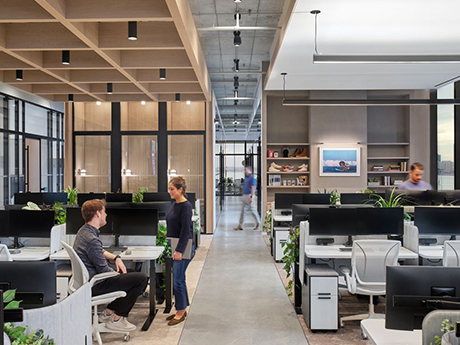
Sales is a game of psychology as much as skill. Top performers need natural light that regulates energy throughout the day, sight lines that create productive visibility without surveillance and collision spaces where quick wins get celebrated spontaneously. These aren’t luxury amenities; they’re pieces of performance infrastructure.
Contrast that with fluorescent-lit cubicle farms with tall, opaque barriers. These spaces don’t just fail to inspire — they actively communicate that energy should be contained. They set a tone that seeps into calls and meetings and ultimately erodes confidence over time.

Your office layout either fuels ambition or flattens it. There’s no neutral ground.
Space Design Shapes Behavior
In sales training, we talk constantly about reinforcing the right behaviors. The same principle applies to real estate. If you want collaboration, create environments where people and teams naturally intersect, not conference rooms that require Outlook invites. If coaching is a priority, design accessible breakout spaces for quick debriefs and role plays.
Want more peer coaching? Don’t just mandate it in your training manual — design a “power corner” with writable surfaces and casual seating where two reps can debrief a call in 90 seconds, not schedule a conference room for next Thursday. If call activity drives pipeline, build designated calling areas that amplify — not hide — energy and activity.
Behavior follows design. The best offices are built around how the team should interact, not just where they can sit.
Confidence is Contagious — Amplify It
When sales reps walk into a space that feels professional and aligned with the brand’s ambition, it reinforces belief. Belief in the company. Belief in the product. Belief in themselves. That confidence translates directly into tone, posture and performance — qualities that flow into every sales call and every client meeting.
We’ve seen teams go from sluggish to sharp simply by moving into a space that matches their goals. The shift isn’t just psychological; it’s measurable in activity metrics, win rates and retention.
Your Space Sells Your Story (Before You Say a Word)
The right location projects credibility and momentum — critical elements in both selling to clients and recruiting top talent. For client-facing organizations, location, layout and design are signals that prospects absorb long before a formal presentation even begins.
When prospects visit your office, they’re reading clues before slide one. Is this a company that understands our market? Do they invest in their own success? The lobby, the meeting space, even the coffee station — these aren’t amenities, they’re proof points. In B2B (business to business) sales, trust precedes transactions. Your space should close the credibility gap before your deck hits slide three.
The same applies when recruiting top talent. Is your office easy to access? Does it feel like a place where significant business happens? Does it feel vibrant and forward-thinking? Can your space serve as a vehicle to attract new clients? These subtle cues influence perceptions that help close deals and attract the sales professionals you actually want on your team.
Real Estate Decisions Are Sales Decisions
When companies evaluate their real estate needs, the conversation typically centers on square footage and budget. But the best leaders ask a better question: “What behaviors do we want this space to reward?”
This shift in thinking recognizes that when your environment and your sales culture are coordinated, productivity, morale and results compound. And when they’re not aligned, there is not a CRM (customer relationship management) dashboard or series of motivational “all-hands on deck” meetings that can compensate for it.
It’s Not About Size, It’s About Design
Great sales cultures aren’t built in training rooms alone; they’re built in the 40-plus hours per week your team spends in their actual environment. When workspace strategy and sales strategy align, you create compound advantages: faster onboarding, stronger peer learning, higher retention and yes, more revenue.
Real estate isn’t overhead. It’s infrastructure for human performance.