

ATLANTA — The multifamily market in the Southeast still prevails as one of the nation’s most dynamic real estate ventures, but one aspect in particular is casting a dark shadow — the cultivation of oversupply in the region.
When the demand for housing during and after the COVID pandemic increased, developers energetically responded with an aggressive building boom. However, when new supply began to outpace demand, vacancy crept up and concern for the market became more prominent.
“We put shovels in the ground and started developing — and now we’re paying for that sin,” said Greg Mark, executive managing director at Cushman & Wakefield. “Across the board, we’re just not seeing the same kind of returns.”
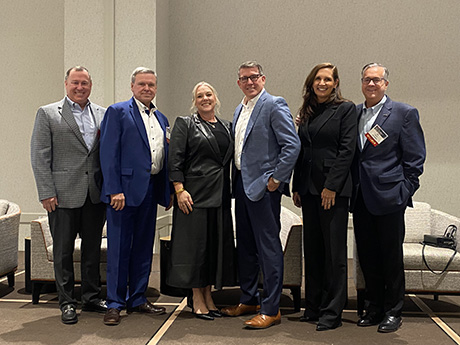
Mark’s comments came at the operations panel during the 2025 InterFace Multifamily Southeast conference, which was held at the InterContinental Buckhead in Atlanta. Co-hosted by France Media’s InterFace Conference Group and Multifamily & Affordable Housing Business magazine, the two-day event attracted a little more than 300 attendees. Ed Wolff, CEO of Dallas-based Aerwave, moderated the panel.
Editor’s note: InterFace Conference Group, a division of France Media Inc., produces networking and educational conferences for commercial real estate executives. To sign up for email announcements about specific events, visit www.interfaceconferencegroup.com/subscribe.
Karen Key, Southeast division president of Asset Living, noted the interesting comparison from this time last year, explaining that the multifamily sector was seeing the best occupancies and rent growth during 2024 and the beginning of 2025, whereas now, the consumer is stretched too thin. Ultimately, she said the ability to push rent growth in those same asset classes is no longer there, as landlords compete on prices and leave renters with more choices.
“While a standard lease-up is 18 months, they are now taking anywhere from 24 to 36 months to complete to get the full stabilization,” said Key. “Now all of these lease-ups are going up against renewals, and that’s what’s making it so challenging with getting those deals to the finish line.”
Key said that operators today are “doing well” if their properties are above 90 percent occupied, but said that in order to maintain an occupancy above that threshold in the current multifamily climate, owners and operators are forced to challenge their competitors in different ways with high concessions, such as offering free rent for a month on lease renewals and targeting new leases more aggressively.
Yet, as the Southeast market faces high concessions, slow lease-ups and negative rent growth because of oversupply, Chris Burns, senior vice president of Willow Bridge Property Co., said that he “still believes that the future is bright for the Sun Belt.”
Be that as it may, most developers have scaled back new multifamily starts in 2025 in response to high construction costs and rising interest rates, which the panelists noted should gradually rebalance the supply-demand dynamic moving forward.
Back to the Basics
Wolff then shifted the conversation to staffing and whether AI (artificial intelligence) will eliminate certain positions in the multifamily sphere.
Several factors are contributing to what many in the multifamily industry describe as a shrinking pipeline of skilled professionals entering the field. While the dynamics vary by region and company, the panelists said that a mix of structural workforce issues, shifting career preferences and evolving industry conditions are exacerbating staffing issues at both the property and corporate level for multifamily operators.
Mark of Cushman & Wakefield explained it as an “erosion of talent,” with an emphasis for the need to return to the fundamentals of business.
“They [young employees] were just thrust across the industry, so a lot of my peers and I have put a big investment across the industry to get back to training people with soft skills and the basics,” says Mark. “[We emphasize] why we are doing the things that we’re doing and here’s why it matters versus saying, ‘just do this.’”
The panelists agreed that young individuals in the multifamily workforce often transition so quickly from several positions, such as leasing agent to assistant manager to property manager, that they don’t have the opportunity to accumulate the professional experience that the current industry veterans have received.
Key also acknowledged the necessity of leveraging AI to supplement onsite teams to help employees adapt to a fast-paced world, while alternating effectively from the consumer, operator and owner mindset.
“For us, it’s really been a focus to pour back into our teams this year — focusing on that culture piece,” continued Key. “If you think about what a property or regional manager does on a daily basis, we really expect them to be a jack-of-all-trades, and AI takes some of the burden off of them, so they don’t have to be specialists in everything.”
Panelist Jonathan Tucker, president of Atlanta-based PeakMade Real Estate, further highlighted that AI will not be a replacement for individuals, but a tool to support their job performance.
“The tech is going to be an enabler to allow us to develop teams that serve customers,” he said. “The more the customer is enlightened about customer service, the more their demands will grow, and eventually, the better the team will be at centralization. It’s an evolution of your traditional property manager or your leasing consultant.”
Tracy Bowers, managing partner of Atlanta-based Gallery Residential, noted that the use of AI can be especially helpful for smaller leasing teams and the centralization of duties with initial communication for a potential prospect, but that leasing teams must be cautious of allowing AI to take on the “follow up” role with prospects.
“That’s where we’re losing the prospects,” explained Bowers. “Because they can tell when they’re getting an email from an AI bot. If you really want to be different and stand out against your competitors, you have to go back to that human interaction with the follow up process.”
The Light at the End of the Tunnel
The panelists concluded the session with various predictions for 2026, largely anticipating that the sector will begin to see a rebound in the second and third quarters of the new year.
“We’re going to be in a slog until probably quarter three, at the earliest, but we just need to tighten up any operations that we can and be prepared that rents are going to be flat to soft occupancy,” highlighted Key. “By the latter part of 2026, I think you’ll see things start to shift.”
The panelists said that the slowdown in new deliveries, combined with persistent affordability pressures that keep many households renting rather than buying, creates the foundation for stabilization — and even modest growth.
“The good news is, as supply burns down, demand is good. And if you also talk about the affordability issue, it’s still 40 percent cheaper to rent than it is to buy, which is going to continue to keep people in the apartment market,” added Burns.
Overall, the picture for the Southeast multifamily real estate market remains hopeful.
“Jobs are here, the affordability is here, the population growth is here — it’s all going to come to a head,” concluded Mark.
— Abby Cox