

If there is one defining characteristic of the Raleigh-Durham retail market today, it is scarcity. Exceptionally low vacancy — especially in high-quality, well-located centers — has become the norm rather than the exception, fundamentally reshaping leasing dynamics, rent growth and development strategy across the region.

As of third-quarter 2025, overall retail vacancy in Raleigh-Durham stood at approximately 2.4 percent, marking four consecutive years below the 3 percent threshold. Even more telling, spaces under 10,000 square feet posted vacancy closer to 1.8 percent, underscoring just how competitive conditions have become for local and regional tenants. This imbalance between demand and supply has placed landlords in a position of sustained leverage, particularly in grocery-anchored centers, strong neighborhood and lifestyle shopping centers or mixed-use environments.
Low vacancy matters because it drives outcomes. Lease-ups are happening faster, concessions are increasingly rare in top trade areas and rents continue to trend upward. For tenants, especially those seeking smaller footprints, waiting to engage often means missing opportunities altogether. For owners, the market rewards proactive asset management and disciplined tenant selection.
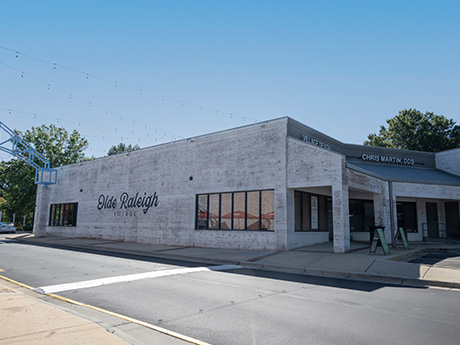
A clear example of this dynamic is Olde Raleigh Village, a grocery-anchored community shopping center that is currently 100 percent leased. With no vacancy to contend with, ownership has been able to focus not on backfilling space, but on elevating the tenant mix and optimizing long-term value. Recently, new leases were executed with Chipotle Mexican Grill and Perspire Sauna, while Happy + Hale, a well-known local restaurant brand, is set to take over space previously occupied by a Chinese restaurant. In each case, strong demand and limited alternatives allowed rents to increase while enhancing the overall merchandising of the center.
What Olde Raleigh Village illustrates is that success in a low-vacancy environment requires more than simply leasing space. Performance today hinges on execution across the entire life cycle of an asset. Integrated leasing, hands-on property management and thoughtful marketing and positioning all play critical roles in maintaining momentum, supporting tenants and sustaining long-term demand.
In a market this tight, even well-located centers must be actively managed to remain competitive.
While vacancy remains compressed, there are early signs that limited new development is beginning to emerge, albeit selectively and with discipline. Rather than speculative construction, most new retail projects are tied closely to rooftops, daily needs tenancy and proven anchors. Suburban growth nodes, in particular, are leading this next phase.
Fuquay-Varina offers a strong example. A Super Target–anchored shopping center is set to open this spring, responding directly to population growth and pent-up retail demand in the area. Nearby, Harvest District is bringing new unanchored neighborhood retail out of the ground, providing additional options for service-oriented and local tenants that have struggled to find space elsewhere in the market. Further east, a Target-anchored development has also been announced in Clayton, reinforcing the trend of measured expansion in high-growth suburban communities.
These projects are notable not for their scale, but for their restraint. Developers are building just enough to meet demand, not enough to oversaturate the market. That discipline reflects lessons learned from prior cycles and aligns with current economic realities, including higher construction costs and cautious capital.
From an investment standpoint, retail sales activity remains steady but selective. Buyers continue to favor grocery-anchored and neighborhood centers with strong tenancy and durable income streams. At the same time, many owners are choosing to hold rather than sell, supported by healthy fundamentals and rising rents. The result is limited product availability and continued competition for well-performing assets.
Looking ahead, the outlook for Raleigh retail remains fundamentally strong. Rent growth is expected to continue, particularly for smaller-format space, while vacancy is likely to remain compressed in the absence of significant new supply. For tenants, early planning and flexibility around size and location are critical. For developers and owners, success will depend on thoughtful site selection, disciplined execution and a focus on quality over quantity.
In Raleigh, scarcity is no longer a short-term condition. It is the defining feature of the retail market. Those who recognize and adapt to that reality will be best positioned to succeed.
— By Julie Augustyn, senior vice president, Raleigh, Foundry Commercial. This article was originally published in the February 2026 issue of Southeast Real Estate Business.