

By Taylor Williams
The American office market remains awash in change as both tenants and landlords continue to grapple with now-familiar quandaries, from devising ideal hybrid work schedules to rightsizing inventory to putting forth the best mix of amenities, all while negotiating down to the last nickel of rent and last day of term.
There are no right or wrong answers to these dilemmas outside of what works best for a particular company or building. Aside from flight to quality, there are very few common denominators across the spectrum of office usage from the tenant perspective. And aside from certain “must have” amenities and features, from the landlord perspective, there is no one-size-fits-all formula for wooing tenants back into buildings.
For Texas cities with growing populations and well-located, obsolete office buildings, there are rarely obvious, cost-effective options for revitalizing or converting those structures. And above all else, there’s not a lot of clarity on the future of office utilization as a whole.
So in the meantime, all that tenants and landlords — and their brokers — can do is try to make the smartest deal possible based on the information they have today.
“In today’s market, every deal has to stand on its own and make financial sense independently,” says John Heard, vice president at Transwestern’s Houston office. “For landlords, the cost of tenancy in the office world is high, so there’s a heightened sense of focus on individual deals today, including the level of concessions that can be provided.”
“Then there’s the market that landlords need to work within to be competitive,” Heard continues. “Tenants are spending more time on the front end evaluating their needs prior to engaging the market, and landlords are spending more time understanding those needs during the negotiation process. So deals may be taking longer, but they’re more curated at the same time.”
Over the past several years, office leasing agents and investment sales brokers have used terms like “institutional,” “foundational” and “structural” to describe changes in office utilization to this writer. Whatever the preferred adjective, the fact remains that the seismic shift in office usage has inevitably generated winners and losers.
Buildings have taken hits to occupancy and cash flows; owners have defaulted, and lenders have foreclosed. Yet because there are so many barriers and obstacles to converting office buildings to other uses — and because demolition is expensive and zoning changes are not guaranteed — many of these buildings have just kept on chugging under revised ownership structures.
As a result, prospective tenants — or existing tenants coming up for renewal — now find themselves digging deeper into financials, asking more pointed questions and negotiating new aspects of leases. Those tenants are trying to convince their employees to come into the office, and part of that persuasion hinges on trust that landlords will operate their buildings as advertised.
SNDAs Grow in Importance
The larger state of uncertainty surrounding the U.S. office market as a whole also means that failing to ask the right questions or secure the right guarantees in writing can be that much more damaging in the long run. While another sector-shattering event like COVID-19 may not be in the cards for this lifetime, the pandemic underscored the importance of preparing for unexpected scenarios.
In 2026, with scads of loans coming due, such a scenario could easily involve some sort of change in building ownership. That’s something tenants are more mindful of today, says William Padon, executive vice president at CBRE’s Houston office.
“In today’s market, there’s an introspective view from the tenant side of ‘We might love this building, but who’s our owner, and will they be around? And can the owner operate the building in a first-class manner for the term of the lease?’” he says. “Then you peel back [the ownership structure] further, and it’s not necessarily the equity source of the capital stack. Tenants also have to evaluate the lender and ensure that they have proper documentation — an SNDA — to ensure that if the equity source leaves, the lender will fund the TI [tenant improvement] dollars and adhere to other terms of the original lease.”
Short for subordination, non-disturbance and attornment, SNDA agreements essentially exist to ensure that original lease terms will be honored should the building have a change in ownership. Sources say that prior to the pandemic, SNDAs were typically only requested by tenants — and given by landlords — for deals in which the space accounted for a substantial portion of the gross leasable area.
Today, however, SNDAs are increasingly factoring into lease negotiations of all sizes due to the potential fluidity of ownership structures in the new office environment.
“Being able to speak to the landlord’s capital stack — detailing who the limited partners and other equity partners are, who the sponsor of the deal is — that’s a more frequent conversation than it’s ever been,” says Matt Asvestas, managing director in the Houston office of Stream Realty Partners. “Letting tenants know [as an operator or sponsor] that you’re in good standing or what the [loan] balance is and just being upfront and transparent about the capital stack is helpful today.”
“SNDAs are becoming more prevalent in lease discussions,” confirms David Hightower, executive vice president of development at Houston-based Midway. “It’s more of a recognition by tenants, especially strong ones, that while it is typical for a landlord to consider a prospective tenant’s financial ability to perform under a lease, the tenant should consider the strength of the landlord. This is especially true when the tenant is large and making a substantial investment in TIs.”
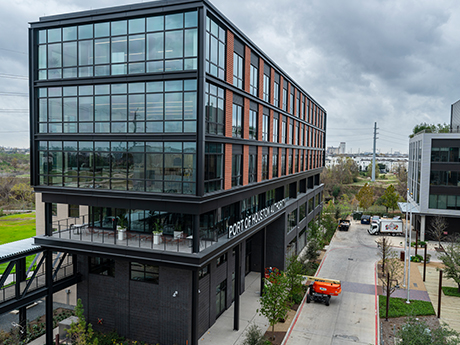
Port Houston announced in summer 2023 that it would open a new office headquarters at East River, Midway’s 150-acre mixed-use development. At the time, Roger Guenther, the port’s executive director, said that the location ‘takes us back to our original roots where the Houston Ship Channel began while also providing our staff with a collaborative environment and a modern workspace that all Houstonians can be proud of.’
J.J. Leonard, partner and managing director in the Dallas office of Partners Real Estate, says that while SNDAs can be complicating factors in lease negotiations, they can also represent a subtle advantage for landlords pursuing competitive deals, though ultimately it’s the lender that often has the final say on whether an SNDA will be granted.
“Questions that are often asked before or during tours — what’s the capital stack look like, who’s the lender, when is the loan due — tenant reps are digging in and trying to figure out the loan balance and whether there’s distress,” he says. “For those buildings in which the landlord owns them
all-cash or has a loan that’s been extended and is in good standing — that’s a horn you want to toot [as a landlord rep] and something you want your audience to know.”
Spotlight on TI
Owners of office buildings that feature new construction, minimal nearby competition and vibrant surrounding retail and restaurant scenes have the advantage in the flight-to-quality era. Yet without the proper amenities and building features — as well as an intangible sense of vibrancy — those owners can miss out on key deals.
As such, many of those owners spent much of the post-pandemic era investing more upfront dollars into common areas, amenity spaces and building systems just to compete. Those capital expenditure (capex) investments, many of which were executed during periods of stagnant or nonexistent rent growth, squeezed landlords on the back end, limiting their TI allowances for build-outs of tenant spaces. But to some degree, it’s those build-outs that make the space “high quality” and therefore appealing to users in the flight-to-quality era.
As such, TI dollars have come to embody the financial struggles between landlords and tenants. Companies have felt that if they commit to what some industry professionals have labeled a dying sector, they should have considerable leeway to design and outfit their spaces as they see fit, costs notwithstanding. But those costs have shifted dramatically in recent years.
“What cost $70 per square foot in 2018 might have been $110 per square foot in 2023 or 2024,” says Leonard. “Tenants needed those dollars and were going to spend on top of whatever they got from landlords just because they were — and are — committed to building out their spaces [in specific ways]. Landlords that can push rents and give more TIs are seeing healthier returns; the math works out fine.”
“But for buildings in which owners can’t push rents, the math becomes a little more difficult,” Leonard continues. “They may have dollars in a reserve account with the loan to pay TIs, but their investors might not be able to put new dollars into [capital improvements] because the value of the property has decreased, largely due to [interest] rate hikes starting in 2022. So they can’t commit additional millions of dollars to updating their building and its amenities, yet tenants still want a good TI package and that quality look and feel for their space, even if they’re spending less on rent. So that can be a tough dance.”
Conversely, landlords want to know that if they’re cutting big checks, tenants will stick around.
“If a landlord is giving $100 per square foot in TI allowances for a 10-year lease — which is about what we’d expect out of the gate for a Class A deal in Houston — for a landlord making that kind of capital infusion, they need to understand if the tenant will really be around to pay the rent for those 10 years,” says Padon.
Of course, the quality of the location outside the four walls continues to factor into tenants’ site selection. For those office owners that are fortunate enough to have vibrant, walkable retail, restaurant and entertainment uses in their backyards, there’s more flexibility in terms of investing in onsite amenities versus saving those dollars for TI allowances.
“We believe that a great building in a well-planned and curated mixed-use environment is a much better investment that adding expensive amenities in the building,” says Hightower. “[Having] amenities such as coffee shops, fitness centers and other forms of hospitality that serve several buildings within mixed-use developments — that spreads those investments over more assets, commanding higher rents and creating the walkable environment many tenants are seeking.”
Don’t Push It
Sources say that multiple years of persistent upgrades across all segments of the office-using market have led to a scenario today in which owners of top-tier buildings can actually push rents — and in turn, offer competitive TI packages.
“Flight to quality really is the headline comment for the office sector as a whole,” notes Padon. “Occupancy in top-tier trophy assets is increasing, and landlords are increasing [rental] rates commensurate with that occupancy.”
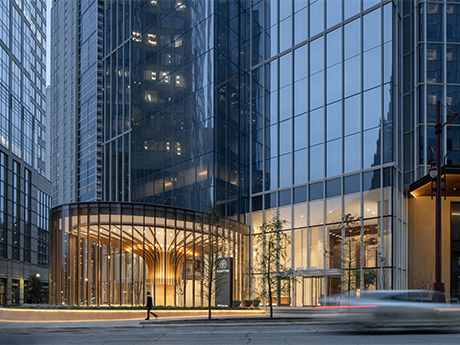
Padon cites Texas Tower, Hines’ 47-story building in downtown Houston that was completed in 2022, as a prime example of a property that is seeing substantial rent growth. CBRE has two deals in the works at Texas Tower that would bring the building to nearly 100 percent occupancy.
“The increase in rental rates at Texas Tower over the past 12 to 16 months has been about $10 per square foot,” he says. “That’s about a 25 percent increase. So that building is commanding top rents and getting interest from top law firms and investment banks. The next building down is 609 Main, also [owned] by Hines, and it’s also about 99 percent leased and has seen about a $10 [per square foot] increase in rental rates over a similar period of time.”
Asvestas notes that flight to quality goes well beyond trophy buildings.
“We’re seeing Class B tenants going to Class A Tier II buildings, or tenants in industrial buildings going into a well-maintained Class B building with good ownership,” he says. “It’s still an upgrade, but there are more tranches of flight to quality than just the trophy subset that represents the top of the market.”
“Flight to quality has always occurred during tough office markets,” adds Hightower of Midway. “Tenants see opportunities to upgrade when landlords are under stress. But it might be more flight from obsolescence. The older the building, the older the building infrastructure and technology, and tenants have to have the latest, best technology and amenities to attract the best talent.”
Sources also say that several years of low to nonexistent construction of new office product has accelerated and driven home the flight-to-quality trend.
“Office inventory is coming offline, being demolished or converted, and in some buildings, occupancy is so low that it’s become obsolete,” notes Asvestas. “So desirable inventory is smaller than ever, and when you layer in owners that can actually transact, fund deals and continue to reinvest in their properties, it’s even smaller. So that tightening across all tranches is leading to that spillover effect.”
“There are projects planned, but to justify new development, owners have to underwrite rents that are double today’s Class A rates, which would be a minimum of about $65 [per square foot] triple net,” adds Heard. “There are tenants that are willing to pay those rates, or at least consider them for recruiting and retention purposes. So as a result, owners of well-leased, Class A buildings are paying attention and commanding higher rates.”
— This story first appeared in the March 2026 issue of Texas Real Estate Business magazine.