

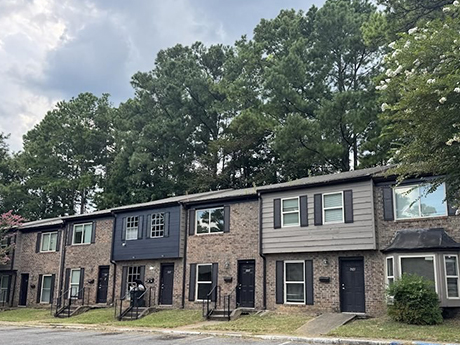
Conditions in Birmingham’s apartment market vary by submarket heading into 2026. Several recently completed developments downtown are still stabilizing, creating short-term leasing pressure, while suburban areas across the metro continue to see steady renter demand.

Much of the new multifamily development in Birmingham over the past several years has been concentrated in the downtown core. As a result, many of these properties are still working through lease-ups.
Marcus & Millichap research projects roughly 670 apartments will be delivered across the metro this year, with vacancy expected to hover around 6.1 percent and average effective rents near $1,302 per month. That level of supply has created temporary softness in parts of the downtown market.
Some newly delivered communities are offering concessions during lease-up periods as owners compete for tenants. In certain cases, owners are choosing to refinance rather than bring assets to market while occupancy stabilizes. These conditions are typical when several projects deliver within the same submarket over a short period of time.
Outside the city center, Birmingham’s suburban apartment submarkets continue to perform well. Cities including Homewood, Vestavia Hills and Hoover remain among the metro’s most stable suburbs. Shelby County cities, including Pelham and Alabaster, are also seeing consistent renter demand.
These areas benefit from limited new construction and strong local fundamentals. Access to employment centers, stable population trends and well-regarded school systems continue to support renter demand. Because relatively little new supply has been introduced in many of these communities, occupancy levels and rent performance have remained steady compared with downtown properties still working through lease-ups.
Investment trends
Investor interest in Birmingham multifamily assets also remains broad. Buyers with national footprints continue to evaluate opportunities across the metro. Institutional capital, private investment groups and Sun Belt-focused operators have all been active in the market over the past year. Recent acquisitions have involved investors based in California, Chicago, New York, Colorado and the Carolinas. That geographic diversity reflects Birmingham’s reputation as a stable secondary market where investors can still find steady demand and relatively affordable entry points compared with larger Sun Belt metros.
At the same time, the market is working through a small number of properties purchased during the peak investment cycle of 2021 and 2022. Some of those assets were acquired with rent growth expectations that have been difficult to achieve in the current environment. As loans mature, lenders and owners are repositioning certain properties or bringing them to market. That process is expected to continue through 2026 as the market adjusts following several years of elevated transaction activity.
Economic factors
Several economic developments could also support apartment demand in the coming years. Fannie Mae recently announced plans to relocate its San Francisco office to Birmingham, a move expected to bring several hundred jobs to the metro. In addition, the U.S. Department of Homeland Security has announced plans to convert the former Birmingham-Southern College campus into a Coast Guard training center, a transition expected to bring additional employment and activity to the area.
These types of relocations reinforce Birmingham’s role as a regional employment center. While the metro has historically grown at a steadier pace than some high-growth Sun Belt markets, it has benefited from consistent economic expansion and a diverse employment base.
Outlook
Looking ahead, many investors expect the downtown apartment market to gradually stabilize as recently delivered units are absorbed and the development pipeline slows. Compared with the pace of construction in recent years, fewer large multifamily projects are expected to deliver over the next 12 to 18 months.
As that supply pressure eases, Birmingham’s combination of affordability, stable renter demand and expanding employment opportunities should continue to support long-term investment interest.
— By Josh Jacobs, senior managing director investments, Marcus & Millichap. This article was originally published in the March 2026 issue of Southeast Real Estate Business.