

By Maxx Kossof, The Missner Group
Chicago’s industrial market is active — vacancy is low, rents are up and the construction pipeline remains substantial. But the market is not uniform. Smaller deals, in tighter locations and existing buildings, are moving. That segment has been underserved for some time, and that is starting to change.
Big box is largely spoken for
Chicago’s active construction pipeline is significant, but the majority of it is already committed. The large projects breaking ground are build-to-suit developments for specific users, including Kimberly-Clark, CJ Logistics and Walmart. Big speculative groundbreakings have been largely absent for some time, reflecting a period of softer leasing demand that is only now beginning to recover. That pipeline serves an important segment of the market, but a narrow one.

Most tenants are not those users. They are regional distributors, light manufacturers and last-mile operators looking for 25,000 to 90,000 square feet in a location that works for their workforce and customers. For years, speculative development bypassed this segment in favor of larger tenants and higher absolute rents. That is beginning to shift.
Infill is competitive
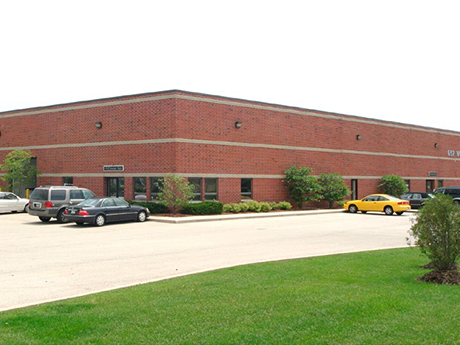
When a well-located older building becomes available in Chicago, there is real competition for it. The window to acquire at a reasonable basis is often short. The asset may not look like much on the surface, but its value is found in a tenant-friendly location and functionality, even if it falls short of Class A.
Both paths — ground-up new construction and repositioning existing buildings — come with complexity that not every developer is equipped to handle. Ground-up in city-adjacent submarkets means navigating entitlements, environmental conditions and carrying costs, offset by the premium rents smaller demised spaces command.
Repositioning requires a different skill set: underwriting a value-add plan, marking rents to market and managing a more complex lease-up. In both cases, the developers equipped to absorb that complexity tend to find less competition on the other side of it.
Market response
The response to this demand is not coming exclusively from repositioned older buildings. Some developers are underwriting new speculative product for smaller tenants — buildings with flexible demising plans that accommodate multiple users in the 25,000- to 90,000-square-foot range.
The logic is straightforward: Smaller demised spaces command meaningfully higher rents per square foot, and that premium makes new development pencil out where land and construction costs are elevated. It trades single-tenant simplicity for occupancy diversity and a rent profile that supports the basis. We are pursuing this approach across the majority of investments we are evaluating at Missner, and we are not alone.
At the same time, infill repositioning is gaining traction. When a long-term tenant vacates a functionally obsolete asset, the building is often seen as a problem when in many cases it is actually an opportunity. Investors have been acquiring older industrial buildings in city-adjacent submarkets and upgrading them for smaller tenants. Capital flowing toward both strategies reflects a broader recognition that this segment has been structurally undersupplied.
A direct consequence of this trend is that land values in the best-located submarkets have been rising sharply. The rent premium that smaller demised spaces command gives developers the confidence to pay top dollar for well-positioned sites — and they are paying it, even against tight underwriting standards.
That dynamic is concentrated at the top: primary locations with strong access, labor proximity and development feasibility are attracting intense competition, while secondary locations receive comparatively little interest. Since the rate hike cycle began, sellers refused to reprice land to levels that justified capital partners’ tighter return thresholds, a standoff that kept many deals from transacting.
That gap has begun to close. Growing rents have given developers the underwriting support to meet sellers closer to their numbers, and capital partners have responded. Institutional equity is increasingly willing to back speculative development in markets where demand has proven resilient and oversupply is not a concern.
Chicago never had an oversupply problem — a fact that has attracted positive attention as capital rotates back into industrial. Markets like Indianapolis faced a significant inventory overhang, but aggressive absorption has worked through much of that excess and the market is drawing renewed interest. Capital is coming back, and with more conviction.
Developers and investors who identified this early are moving ahead of a demand pool with limited alternatives, while those who wait for the trend to fully appear in the data will be competing with a larger pool of investors.
What tenants are asking for
Tenants are being deliberate. The ask we hear consistently is flexibility — the ability to right-size as the business evolves, with configurations that do not require committing to more space than is needed. A multi-tenant building, whether newly built or repositioned, can accommodate that. A 400,000-square-foot single-tenant spec building cannot.
Location matters equally. Manufacturers, light industrial operators and last-mile distributors need to be close to their labor force. In Chicago, that means infill locations — and in those locations, new large-format supply is not coming. Tenants who need to be there are working with what already exists or waiting for someone to build the right product.
Large-format industrial development has its place and will continue. However, the larger opportunity right now is at the smaller end: buildings brought back to relevance through renovation, and new product designed from the ground up for users the market has long overlooked. Chicago has the demand. The good sites are harder to find but exist. The question is who is willing to do the work.
Maxx Kossof is vice president of investments with The Missner Group. This article originally appeared in the June 2026 issue of Heartland Real Estate Business magazine.