

— By Diane Pritchett of South Coast Metro Alliance —
How do maturing mixed-use districts stay competitive as office, retail, multifamily and hospitality demand patterns continue to shift? The experience of South Coast Metro in Orange County, Calif., offers several practical lessons.
In the 1960s, developer and philanthropist Henry Segerstrom envisioned the growth of a vibrant urban center that became South Coast Metro, covering 2,500 acres within 3.5 square miles, including sections of Costa Mesa and Santa Ana. Today, the district’s continued evolution offers a useful case study for other employment centers, mixed-use districts and economic development organizations looking to remain relevant as tenant and resident expectations change.
Start with a Strong Anchor, then Keep it Current
When the Segerstroms developed South Coast Plaza, they believed the indoor shopping destination would become a magnet, attracting others to the area. That anchor helped establish South Coast Metro’s identity well beyond Orange County. The lesson for other districts is that an anchor only works if it continues to evolve. Tenant mix, programming, dining, public space and visitor experience all need regular attention as consumer and workforce expectations change.
Make Experience Part of the Business Case
Office districts can no longer rely on location alone. Employers are competing for talent in an environment where workers expect convenience, flexibility and a stronger connection between the workplace and the surrounding community.
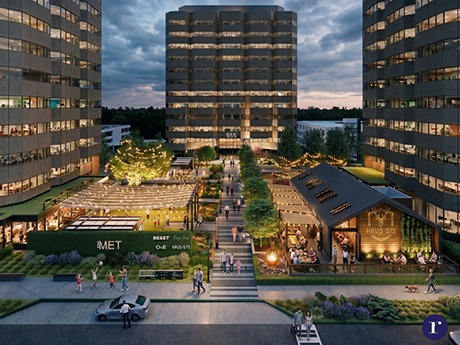
South Coast Metro employers are offering flexible hours and touting access to amenities provided by local building ownership and management. For example, The MET 2.0 office campus has recently been repositioned with new dining, entertainment and recreational experiences.
On a macro level, South Coast Metro is home to the Theater & Arts District, which draws locals and audiences from across the globe to world-class performing arts. The district has also invested in public outdoor artwork, including sculptures, murals and architectural designs.
For owners and economic development groups, the takeaway is clear: arts, dining, events and public space are not decorative extras. They help create the identity, energy and daily activity that support leasing, visitation and tenant retention.
Use Technology to Support the District Experience
Technology should support how people move through and use the district. That may include parking systems, tenant apps, security coordination, wayfinding, transit information, event communication and building systems that improve convenience and efficiency. Just as important, property owners and employers should share best practices so the district experience feels connected rather than fragmented from building to building.
Design Around Walkability
Keep it walkable. South Coast Metro companies embrace the idea that everything the community has to offer should be within a short walk. Soon, that may mean adding “stay” to live-work-play.
An elevator ride should be enough to reach a yoga studio, bistro or other amenity. A short walk should connect workers, residents and visitors to dining, fitness, hotels, entertainment and outdoor gathering areas. Nearby green spaces, small lakes, seating areas and tree-lined walkways provide a contrast to sleek office towers for work and recreation.
The broader point is that walkability has to be planned, maintained and marketed. Sidewalks, lighting, shade, landscaping, signage, parking strategy and ground-floor uses all influence whether people actually experience a district as connected.
Help Employers Compete for Talent
Many companies choose to locate in South Coast Metro for strategic advantages, available talent pipelines and brand alignment. They want a location that aligns with their environmental, social and governance commitments and enhances their public image. They also understand that many workers prioritize flexibility, inclusivity and purpose.
Districts that want to retain major employers need to understand those priorities and respond with the right mix of amenities, mobility options, gathering spaces, safety measures, housing options and community identity. That requires regular communication with employers, property owners, residents, hotels, retailers and local governments.
Use Public-Private Partnerships to Solve Practical Problems
Maturing districts also need formal and informal channels for public-private cooperation. One recent public-private partnership in South Coast Metro involved a new police department substation in an office building. The owner built the substation so officers would have a convenient space to work while creating a safer environment for businesses, hotel guests and residents. Projects like this show how owners and municipalities can address district-level needs that no single tenant or property can solve alone.
Plan Mixed-Use Growth at the District Level
New mixed-use development should reinforce the larger district rather than function as an isolated project. For example, the new 41-acre Related Bristol mixed-use urban community highlights South Coast Metro’s multifamily offerings. It will include contemporary apartments, shopping, neighborhood services and dining experiences, as well as a premium hotel, a senior living component and open spaces.
As these projects come online, the challenge will be integration. Housing, hospitality, retail, office and public spaces need to connect physically and programmatically so the district functions as one place rather than a collection of separate assets.
Create a Coordinating Organization
One of the most important lessons for other districts is the need for a coordinating organization. In some markets, that role may be filled by an economic development corporation, business improvement district, chamber, downtown partnership or property-owner alliance. The name matters less than the function: someone must keep the district’s interests aligned.
The South Coast Metro Alliance unites property owners and major businesses that have a long-term investment through ownership and/or long-term leases. It collaborates with the County of Orange, the cities of Costa Mesa and Santa Ana, the Orange County Transportation Authority and local chambers of commerce. Meetings are held with property management, apartment communities, hotel marketing teams and a business/police partnership. CEO roundtables bring together key companies using South Coast Metro to strengthen business development.
That coordination is what allows a district to move beyond individual projects and toward shared strategy. As mixed-use centers continue to mature, the strongest districts will likely be those that treat branding, safety, mobility, arts, hospitality, housing and employer engagement as connected parts of the same economic development effort.
— By Diane Pritchett, executive director of South Coast Metro Alliance. This article was originally published in the July 2026 issue of Western Real Estate Business.