

By Taylor Williams
ATLANTA — The cog between the wheels, the mortar between the bricks, the grease between the skids — when it comes to seniors housing, whatever your preferred cliché is for the factor or mechanism that makes it all work, you’re likely talking about the operator.
Operators in seniors housing have always provided crucial services in the forms of resident caregiving, facility maintenance, property marketing and programming execution. But in 2026, amid a rebounding investment sales environment, third-party operators also play important roles in helping sellers accurately underwrite costs that fall outside their traditional line-item purview. In addition, the reputation of the operator can factor into the buyer pool for a property on the selling block.
Editor’s note: InterFace Conference Group, a division of France Media Inc., produces networking and educational conferences for commercial real estate executives. To sign up for email announcements about specific events, visit www.interfaceconferencegroup.com/subscribe.
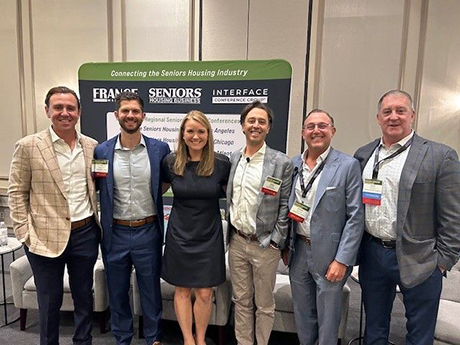
At the 13th annual InterFace Seniors Housing Southeast conference, which took place on Aug. 25 at the Grand Hyatt Buckhead Hotel in Atlanta, a panel of owners and investors spelled out just how important the role of the operator really is in the current seniors housing environment.
Shae Portnoy, vice president of investments at California-based seniors housing REIT LTC Properties, was among the first panelists to speak to the cost-management insights that third-party operators can give owners. Like all other classes of commercial real estate, seniors housing is a highly localized business in which operating costs can and do vary strongly among properties within an owner’s portfolio. Being able to underwrite those costs as accurately as possible helps owners deliver on the exit cap rates and return thresholds they’ve projected for their investors.
“Over the last couple years, what we’ve built with our operating partners is that relationship piece,” Portnoy said. “We can talk about what’s happening with insurance in a particular state or with taxes in a particular county. But the operators are the ones with the expertise and boots on the ground in those buildings. They know if we can push rates, or if labor is getting tough and if they have to raise rates because expenses are chasing them. So that’s a big component of the numerator [in the cap rate].”
When asked to identify regional markets where he saw the healthiest fundamentals and strongest buying opportunities, panelist Kelly Sheehy, managing partner at Atlanta-based investment firm Arcole Partners, immediately framed his answer in an operator-centric manner.
“Great operators generate great outcomes, because at the end of the day, seniors housing is an operating business,” Sheehy said. “If we’re talking to an operator that has a great idea and can do certain things better [than we can], that usually makes for the best risk-adjusted return.”
“So our conviction derives from the conviction of the operator to generate better returns,” Sheehy continued. “Whether that involves just raising rates or [implementing] a true business plan at the property — which we love to see and can get behind with capital — that’s what we look for, especially in a market in which deals are priced to perfection.”
Kyle Hallion, managing director of seniors housing brokerage firm Blueprint who also moderated the panel, said that sellers have been focusing more on the role of operators in dealmaking over the past six months.
“Unlike in years past, over the past two quarters, operator retention is becoming a decision-making factor for some sellers, whether for licensure risk or expediting the timeline,” Hallion said.
Portnoy said that her company has multiple acquisitions in its pipeline in which the operator already manages another property within the LTC portfolio, which adds an element of “comfort to their projections.” Other deals that LTC is working on, however, will involve forging new operator relationships, and that does add another wrinkle to the negotiations and underwriting.
“We do have to adjust our risk for both timing [to close] and projections of cash flow when there’s a change in management because there could be some sort of interruption during those first few months” Portnoy confirmed. “If the ED [executive director] isn’t a team player, that’s a big risk for the operation. So from the time we go under contract, we try to have good conversations with the current operator if they’re outgoing as well as the one that’s coming in and make sure they’re on the same page.”
Portnoy added that she has seen instances in which a seller will not award a deal to a buyer with the best and highest offer if that group wants to bring in a new operator, presumably because doing so could cause such massive disruption for residents.
Panelist Grant Johnston, senior vice president of asset management at Tennessee-based National Health Investors (NHI), then laid out his firm’s basic criteria for evaluating operators.
“They have to render good care, take care of residents and offer the things we want to offer,” said Johnston, noting that as a REIT, NHI’s operator affiliates are subject to more stringent reporting standards. “We also look at their bench strength — do they have people who will work with us for the next five to 10 years, who want to continue to grow with us and do the right things from an operations standpoint? We can be flexible in terms of retaining or replacing.”
Hallion then presented panelist Alex D’Agostino, vice president of acquisitions at regional owner-operator Sinceri Senior Living, with a hypothetical scenario on the subject. The scenario involved buying a deal that otherwise checked all the boxes but in which the operator would be replaced; D’Agostino was asked how he would pitch that aspect of the deal to capital partners.
“It comes down to humility,” D’Agostino said. “When we look at a deal that would obviously require an operator transition for it to make sense for us, we have to understand what’s going on with the current operator, identify where we can add value and recognize that just planting our flag isn’t going to change the operation. We have to have strong conviction and ideas about what will change when we walk in the door and be able to explain that to capital partners.”
Portnoy closed the discussion by reinforcing the importance of that which lies at the heart of every deal, partnership and arrangement in seniors housing — trust. She closed her analysis by hammering home the unspoken creed of the asset class: Resident care is what matters most.
“Trust has to go both ways, and we have to understand the core values of operators that we’re getting into business with,” she said. “At the end of the day, we want the best outcomes for our residents, because we genuinely care about our grandmothers and grandfathers. We want our kids to respect their elders. We want that care [to be present] in our buildings, and we treat every deal we do as if it was our parents who were moving in.”