

By Jeff Lefko, executive vice president, partner, Hanley Investment Group Real Estate Advisors
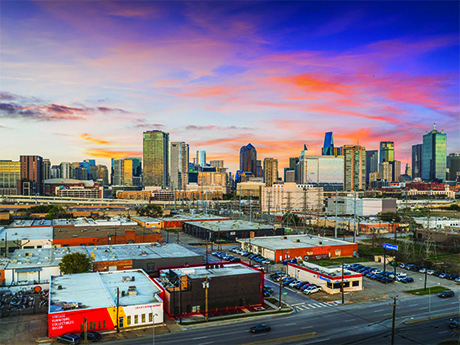
The Dallas Design District has entered a new phase of growth that is reshaping its identity and elevating its position within the city’s retail landscape.
Once known primarily for showrooms and industrial buildings, the district has become one of Dallas’ most active destinations for dining, entertainment and luxury commerce. The shift has been rapid, and the momentum in 2026 is unmistakable.
New openings this year have reinforced that trend. Delilah Dallas, a 1920s-inspired supper club that blends dining with live entertainment, arrived early in the year. Alara, a modern Mediterranean concept built around mezze and shared plates, followed soon thereafter, as did Ospi, a handmade pasta and Roman-style pizza restaurant co-owned by Top Chef contestant Jackson Kalb. Additional arrivals include La Lupita, a Los Cabos-born taquería and mezcalería making its U.S. debut, and Juliet, a Houston-based, movie theater-inspired steakhouse, opened in October next door to Delilah.
The recent openings broaden the district’s lineup of destination dining. Operators are choosing the district because it offers visibility, a high-income customer base and proximity to neighborhoods such as Uptown, Downtown, Victory Park and the Medical District.
The district’s transformation is supported by demographic strength and sustained residential growth. Population within a one-mile radius has increased steadily over the past decade, and projections show continued gains through 2030. Household growth has been even more significant, driven by modern apartments, creative office space and residents who want pedestrian-friendly access to dining and entertainment. Average annual household income within one mile exceeds $150,000, creating a strong base for high-end operators. The area also draws a daytime population of more than 361,000 people within three miles, supporting the district’s growing mix of dining, entertainment and retail destinations.
Major development activity is reinforcing the district’s rise. Harold Simmons Park, a 250-acre project that is situated adjacent to the district and is expected to generate billions in long-term economic impact, is set to reshape the surrounding area. Hi Line Square and other mixed-use projects are adding residential density and modern retail space. The district’s connectivity — combined with its growing pedestrian network linking the Katy Trail and The Strand — has helped establish it as one of Dallas’ most walkable urban neighborhoods.
Additional development throughout the Design District continues to elevate the area’s profile, including new residential communities, destination dining concepts and modern creative office and showroom spaces. Nearby projects such as the Margaret at Riverfront Apartments, luxury galleries, creative studios and high‑profile design showrooms are accelerating the district’s continued growth trajectory.
Retail rents in the Dallas Design District have strengthened materially as tenant demand outpaces the supply of high‑quality space. CoStar Group reports that average retail asking rents have risen 15 percent in less than four years, and the district continues to command a premium as experiential operators compete for visibility in one of Dallas’ tightest urban submarkets. CoStar’s forecasts call for rents to climb another 14 percent by 2031, building on gains already made. This trajectory points to long-term income stability and strong appeal for operators willing to pay above-market rents for flagship locations in a walkable, high-income trade area.
This rent growth is reflected in the district’s newest restaurant concepts, including the dual‑tenant space at 1000 N. Riverfront Blvd., which houses one of the district’s newest restaurant concepts. The Saint and Night Rooster occupy the 8,423‑square‑foot building, which was completed in 2025. The Saint is located on the second floor of the building, while Night Rooster is located on the ground floor, creating a vertically integrated dining experience within a single structure.
The Saint, a flagship Italian steakhouse, reopened in January 2026 after relocating from Deep Ellum to align with the district’s elevated dining scene. Night Rooster, which opened in late January and is led by chef Shirley Chung (another Top Chef alumna and Food Network personality), offers a modern interpretation of Chinese cuisine that blends cultural heritage with Texas-grown ingredients.
Both concepts are backed by Hooper Hospitality Concepts, which owns restaurants in the Las Vegas region and throughout Texas. Night Rooster has already ranked No. 1 on PaperCity’s list of buzzy new Dallas restaurants and among the Dallas Observer’s biggest restaurant openings of January. The property was also named a 2026 D CEO finalist for best redevelopment. Both concepts reflect the type of experiential, design-forward operators that are defining the district’s identity. Sales volumes are reportedly strong, supported by the district’s traffic, visibility and growing reputation as a culinary destination, as well as the adjacency to major galleries, showrooms and restaurants that further place the building at the center of the district’s activity.
The Dallas Design District has become one of the city’s most vibrant retail corridors, shaped by culture, cuisine and continued investment. As development accelerates and new openings arrive, well-located opportunities within the district are becoming harder to find. The area’s trajectory suggests that its role in Dallas’ retail landscape will continue to expand, supported by strong demographics and sustained demand from operators and investors.