

By Kirk Cypel, chief development officer, CBG Real Estate
Americans are still spending, but the headline numbers tell only part of the story.
Federal economic data shows that the economy grew at a 3.4 percent annualized rate in the third quarter; September retail sales rose 6.3 percent from a year earlier, and unemployment was 4.2 percent. Yet inflation-adjusted disposable income fell 0.3 percent in September, the savings rate slipped to 3.8 percent, and real spending was essentially flat. Consumers are spending more dollars without necessarily getting more stuff.

Higher-income households account for a disproportionate share of discretionary purchases, while middle- and lower-income consumers increasingly focus on necessities, convenience and value. Even in the same trade area, some retailers thrive while others struggle. As such, the logical conclusion is that owning a shopping center is less about filling boxes than assembling a tenant mix that meets consumer needs and encourages shoppers to return.
Traditionally, three retail categories drive shopping centers: general merchandise, grocery and restaurants. Other services may fill space, but most are destinations for a specific errand or appointment, with less spillover for neighboring stores. A good tenant mix needs both dependable occupants and businesses that help other tenants succeed.
General Merchandise: The Thrill of the Deal
Off-price retailers are the clear winners.
Ross Stores reported 10 percent comparable-store sales growth in its second quarter; TJX Cos. grew 4 percent, and HomeGoods grew 7 percent. Burlington opened 113 stores in its last fiscal year. Nordstrom Rack has become the growth engine for Nordstrom, once known as a full-price luxury chain. Shoppers want recognizable brands and attractive merchandise but increasingly resist paying full retail prices. Bargain hunters fill their carts with things they don’t need, then proudly brag about the money they’ve saved.
While consumer demand is good news for shopping centers, off-price retailers succeed by controlling costs, including rent. More store openings do not necessarily translate into higher rents. Existing retail boxes that can be divided or adapted less expensively may suit retailers’ expansion plans better than costly new buildings.
Grocery: The Battle for the Belly
Grocers remain valuable anchors because regular food purchases make grocery-anchored centers primary destinations for shopping and other household errands.
But traditional grocers now compete with widely different business models. Walmart, now the largest U.S. grocer that combines food shopping with a wide variety of other merchandise, reported 4.3 percent year-over-year grocery sales in the most recent quarter. Kroger, the nation’s largest traditional grocer, reported only a 0.2 percent increase in sales. Amazon reports more than $150 billion in 2025 grocery sales and competes heavily on convenience. Costco and Sam’s Club pair competitive prices with membership benefits. Whole Foods offers premium and specialty foods. Trader Joe’s emphasizes a distinctive assortment, quality and value. Each brand gives shoppers a reason to choose it.
Traditional supermarkets operate on thin margins and cannot pay high rents. Developers have long balanced that leasing equation by allowing grocery anchors favorable rents while making up the difference on higher rents from the smaller shops that draw on grocers’ traffic. But that’s hard to do when smaller tenants are facing tighter margins. More foot traffic does not necessarily make the numbers add up.
Restaurants: More Than a Meal
With all the talk about affordability or lack thereof, it is telling that people still spend $30 or $40 on a casual meal, or six or seven dollars on a specialty coffee.
However, restaurants and coffee shops are selling something more. They provide the convenience of a meal that someone else prepares, as well as a place to gather and spend time, an opportunity to get out of the house or a workplace away from the office. Those experiences cannot be delivered online. Consumers continue to spend meaningful amounts on food-centered experiences, even as they are price sensitive about other purchases.
Restaurants draw people to a center. They also demand substantial plumbing, electrical and HVAC work, as well as hefty interior finishes and parking allocations. Lease negotiations with a recognized brand often shift a sizable portion of those costs to the landlord. Restaurants don’t always succeed. When one closes, the landlord may be left holding the check. Owners must therefore consider not only the initial investment in a restaurant tenant, but also what it may cost to adapt that specialized space for a replacement tenant.
When the Rent Doesn’t Pencil
According to Cushman & Wakefield, the national shopping center vacancy rate was just 5.9 percent in the third quarter, compared with a historical average of 7.4 percent. While low vacancies suggest healthy demand, this data may say just as much about how difficult it has become to build new retail space economically.
The problem isn’t that we have too much retail space. It’s that we have too much of the wrong space. Decades of low retail construction volumes have left behind properties that are functionally obsolete, visually dated or poorly suited to today’s retailers. Once-thriving, freeway-oriented retail corridors may now look depressed. Desirable centers with the energy to make a shopping an outing rather than an errand are increasingly scarce.
Today’s most seductive retail formula may be allowing shoppers to hunt for bargains in environments that feel rich. Retail and restaurant tenants want more attractive environments with higher leasing incentives when they won’t pay much more in rent. Unfortunately, demand for an elevated shopping experience does not necessarily translate into elevated rents.
To pencil, new projects must absorb today’s higher land, design, sitework, construction, entitlement, financing and tenant improvement costs. The gap between rents and construction costs discourages development. A terrific site that interests tenants may not make financial sense.
Concluding Thoughts
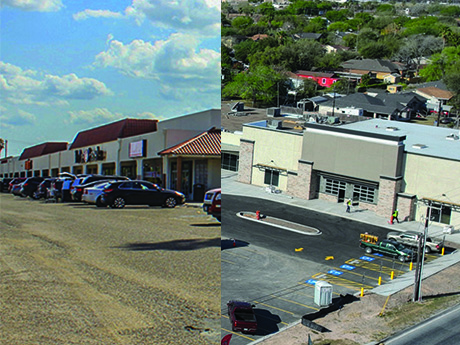
Owners might modernize older shopping centers at costs that are significantly lower than new construction. Better facades, lighting, signage, landscaping and parking can bring new life to tired centers while offering rents that value-oriented tenants can support.
The best redevelopment candidates — and perhaps the best shopping centers to own — are often the simplest: generic buildings with good visibility, convenient access, ample parking and the potential to be reinvented without being completely rebuilt. Retailers constantly expand, downsize and change formats. Flexibility matters.
Until rents catch up with development costs, renovating adaptable existing centers may offer a better path than building new ones. The winning properties will provide retailers with the flexibility to adapt to changing customer preferences at rents that allow them to thrive.
Kirk Cypel is the founder and managing director of Rouler Advisors and the chief development officer of CBG Real Estate. A real estate executive and attorney with more than 30 years of experience, his background includes the acquisition, financing, development, repositioning, leasing and management of retail and office properties.