

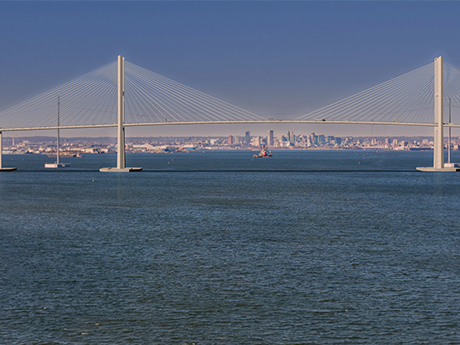
Baltimore’s industrial market entered the first quarter of 2026 in what some are describing as a correctional rather than a contractional phase, with CoStar Group recently characterizing the market as undergoing a “sharp correction” driven by rising vacancy, elevated supply and slower leasing activity.

Vacancy reports vary but the rate is hovering at approximately 9.7 percent as leasing teams worked to absorb approximately 3.2 million square feet of new deliveries over the past 12 months. Trailing absorption is negative at approximately 2.4 million square feet, reflecting a slowdown rather than a disappearance of demand, according to CoStar. New development pipelines remain active at 2.1 million square feet and new starts are moderating, signaling that developers are adjusting to conditions.
In recent years, a series of events in Baltimore City made headlines and positioned the region in the worst possible way, and “Charm City” remains misunderstood in the minds of outsiders through the lens of these news articles. But, earlier this year, a substantial influx of institutional capital turned heads when making a decisive bet on the greater metropolitan area.

A joint venture between Camber Real Estate Partners and PGIM Real Estate acquired a seven-building infill industrial portfolio at a 5.75 percent capitalization rate. In the aftermath of the disruptive and tragic Francis Scott Key Bridge collapse, that level of conviction is a key data point underpinning Baltimore’s strategic positioning as a logistics hub on the East Coast.
Baltimore County East
Within a broader reset, Baltimore County East has emerged as a focal point of continued demand, leading the region with approximately 660,000 square feet of positive absorption over the trailing 12 months while maintaining the largest share of market inventory (16.2 percent) and the most active construction pipeline (664,000 square feet), according to CoStar.
This concentration of activity demonstrates the submarket’s strategic advantages, including proximity to the Port of Baltimore, direct access to I-95 and I-695, access to nearly one-third of the U.S. population within a one-day truck drive and a robust labor force.
These factors have helped position Tradepoint Atlantic as a major East Coast logistics hub and played a significant role in the region attracting large-format users despite broader market headwinds.
Leasing activity in the first quarter confirms that demand has not disappeared but instead consolidated into modern bulk distribution facilities, with larger tenants driving absorption through selective commitments to high-quality, well-located assets. Examples from the first quarter include Mako Freight’s lease at 500 Hickory Drive (470,000 square feet) or Thuma’s lease at a 275,000-square-foot facility at 8416 Kelso Drive, owned by Starwood Capital Group.
Sub-100,000 SF market
An equally important and, at times, overlooked trend is the outperformance of sub-100,000-square-foot infill product, exhibiting materially lower vacancy and stable occupancy relative to the broader market, largely because this segment has seen significantly less new construction. On the demand side, these are spaces that smaller operators are drawn to.
The imbalance between limited small-bay supply and steady local user demand makes it an undersupplied segment maintaining stronger fundamentals even when larger spaces experience increased vacancy. Within the Baltimore-Washington region, one operator comes to mind: Lucern Capital Partners. Lucern’s entry into the market in December 2024 with the 60,000-square-foot, multi-tenanted Laurel Commerce Center is now posting zero availability.
Selective investment activity
From a capital markets perspective, industrial assets in Baltimore continue to attract meaningful investment despite softer leasing conditions. Transaction volume is holding near $1.1 billion and pricing is averaging approximately $142 per square foot, with cap rates around 7.7 percent, reflecting a more disciplined but still active investor base, according to CoStar.
Notably, the Camber-PGIM joint venture deal in January 2026 — a 745,270-square-foot infill industrial portfolio that traded for approximately $107 million — highlights continued institutional demand for stabilized infill assets. The portfolio traded at a 5.75 percent cap rate and was fully occupied at the time of sale. The sale showed confidence in occupied, functional and well-located assets.
More broadly, industrial sales activity has remained a relative bright spot within the commercial real estate sector, underscoring continued confidence even as leasing fundamentals normalize.
Scale and scarcity
Taken together, data suggests the Baltimore industrial market is no longer moving in unison but instead diverging into a barbell dynamic, where bulk logistics assets in premier submarkets like Baltimore County East and sub-100,000-square-foot infill properties are showing momentum and absorption while mid-sized commodity space and older inventory face greater leasing challenges. The underlying takeaway is that Baltimore’s industrial sector is not weakening but rather recalibrating around scale, location and scarcity, with demand becoming more selective, capital becoming more disciplined and performance increasingly tied to asset quality and positioning within the region’s evolving logistics network.
Over the next six months, business and building owners alike will be craving predictability. Commodity pricing and geopolitical concerns in today’s market aside, the Howard Street Tunnel and Key Bridge projects approaching nearer, we would anticipate that vacancy rates will peak and stabilize and that forward-leaning businesses continue to invest in the region for its locational, labor and strategically advantaged future.
— By Oliver Fryer and Bryan Herr, Vice Presidents, MacKenzie Commercial Real Estate Services. This article was originally published in the April 2026 issue of Southeast Real Estate Business.