

By Taylor Williams
Defined by Gemini as “the division of a system, structure or entity into two distinct branches or parts,” the term “bifurcation” is coming up more frequently in the context of industrial development in Texas — a sort of umbrella term for the process of establishing new subcategories of the property type.
The past seven or so years have constituted one of the most massive industrial building booms in modern history. Like matches and gasoline, Americans’ newfound obsession with e-commerce paired with unimaginably low interest rates for much of that time, sparking an all-out industrial development and leasing mania. Capital flowed into the sector with insatiable appetite, eventually forcing yield-chasers to devise new means of unlocking value within the space lest they cannibalize each other.
Of course, even before e-commerce irrevocably changed the way Americans shop and allowed industrial real estate to ascend as an institutionalized asset class, functional differences were recognized between manufacturing and distribution facilities, or between pure-play industrial and flex buildings. Investors understood the relative differences in how these subcategories of industrial product were built, operated and valued. And in terms of development, at the most basic level, the size of a building has always factored into the underwriting of construction costs.
But against the backdrop of the recent industrial development frenzy, building size became an equally important variable to consider on the revenue side of the ledger. From an investment standpoint, it’s a metric of evaluation unto itself, right up there with location, cash flow and tenant credit.
Rents no longer grow at frenetic paces across all types of product, unlike a few years ago when every industrial deal or project was seemingly a slam dunk. Today, delivering or buying an industrial building that is the wrong size for the needs of the market in question can have more dire consequences. But by that same logic, the notion that Texas industrial markets are currently oversupplied can be parsed or refuted by looking at delivery and absorption rates of buildings of different sizes. In other words, balanced pockets still exist.
Kyle Russell, managing director of development at Dallas-based Westmount Realty Capital, believes that this is a crucial perspective to keep in mind when assessing supply-demand dynamics.
“When we talk about oversupply, we have to be very clear about what size and category of buildings we’re talking about,” Russell says. “If designed properly, a mid-size, 300,000-square-foot building can offer more flexibility in lease-up, reach larger tenants and still be multi-tenanted several different ways. A 1 million-square-foot ‘bomber’ has far fewer lease-up options; there are only so many groups that can fill that kind of footprint.”
“Too often, we slice the data by market and submarket and stop there, but the more important cut is the tenant classes that a building can actually serve,” Russell continues. “It all gets lumped together as industrial, but you have to look under the hood of each building to see what the tenant possibilities really are.”
Russell applies the same line of thinking to different uses of buildings within the spectrum of industrial facilities.
“If you’re building a cold storage facility, and across the street is a tilt-wall dry box, there’s no competition there,” he says. “The tenants don’t cross or compete with each other, so it’s really important to caveat those product types.”
Cold storage development represents an emerging vertical of sorts for Westmount. Last summer, the firm purchased 25 acres in West Dallas in an off-market transaction for an 282,000-square-foot cold storage development that is now nearing commencement.
Hans Brindley, senior vice president and market officer for Prologis’ Houston portfolio, recognizes an efficient form of bifurcation in that market with regard to land. He says that the delineation — and developers’ ability to recognize it — has contributed to the overall health and evolution of that market.
“The Houston market has done a good job of bifurcating good sites from challenging ones, so there’s not really one area that’s being flooded [with new supply], especially if you start looking at size ranges,” Brindley says. “In the past you could almost pick one rate for the whole market. So we’ve seen some segmentation, and there’s been enough demand that landlords and developers with good sites haven’t had to panic on meeting their pro forma lease-up [expectations].”
Big Box Rebound?
Earlier this year, Prologis broke ground on a two-building, 229,227-square-foot project within its Port Crossing Commerce Center development in La Porte, an eastern suburb of Houston. While the size of that project speaks to the reality that leasing of large-scale buildings has slowed over the past couple years, Brindley says that trend is starting to reverse course.
“Most markets saw that pullback in bulk deals, but we’re starting to see it fill back in, and 2026 could be another year of 20 million-plus square feet of absorption with some larger users coming back,” he explains. “We just kicked off a 1 million-square-foot building because one hasn’t been delivered in two to three years, and at that time we had maybe eight available. We see that demand turning back on, and that’s given us the confidence to step out and get ahead of it.”
From the perspective of one industrial broker in Dallas-Fort Worth (DFW), it’s a case of extreme ends of the spectrum with regard to the building sizes that are currently fielding the most tenant demand — and big-box product is on the right side of the trend.
“Demand has been off the charts recently for buildings of 800,000 square feet and above and for buildings of about 35,000 square feet and below,” says Rick Medinis, principal at NAI Robert Lynn. “When you get above that 35,000-square-foot level, the market is softer, all the way to about 300,000 square feet. If you’re a tenant that needs 250,000 square feet right now, you’ll have dozens of options to choose from across all submarkets.”
That’s a fairly dramatic shift from 18 to 24 months ago, when by some estimates DFW had about a dozen buildings of approximately 1 million square feet sitting empty. Medinis says that the turnaround in demand for large-scale warehouse and distribution buildings began during the third quarter of last year and has carried through the first quarter of this year.
“A lot of 1 million-square-foot deals have recently materialized and closed within a couple months, though you’d think that those deal times would be much longer, drawn-out processes,” he says. “But these logistics companies showed up and signed leases very quickly. As we enter the next phase of the cycle, a lot of groups are racing to get ahead on building the next 1 million-square-footers.”
Most recently within this segment of the market, DSV Contract Logistics signed a lease to occupy the entirety of a 1 million-square-foot building within Northlake 35 Logistics Park. According to one broker who worked on the deal — Ward Richmond, vice chair at Colliers — the transaction reflected the efforts of third-party logistics providers to capitalize on recent growth in hyperscale data center development in North Texas. Specifically, Richmond said that these groups were “scaling rapidly to manage the complex flow of specialized equipment, materials, and mission-critical components.” (see page 8 for more information on this deal).
Examples of sub-35,000-square-foot deals that have closed in the metroplex within the last six months include:
• Elliott Electric Supply taking 23,000 square feet at McKinney Commerce Center
• Trinity Drywall’s lease for 13,000 square feet at Riverbend Business Park in Fort Worth
• Bag Supply Co.’s inking a deal for 18,000 square feet in East Fort Worth
• Aircool AC Parts committing to a 17,213-square-foot space in Carrollton
• The U.S. affiliate of South Korean automotive company Hanjung NC leasing 12,798 square feet at Westwood Business Park in Farmers Branch
• Brio Direct Marketing expanding and renewing its lease in Fort Worth
• C&S Electric Services taking 18,302 square feet in Plano
While any type of aggressive attempt to time the market is inherently risky, Russell of Westmount points out that developers courting large-scale users don’t have to worry about competition from owners of smaller product.
“Tenants don’t work down the size range; users that need a million square feet aren’t going to split the operation across five shallow-bay buildings if they can avoid it,” he explains. “That’s why smaller, sub-200,000-square-foot product can maintain robust demand; it’s not competing with big-box supply. And because those big deliveries move the needle harder on headline vacancy, the market can look soft, but knowing the effective vacancy any given tenant actually feels in its own size bracket is really where we concentrate.”
Parity Still Exists
While Brindley of Prologis recognizes the beginnings of an uptick in demand for big-box space in Houston, he also sees a fair amount of established parity in demand for existing buildings of different sizes. At least in Houston, the discrepancies between those that are full and those that are empty are a function of tenants’ individual business plans and willingness to wait.
“There’s rent growth in existing portfolios, and in each individual size range there’s only so many choices that if tenants get too picky, they could miss out,” he explains. “That could change in nine months with new deliveries, but at most size ranges right now, tenants have to decide if they want to be in older infill locations or take newer space that’s further out.”
Jeff Bryant, president of Ackerman Southwest, agrees that industrial dynamics vary considerably across the major markets in Texas. Ackerman is a full-service real estate firm headquartered in Atlanta with offices in San Antonio and Dallas.
“In DFW, absorption for small-bay industrial and bulk spaces was strong in 2025, while leasing activity for 100,000 to 300,000-square-foot buildings was much slower,” he says. “In Austin, shallow-bay vacancy has increased significantly in the last 24 months, with rapid delivery of new shallow-bay buildings. Bulk supply in Austin is much tighter, so we’re expecting to see an uptick in that development soon.”
“San Antonio has also experienced an increase in vacancy, but to less an extent than Austin,” Bryant continues. “In addition, bulk space in San Antonio is being absorbed mainly through user acquisitions that occurred recently. Availability of 1 million-square-foot buildings has tightened in DFW and Houston, so we’re expecting to see new development of these buildings begin soon.”
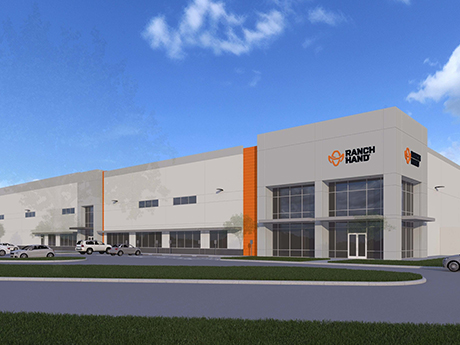
Ackerman & Co. is developing this 400,000-square-foot manufacturing and distribution facility in Seguin, located northeast of San Antonio, for Ranch Hand, a provider of automotive accessories such as grill guards, bumpers and running boards. The development covers
approximately a third of the 120-acre TriPoint Logistics Center.
Bryant adds that overall, markets have seen a strong increase in leasing activity since the start of 2026. In addition, there has been a visible uptick in manufacturing requirements of various sizes in both San Antonio and DFW, he says.
Regardless the market, the performance of large-scale buildings will inevitably hinge to some extent on Amazon’s real estate decisions. The Seattle-based e-commerce giant tends to keep its real estate moves very close to the vest and of course has ample capital to buy rather than lease. But as has always been the case in the age of e-commerce, industrial developers will be tracking Amazon’s activity as a quasi-barometer of demand for big-box product.
In addition, sources agree that even as some mid-sized buildings continue to sit empty, there’s really no major cause for concern. Especially in Texas, a reigning powerhouse of job and population growth, the expectation is that fundamentals will eventually prevail and that with enough time, most of the buildings in question will find occupants.
The exceptions would involve buildings with floating-rate debt for which rents were underwritten very aggressively, even by the standards of two to three years ago.
“The deals that got hurt were the ones under construction when rates started climbing, most of them on floating-rate debt,” says Russell. “The rate hikes effectively collapsed the lease-up runway the budget could absorb; interest carry started eating through reserves much faster than original pro formas assumed. Owners that were aggressive early on leasing or were conservative on underwriting rents were probably fine. The real pain landed on deals that were underwritten to continued rent growth and then sat vacant for a year or two — that’s where some groups felt the pain.”
Power Trip
No matter what size building a developer is planning or constructing, it’s a safe bet to assume that it will require more power capacity than a few years ago.
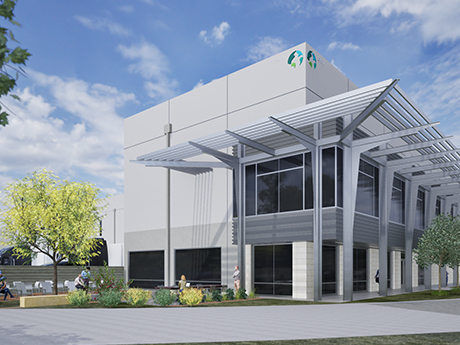
Enchanted Rock, a power generation and clean energy company, recently leased the entirety of this 407,302-square-foot building within Prologis’ 350-acre Legacy Point development in Cypress. The space will be an assembly, production and testing hub for the company’s natural gas generators at a time in which power requirements are major sticking points in leasing.
Some of the shifts in power requirements among industrial users are tied to manufacturing. Although pinpointing trends and statistics within that segment of the user base can be tricky, sources anecdotally agree that Texas is fielding a greater share of manufacturing deals today, even as political uncertainty around tariffs continues to swirl.
“If [the breakdown of deals] used to be 20 percent manufacturing, 80 percent distribution, now it’s more heavily weighted the other way,” says Bryant. “A lot of this additional power is to support manufacturing requirements, and power requirements are something everybody wants to know when acquiring land or a building, even with small-bay product.”
“We’re seeing a lot of manufacturing deals, and that requirement is a part of the equation more now than in the past,” adds Brindley. “So we have to have good relationships with [utility] providers and understand what the capacity is. And when tenants want more power sooner than we can get it, we have bridge power solutions.”
Data center groups bear considerable responsibility for outsized pressures and demands on electricity. Though it’s understood that due to the inordinate levels of capital backing those groups, they can easily outbid industrial owners on land, sources say that so far that trend has only materialized in select areas and to limited extents.
That is likely attributable to the fact that for e-commerce and logistics users, transportation costs tend to be harsher line items than real estate expenses. Those groups therefore have to be close to urban hubs, whereas data center operators can sprawl to suburban or rural sites and operate profitably without the human element and without factoring in the transportation element.
— This article originally appeared in the April 2026 issue of Texas Real Estate Business magazine.