

By Cliff Booth, founder & chairman, Westmount Realty Capital
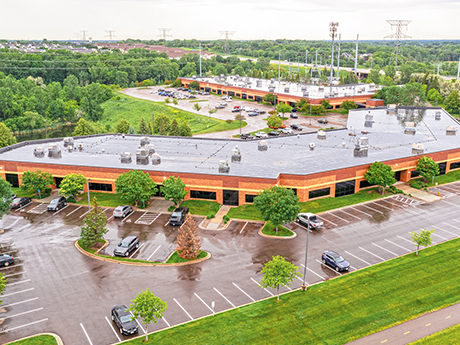
Shallow bay industrial, often defined as product with suites between 2,000 and 30,000 square feet, has proven to be a resilient and attractive commercial real estate investment for the past four decades.
Today, a combination of persistent tenant demand, flexible space configurations, favorable lease structures and limited new supply continues to drive investor interest in this subcategory of industrial product, including increased institutional capital flows. Shallow bay industrial remains a standout in commercial real estate portfolios — here’s why.

Consistent Tenant Demand, Diversification
Shallow bay industrial properties cater to a broad spectrum of users, ranging from local contractors and logistics providers to regional distributors and e-commerce firms. These tenants are drawn to highly functional suites that support frequent changes in business operations, from manufacturing to last-mile delivery. Research from JLL shows that over the past decade, the annual average leasing volume in the shallow bay category has been about 250 million square feet, evidencing stable demand through multiple economic cycles.
The multi-tenant structure of shallow bay buildings reduces single-tenant risk and enhances asset stability. A project might host five to 50 tenants, with no single occupant accounting for more than 10 percent of the rentable space. This diversified rent roll minimizes vacancy risk even during economic downturns, compared to single-tenant assets, which can sit empty for months if a tenant departs.
Empirical data from Cushman & Wakefield notes that in regions dominated by shallow bay assets, vacancy rates consistently trend lower than in large-format warehouse markets. Some submarkets, like Phoenix’s Northeast Valley, have reported shallow bay vacancy rates of just 6 percent compared to 16 percent for larger buildings.
Flexibility, Adaptability for Tenants
The hallmark of shallow bay suites is their flexibility; spaces are easily reconfigured for new uses like showrooms, labs, service depots or light assembly operations with modest tenant improvements.
Location is another critical advantage; most shallow bay assets sit close to urban cores, which now see the expanding need for last-mile logistics as e-commerce and urbanization drive greater delivery frequency. Tenants often cite reduced transit times and lower transportation costs as decisive factors over competing product types further from population centers.
This adaptability means that shallow bay assets typically outperform other property types when local demand shifts. Where office buildings may be limited by zoning or extensive build-out requirements, shallow bay industrial can accommodate new tenants with minimal disruption or downtime, supporting higher occupancy and cash flow continuity.
Triple Net Leases, Inflation Hedge
Operationally, shallow bay industrial leases are typically structured as triple nets (NNN), whereby tenants contractually reimburse owners for property taxes, insurance and common area maintenance. This pass-through mechanism allows investors to insulate net income against rising operating costs.
NNN structures prove particularly effective as inflation hedges. As expenses rise due to inflation, these costs are recouped from tenants, maintaining the property owner’s bottom line. In periods of elevated inflation, such as in recent years, shallow bay investors reported rent growth well ahead of headline consumer price index, with year-over-year rental increases of 6.5 percent in some shallow bay markets, compared to lower rent growth in the office and retail sectors. The contractual flow-through also reduces owner risk and exposure to unpredictable municipal appraisals or insurance rate hikes.
Supply Dynamics: Limited New Competition
Construction trends in the industrial sector overwhelmingly favor larger Class A warehouse projects, often with footprints exceeding 100,000 square feet and catering to credit tenants with national distribution needs. According to JLL, only 0.7 percent of new U.S. industrial development activity targets the shallow bay format, meaning a minimal amount of new supply is added to an existing inventory approaching 4.9 billion square feet.
This chronic undersupply supports robust rent growth and asset appreciation in established infill locations, where land constraints and zoning regulations hinder new shallow bay development. Deep-pocketed institutional investors increasingly pay premiums for well-located shallow bay assets due to supply scarcity and rising replacement costs.
Intermediate-Term Leases: Predictable Cash Flow, Upside
Typical lease terms in shallow bay industrial span three to seven years — longer than retail but shorter than traditional office or big box industrial.
This provides owners with predictable income streams while affording mark-to-market rent opportunities as leases expire more frequently. Rising rents in recent years show the value of this structure; owners can capture increases as tenants roll, rather than wait out longer lease periods typical in other asset types.
Multi-tenant layouts also help absorb turnover risk, smoothing cash flow when specific tenants vacate and mitigating the effect on overall property income. Strong historical renewal rates further support dependable revenue planning.
Lower CapEx, Tenant Improvement Costs
Compared to other major property types, shallow bay industrial generally requires far less capital expenditure (capex) per square foot.
The suites are utilitarian, often featuring simple mechanical systems, slab floors and standard office build-outs with minimal custom finishes. Tenant improvement allowances are correspondingly modest, especially when compared to highly customized office suites or Class A logistics warehouses that require specialized equipment and infrastructure.
Reduced capex means more investor dollars flow through to net operating income, often translating to higher cash-on-cash returns and lower risk for both private and institutional owners. These characteristics strengthen the shallow bay value proposition, particularly in cycles of unpredictable operating costs.
Growing Institutional Interest, Capital Inflows
Historically dominated by entrepreneurial owners and regional platforms, shallow bay industrial has recently attracted significant attention from institutional investors. Global allocators cite the sector’s stable performance, supply limitations and income durability as key drivers of capital flows.
According to Marcus & Millichap, investment demand for shallow bay industrial is “incredible,” with deal volumes climbing across Sun Belt and infill urban markets despite broader macro headwinds.
Premium pricing for core shallow bay assets has steadily increased, with values in some markets outpacing larger general warehouse categories by as much as 20 percent. Institutional buyers, including pension funds and REITs, continue to aggregate portfolios, seeking attractive yields and defensive characteristics as part of diversified industrial allocations.
The persistent income, flexibility and resilience of shallow bay industrial assets set them apart as the heartbeat of the U.S. industrial sector, offering superior performance versus other commercial real estate property types over the past 40 years. With growing institutional interest and plentiful market data showcasing premium rent growth, occupancy and values, shallow bay industrial makes a compelling investment in today’s landscape and looks set to remain a staple of high-performing CRE portfolios for the foreseeable future.