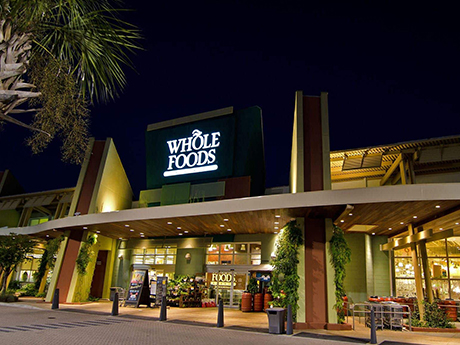
ST. PETERSBURG, FLA. — Whole Foods Market plans to open a new 40,100-square-foot store in St. Petersburg, marking the grocer’s entry to the Tampa Bay suburb. The developer of the freestanding store was not disclosed, but the Tampa Bay Times reported that the developer/landlord is a partnership between locally based J Square Developers and Atlanta-based SJC Ventures. Located at 201 38th Ave. N, the new store will feature more than 800 local products from more than 140 local suppliers. The store will include a full-service seafood counter; cheese station; meat counter; a craft beer department that will sell 180 craft beers, including 50 from local breweries; a hot food and salad bar; bakery; and a wellness and beauty section. Whole Foods plans to open its doors on Wednesday, Feb. 28.
Development
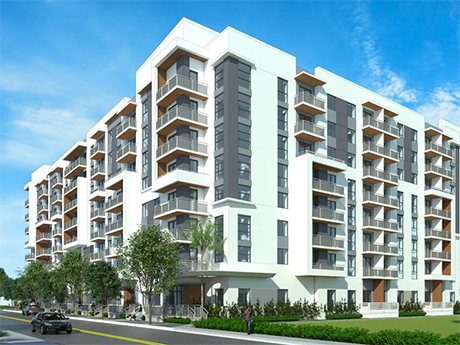
MIAMI — JLL has arranged $60.9 million in construction takeout refinancing for a new multifamily development underway in Miami’s Village of El Portal neighborhood. The eight-story, 282-unit property, called The Kavista, is set to open later this month. Melissa Rose, Michael DiCosimo and Maddy McMillen of JLL arranged the two-year, floating-rate loan through Varde Partners on behalf of the borrower and developer, Barrington Brothers. Located at 495 N.E. 83rd St. between Miami Shores and Little River, The Kavista will feature one-, two- and three-bedroom apartments, as well as a resort-style swimming pool and pool deck, a coworking lounge, theater, fitness center and electric vehicle (EV) charging stations. Monthly rental rates at The Kavista range from $2,100 to $4,200, according to Apartments.com.
TAUNTON, MASS. — Atlanta-based Portman Holdings will undertake a redevelopment project in Taunton, located south of Boston and east of Providence, that will convert the site of the former Silver City Galleria mall into a 1.1 million-square-foot industrial park. The mall closed in 2020 after nearly 30 years of operation. For the first phase of the project, Portman plans to demolish existing structures and construct a 248,435-square-foot-building with a clear height of 32 feet, 38 dock positions, two drive-in doors and parking for 270 cars and 29 trailers. On behalf of Portman, Jody Thornton, Brett Paulsrud, Ryan Parker and Ari Bogen of JLL arranged a $29 million construction loan through BMO Harris for the first phase of the redevelopment.
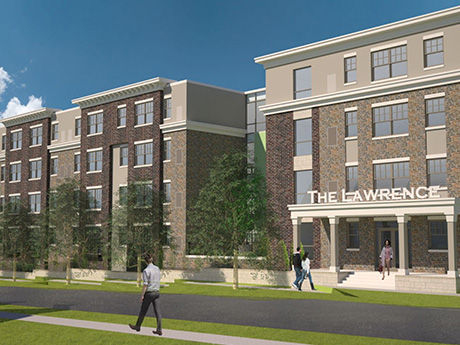
BUFFALO — San Francisco-based mortgage banking firm Gantry has arranged a $38.1 million construction loan for The Lawrence, a 132-unit multifamily project that will be located adjacent to the Niagara Medical Campus in Buffalo. Units will come in studio, one- and two-bedroom floor plans, and the project will include the construction of a 78-space parking garage. Daniel Monte of Gantry arranged the five-year, fixed-rate loan through an undisclosed regional bank. The borrower and developer, a private joint venture, also requested anonymity.
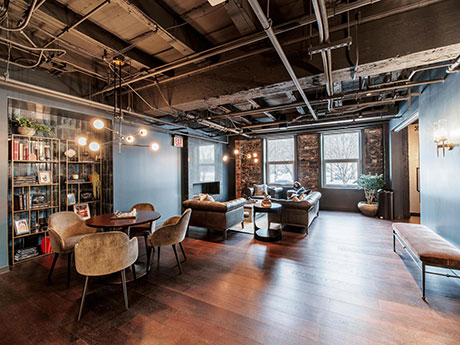
CHICAGO — Marquette Cos. has completed The Thompson at Fulton Market, a 210-unit apartment building located at 150 N. Ashland Ave. in Chicago’s Fulton Market district. The project transformed the former Mary Thompson Hospital into apartments. Named for Dr. Mary Thompson, Chicago’s first female doctor and the first woman known to have performed major surgery, The Thompson is comprised of a new 12-story building that is integrated with an original five-story building that was constructed in the 1920s as part of the hospital. Units range from 502 to 2,098 square feet, with monthly rents ranging from $2,155 to $5,350. In addition to the market-rate apartments, there are 32 affordable housing units. Amenities include The Collaboratory, a 24-hour coworking space; The Parlor, a social hub featuring a resident bar and lounge; a fitness center; and dog wash station. An outdoor courtyard features grill stations, seating and a covered terrace. The penthouse level includes an indoor lounge and a rooftop deck overlooking Union Park. Chicago-based artist Lefty Out There created several murals for the common areas. Marquette Management is the property manager, ParkFowler Plus served as the architect and Power Construction was the general contractor.
CHICAGO — McHugh Construction has completed the $30 million transformation of the historic Ramova Theatre in Chicago’s Bridgeport neighborhood. The long-shuttered, single-screen cinema is now an 1,800-person concert hall. The 36,000-square-foot project also included the build-out of a space for Other Half Brewing, an independent craft brewery and taproom; Ramova Grill, an 18-seat diner; and Ramova Loft, a second-floor, 200-person event venue. Ramova Theatre originally opened in 1929 and closed in 1985. After sitting dormant for nearly 40 years, the theater was added to the National Register of Historic Places in 2021. McHugh began the building’s restoration that same year. McHugh worked with O’Riley Office, Baum Revision and historic preservation specialists to restore the building’s architectural details with its original Spanish courtyard-style lobby and auditorium. Project funding came from investments from the local populace, tax-increment financing subsidies from the City of Chicago, a state grant and a Historic Places loan.
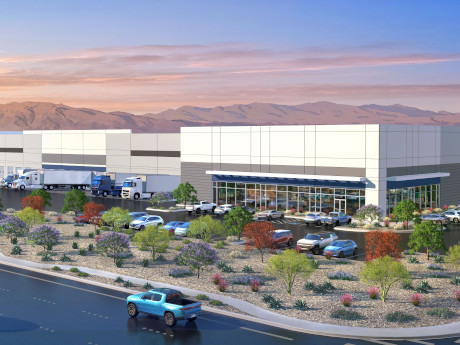
LAS VEGAS — Panattoni Development has broken ground on Oasis Commerce Center, an industrial development on South Rainbow Boulevard in Las Vegas. The project team includes Ware Malcomb, Westwood and Martin Harris Construction. Situated on 19.9 acres, the development will offer 422,000 square feet of Class A industrial space upon completion in fourth-quarter 2024. The cross-dock building will feature 36-foot clear heights and substantial trailer parking. CBRE’s Higgins/Toft/Zaher team is marketing the property for lease.
BEAR, DEL. — Locally based developer and general contractor Reybold Group is underway on vertical construction of a new, 16,893-square-foot retail center in Bear, about 10 miles south of Wilmington. The site is adjacent to the St. Andrews residential community. Upon completion, which is scheduled for later this year, the property will feature eight storefronts. One undisclosed tenant has signed a lease at the development.
NEW YORK CITY — JPMorgan Chase & Co. (NYSE: JPM) announced plans today to expand its brick-and-mortar footprint by adding 500 Chase bank branches over the next three years. The New York City-based institution also plans to renovate 1,700 existing bank locations across the United States. New branches will expand JPMorgan Chase’s footprint in existing markets like Boston; Washington, D.C.; Charlotte, N.C.; Philadelphia; and Minneapolis. The company will also enter several new markets, including low- to moderate-income rural communities that previously had little access to traditional banking service. The multi-billion-dollar expansion effort will also contribute to local economic growth through the addition of 3,500 new employees, including construction jobs and local hiring upon completion, according to the company. JPMorgan first announced expansion efforts in 2018 with a $20 billion economic growth effort that included the addition of 400 new Chase branches over the subsequent five years. Since that time, the company has added more than 650 new branches, including 400 locations in 25 new states. Brick-and-mortar expansion efforts by JPMorgan have marked a stark shift in strategy, as a number of rival banks have been closing branches over the past few years and shifting more toward digital banking efforts. This year, Chase …
By Adam Wolfson and Darryl Kasper of Wolfson Development Co. Against a backdrop of recently proposed (though unlikely to pass) legislation aimed at forcing large build-to-rent (BTR) and single-family-rental investors to shed units and convert them to for-sale housing, BTR fundamentals — and the investment case for the sector — remain strong as ever. While debatably well-intentioned, the legislation mistakes correlation for causation. The BTR sector is indeed benefitting from problems in the housing market. However, these problems pre-dated the industry and are more likely caused by factors such as inflation, high interest rates and limited supply. These forces are at play throughout the United States, but they are especially prevalent in the Southeast, where they align to create what could be the perfect storm for BTR rent growth. Inflation, Wage Growth Will Drive Rent Growth Inflation has run rampant since mid-2021 for a variety of reasons, including economic dislocation caused by the pandemic and the subsequent stimulus packages the U.S. government provided in response, as well as high gasoline prices and a supply chain crisis. According to U.S. Inflation Calculator, the annual inflation rate skyrocketed from 1.4 percent in 2020 to 7 percent in 2021, then fell slightly to …