Market Reports

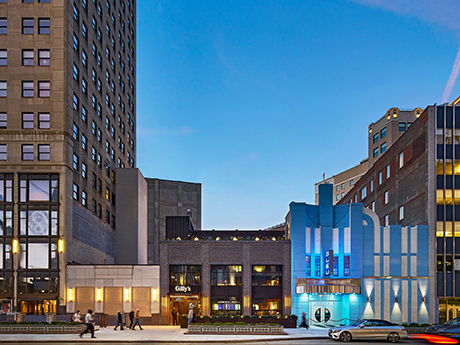
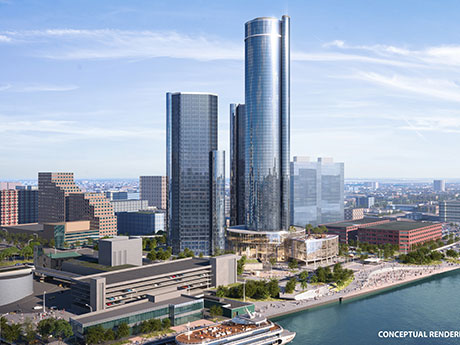
By Michael Poris, McIntosh Poris Architects Long defined by its industrial legacy, Detroit development currently combines ground-up construction with intelligent, innovative adaptive reuse. Brick-and-mortar manufacturing-era remnants include many buildings that originally served the automotive industry. As large-scale manufacturing relocated and Detroit’s population declined, several significant buildings were abandoned. Many are viable for second lives, ones that fulfill current commercial real estate market demands. Adaptive reuse makes sense I co-founded McIntosh Poris in 1994 to protect Detroit’s historic buildings from bulldozers and redesign them for a post-manufacturing economy. At that time, demolition was the most expedient option.  To address this, we focused as much on civic networking and preservation education as architectural design. Implementation involved organizing events with public officials and the local business community to meet leaders of other cities’ successful urban-renewal programs. To make Detroit more attractive to commercial real estate investment, we lobbied for zoning changes. Most relevant, commercial and historic districts were re-evaluated to permit mixed-use redevelopment. Historic preservation became viable, often making sense both financially and culturally. Well before sustainability became a commercial real estate consideration, we educated developers on available adaptive reuse incentives such as historic tax credits. Combined with the inherent efficiencies of reuse, …

FacebookTwitterLinkedinEmail

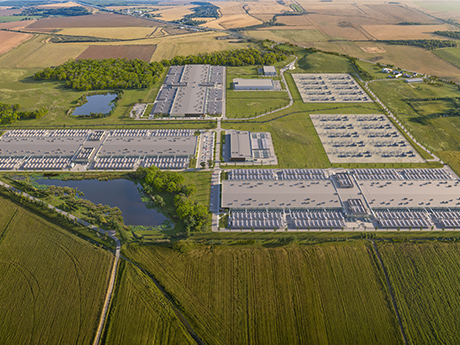
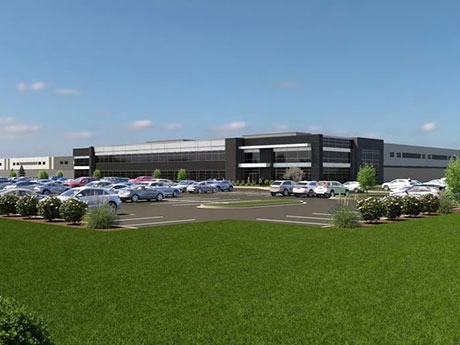
By Ryan Brittain, Colliers Speculative construction has always carried a certain boldness in industrial real estate. Building without a tenant can either signal visionary thinking or a bold bet on future demand.  In metro Detroit, that confidence was on full display during the post-COVID boom. To meet the surge in tenant demand, highly respected industrial developers raced to deliver modern distribution space across the region. At the height, preleasing was not always necessary but often occurred. Developers pushed forward on new Class A warehouses, confident that tenant requirements would catch up and, for a time, they did. Yet here we are in 2026, and speculative development is not an idea of the past. It is returning, this time with more discipline. This is not another Resurgit cineribus Detroit comeback story, but rather a thoughtful recalibration. The “Return of the Spec” reflects a market that has matured and learned, not one that has overheated. To understand it today, it helps to revisit how we arrived. As a wave of newly completed speculative projects delivered (at one point, the market saw 12 million square feet under construction), availability expanded. Shortly thereafter, the automotive industry hit an uncertain patch in late 2023. Vacancy …

FacebookTwitterLinkedinEmail

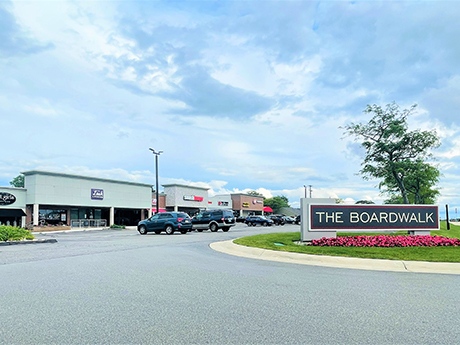
By Ashish Vakhariya, Marcus & Millichap Detroit’s retail market continues to show pockets of strength amid broader economic and retail sector headwinds. More affluent northern suburbs and the revitalizing urban core have demonstrated greater resilience, while limited construction activity should support the backfilling of existing space. Detroit’s position among the highest-yielding metros in the country will likely remain a key draw for investors, with capital focusing on well-located, necessity-based and service-oriented retail assets. Big-box downsizing and rising cost pressures create a cautious leasing environment: Detroit’s retail landscape recorded more than 1 million square feet of negative net absorption over the nine months that ended in March, with preliminary second-quarter figures indicating continued space relinquishment. Strained consumer demand and structurally challenged retail formats have contributed to a wave of bankruptcies and consolidations among major tenants, including Party City, Big Lots, Macy’s and Walgreens.  Trade policy uncertainty has further heightened tenant caution, as elevated input costs are expected to weigh on leasing activity. A recent Michigan Retailers Association survey found that more than 60 percent of businesses statewide rely on imported goods.  With consumers more price-sensitive, many retailers may struggle to pass on higher costs; however, tenants reliant on locally sourced inventory …

FacebookTwitterLinkedinEmail

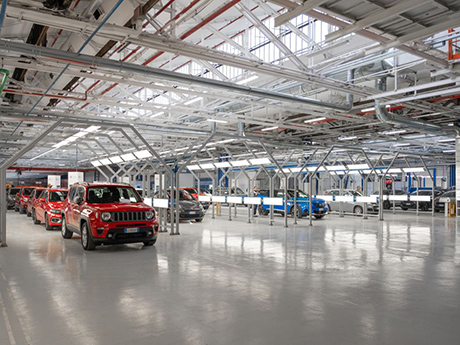
By Jason Capitani, L. Mason Capitani/CORFAC International The automotive industry and business as a whole have always operated in cycles. Looking back at 2009, when Southeast Michigan faced significant challenges, the region’s recovery in the years that followed shows how resilient the local economy can be. Yet, as we navigate today’s post-COVID landscape, some still hope for a more gradual and stable recovery. Though questions remain about whether Detroit should have seen a market correction years ago, or if electric vehicle programs have artificially propped up the economy, only time will tell. Michigan’s jobless rate hovers around 4 percent, lower than the national average of over 7 percent, marking the lowest level since before the pandemic. The state has added over 450,000 jobs since 2020. While the automotive sector remains dominant, other thriving industries include advanced manufacturing, defense, IT, medical devices, food processing and logistics. 2025 outlook: early weakness with potential for shift Demand for industrial space in late 2024 and early 2025 has been weaker, with net absorption at its lowest since 2021. This dip might signal a shift in the auto industry, with some speculating a return to hybrid or combustion engine production, though these decisions take time …

FacebookTwitterLinkedinEmail

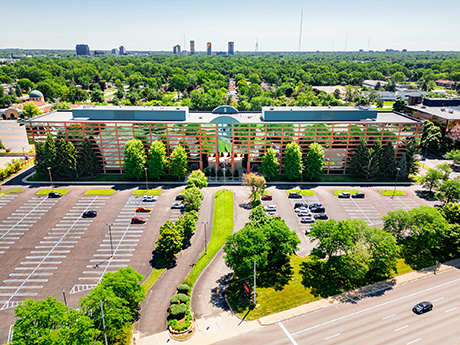
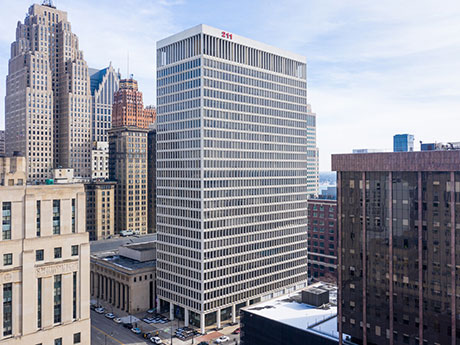
By Andy Gutman, Farbman Group Detroit’s office market, like many other large cities across the Midwest, has experienced many shifts — specifically in the office sector. Despite the challenges Detroit has seen over the past few years, the city has also shown great resilience. As companies continue to reconsider and revise their office needs, and workspaces evolve, Detroit is well positioned to capitalize on office occupancy in 2025 thanks to its historical assets, as well as opportunities in the city that are ripe for redevelopment. Tech, transportation and tenacity One of the city’s strengths in the office sector is its potential to rebound faster than many other Midwest cities. Unlike other markets that are overbuilt with more pain coming in the form of downsizing, such as Chicago, Detroit has avoided oversupply and isn’t overburdened with soaring vacancy rates. The city’s office market vacancy rate has slowly declined over the last several quarters — a positive sign for the local market. Detroit has also benefitted from steady and incremental growth, particularly by incubation, innovation and technology-focused tenants. It’s these types of tenants who have assisted in revitalizing the city’s urban core. The market is also characterized by a higher proportion of …

FacebookTwitterLinkedinEmail

By Andy Gutman, Farbman Group Until recently, the post-pandemic headlines and trend lines have been clear: the office market is struggling. Lower volumes and businesses closely evaluating their operational models and space needs in the wake of a COVID-altered world have prompted concerned conversations about what’s next for an evolving office sector.  Here’s the good news, however: the Detroit office landscape reflects a changing narrative around not only the commercial climate, but the entire city of Detroit.  To be clear, the office resurgence in Detroit has been modest, and is clearly still in its early stages. Whether you are entering a recession or starting a recovery, there is always a transitional period where sector activity is starting to change before the shift becomes impossible to deny.  Motown momentum While the understandable indecision and uncertainty of the last few years has led to some stagnation in the office space, many of the COVID-era lease expirations seem to have resolved and activity has been gradually, but steadily, picking up in the last six to 12 months. Decisions are being made and lease volume is trending up — but deals and leases are moving slower, are taking longer to get done and we …

FacebookTwitterLinkedinEmail

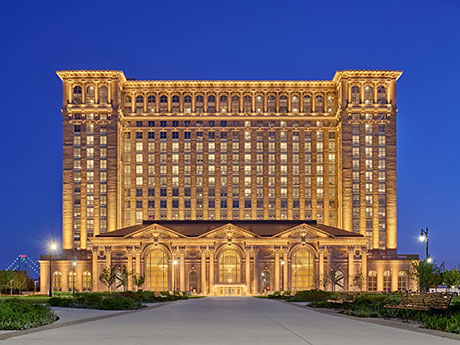
Metro Detroit’s retail market is characterized by strong tenant demand and investors’ eagerness to acquire and backfill vacant properties. In the downtown area, the revitalization efforts and adaptive reuse developments that started well before the pandemic continue. In fact, this year marked Detroit’s 100th commercial demolition, accelerated by $95 million in American Rescue Plan Act funding. Over the past five years, the City of Detroit has invested $1 billion in preserving or developing more than 4,600 affordable housing units. The hard work is paying off. Between July 2022 and July 2023, Detroit experienced population growth for the first time since 1957, according to the U.S. Census Bureau.  A major highlight this year was the reopening of the long-abandoned train station, Michigan Central Station. Ford Motor Co. redeveloped the property in the city’s Corktown neighborhood into a 30-acre technology and cultural hub. Until Aug. 31, the first floor will be open for “Summer at The Station,” where visitors can take self-guided tours and enjoy food and beverages outside. This fall, the first commercial spaces will begin opening to the public.  Meanwhile, developer Bedrock topped off construction of its Hudson’s project, the redevelopment of the former J.L. Hudson’s department store site. General …

FacebookTwitterLinkedinEmail

By Adam Ferguson, Bernard Financial Group If 2022 was a lesson in how rapidly things can change in commercial real estate, 2023 was an exercise in adaptation for both borrowers and lenders alike. Detroit is no stranger to change or adaptation.  From becoming the Motor City and growing into the country’s fourth-largest city during the first half of the 20th century to a renaissance in the 2010s after several decades of bumps and bruises, Detroit continues to add to its storied history. With billions of dollars of investment within the city limits and growing suburban sectors, Detroit’s multifamily market is making significant advancements by adding fresh developments to a market where 38 percent of multifamily inventory is over 50 years old.  While certainly not the only catalyst, low interest rates help to spur development. Lower cost of capital is especially impactful in markets like Detroit where building costs are high and rents are low compared with other major markets. Southeast Michigan averaged over 3,800 units of multifamily housing building permits issued per year over the past decade. Compare that to an average of 988 from the decade prior and one can discern the growth in demand for multifamily housing financing …

FacebookTwitterLinkedinEmail

By Drew Miller, CBRE Despite some level of macroeconomic uncertainty, the fundamentals of the industrial real estate market in West Michigan remain solid. While the overall number of tenants in the market has recently declined slightly, the demand for space from local companies and tenants new to the market is still outpacing supply.  Nationally, the overall industrial vacancy rate finished the second quarter of 2023 at 3.7 percent, 30 basis points higher than the previous quarter but 100 basis points lower than the 10-year average. Comparatively, the West Michigan industrial market, of approximately 170 million square feet, ended the second quarter with an availability rate of less than 3 percent. The combination of a diverse economy, robust infrastructure and a conservative approach to development all factor into the continued strength of the region.   Grand Rapids, the second-largest city in Michigan, and West Michigan at large are blessed with a well-balanced and diverse economy led by office furniture, automotive suppliers, aerospace, food processing, e-commerce and advanced manufacturing companies. The area is home to many of the leading office furniture and related design companies, including MillerKnoll, Haworth and Steelcase, all headquartered in West Michigan, with many of their manufacturing and suppliers …

FacebookTwitterLinkedinEmail

By Scott Nurski and Kevin O’Reilly, NAI Wisinski Great Lakes The Grand Rapids multifamily investment sales market has experienced reduced volume year-to-date, but the fundamentals remain strong. West Michigan, especially Grand Rapids, is affordable, with abundant high-paying employment opportunities and a high quality of life. In the words of author Malcolm Gladwell, “I love Grand Rapids. Why doesn’t everyone live in Grand Rapids?”  Unlike many major markets, the construction pipeline here is slow and steady, with little risk of oversupply. While multifamily sales volume is down across the board, Grand Rapids remains a desirable location for owners and operators alike.  Multifamily fundamentals Annualized rent growth continues to normalize from the wild parabolic rise seen nationwide due to the pandemic and associated market disruptions. It currently stands at 5.1 percent, according to third-quarter data from CoStar for Kent County (30 units and above). This figure is a solid uptick from the second-quarter 2023 figure of 3.2 percent. The market generally is returning to the 3 to 5 percent range typically seen during pre-pandemic norms.  Occupancy improved slightly from 95.2 percent in the second quarter of 2023 to 95.4 percent in the third quarter of 2023. However, it has been gradually declining …

FacebookTwitterLinkedinEmail
Newer Posts