
— By Jared Glover of Berkadia — While several Sun Belt and Rocky Mountain markets continue to work through challenging operations, elevated supply and weakening fundamentals, Reno has emerged as a bright spot in the West. The city posted 2.5 percent year-over-year employment growth, adding more jobs in 2025 than Las Vegas. This is a remarkable stat given that Reno’s population is roughly one-fifth the size of its Southern neighbor. At the same time, Reno’s population grew at roughly four times the national average as median household income climbed to just over $90,000 as the economy continued to diversify into technology, healthcare and manufacturing. In fact, Northern Nevada saw 14 site visits per month last year for potential corporate relocations, according to a recent report by the Economic Development Authority of Western Nevada (EDAWN). This places the region it in the top 1 percent of U.S. markets, reinforcing long-term growth expectations. Several major development projects look to keep this momentum going. The most significant is the $1 billion transformation of the Reno-Tahoe International Airport, which saw a record 4.9 million passengers in 2025. The University of Nevada, Reno, also continues to invest heavily in new buildings to attract and retain top …
Market Reports
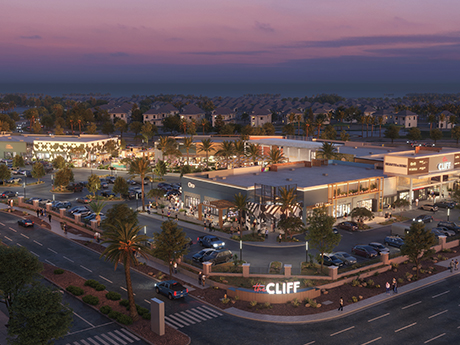
— By Shawn Smith and Sean Retzloff of Colliers — Northern Nevada retail has entered 2026 with a sense of forward motion, shaped by population growth, changing consumer spending habits and renewed interest from national retailers. Grocery-anchored centers continue to serve as reliable engines of demand, particularly in Sparks, where national chains and quick-service restaurants (QSR) are actively pursuing space. These QSR brands continue to be fueled by the post-pandemic preference for convenience and speed — and they find Northern Nevada’s demographic expansion particularly attractive. The lifestyle shift toward wellness is also redefining the tenant mix, with concepts like Planet Fitness building on momentum and gravitating toward suburban neighborhoods where resident demand for amenity-rich environments close to home is rising. This suburban pull is especially evident in Spanish Springs, South Reno and the North Valleys. Growth is moderate in these areas, which justifies new retail infrastructure with flexibility to accommodate retailers eager to enter maturing communities. Once considered fringe, these outer markets are now central to the region’s retail growth story. Shifting Economics of Retail Space The economics of securing space are evolving as demand grows outward. Lease rates are expected to rise modestly to the $2.25 to $2.50 per square foot …
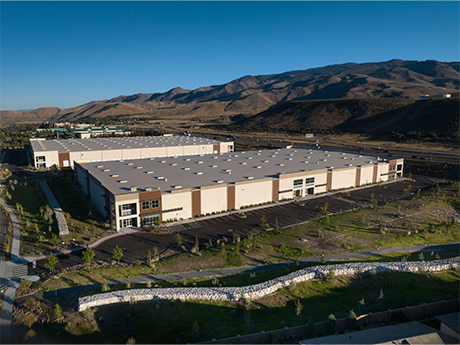
— By Joel Fountain of Dickson Commercial Group — After several years defined by rapid expansion and record development, Northern Nevada’s industrial market closed 2025 showing clear signs of stabilization. Vacancy leveled off, leasing momentum returned and capital markets activity began to pick back up. All told, these indicators point to a market that’s entering a more balanced phase. One of the most notable shifts has been the normalization of vacancy after an unprecedented wave of new supply. Direct vacancy hovered around 11 percent throughout 2025, suggesting the market has reached a temporary equilibrium between supply and demand. While elevated compared to the sub-3 percent vacancy levels seen during the pandemic-driven surge, continued positive absorption helped keep the market stable as it digested several million square feet of recently delivered product. In terms of region, submarket performance varied considerably. Central-West, Airport and South Reno tightened meaningfully during the year, with combined vacancy falling from 10.4 percent in late 2024 to 6.1 percent by the end of 2025. These areas benefited from limited new construction and steady demand from regional service users and smaller distribution tenants. Conversely, the North Valleys and the I-80 East corridor, which accounted for roughly 83 percent …
— By Rick Nelson of Mark IV Capital — The Northern Nevada industrial market continues to stabilize following several years of rapid expansion and then a recalibration driven by broader economic uncertainty. Current conditions have presented challenges, particularly in the logistics and distribution sectors where tariffs and shifting trade policies have created a more cautious investment climate. Fortunately, there are signs of resilience and forward momentum. The region’s vacancy rate stands at 11.7 percent, down from its peak in fourth-quarter 2024, per CBRE. The market also recorded its third consecutive quarter of positive net absorption, with 130,433 square feet absorbed that quarter, bringing the year-to-date total to 1.9 million square feet. Although current construction activity has moderated to 1.6 million square feet currently underway, the development pipeline remains robust, with an additional 15.8 million square feet in planning stages. This underscores sustained investor interest despite elevated vacancy and measured tenant activity. Advanced manufacturing and data centers are poised to be the vanguard of industrial development in the greater Reno area going forward. Cushman & Wakefield recently named Reno No. 5 among emerging data center markets worldwide in its 2025 Global Data Center Market Comparison Report. This recognition reflects the growing …
— By Ben Galles of CBRE — The Reno multifamily market started 2025 with a large supply of new Class A units that was delivered in the fourth quarter of last year. Despite some market challenges, leasing activity of the new supply has gone well, given the limited construction pipeline. There are currently fewer than 700 market-rate units under construction, with very few projects moving forward and starting construction. The constrained development pipeline will likely lead to a significant decrease in vacancy in the second half of 2026 and beyond. This should also start to push rental rates higher, which have been static or slightly down for most of the year, as many owners have offered rent concessions to lock in new tenants. While future market fundamentals are promising, many buyers remained on the sidelines because most deals have been presented at negative leverage. The average price per unit in 2025 (year to date) is down about 22 percent, while the price per square foot is down about 16 percent (year to date) from the previous year. This is due to a few things. First, there was an increase in the number of Class B and C assets that traded …
— By Sam Meredith of Colliers — After a slow and uncertain start to 2025, the retail market in Reno and Sparks is finally finding its stride. The first half of the year saw many tenants hit pause on leasing decisions as economic jitters made retailers cautious. By the third quarter, however, the mood had shifted. Leasing activity picked up noticeably, and tenants are now back in the market, actively looking for space. That momentum is expected to carry through the fourth quarter and into 2026, with healthy absorption on the horizon. This turnaround is backed by solid market indicators. Net absorption turned positive in the second quarter, while asking rents rose quarter over quarter. Vacancies nudged upward due to big-box closures, including three Big Lots and a Joann store early in the year, but the overall retail vacancy still sits at a manageable 5.4 percent. In fact, several submarkets, including North Valleys, Northwest Reno, South Reno and Southwest Reno, are reporting vacancy rates below 2 percent, showing strong demand in key areas. Retailers are clearly taking notice. Trader Joe’s, which once considered Northern Nevada a one-store market, has now opened two additional locations in Spanish Springs and South Reno. …
— By Liz Claire of Avison Young — The Las Vegas retail market continued its strong performance in fourth-quarter 2024. Vacancy rates declined to 5.3 percent, marking a 200-basis-point drop from the fourth quarter of 2020. Strong absorption rates and healthy rent increases highlight the market’s resilience, even as growth has moderated since its peak in first-quarter 2021. Vacancy Declines and Strong Absorption Las Vegas experienced a significant increase in positive retail space absorption in fourth-quarter 2024, following eight quarters of minimal movement, with a total of 619,000 square feet absorbed. This surge was primarily driven by major developments, including the completion of the 500,000-square-foot BLVD retail project, which saw strong pre-leasing activity from prominent tenants like Adidas, H&M, Lululemon and In-N-Out Burger. Sustained high demand lowered the vacancy rate by 40 basis points from the previous quarter, further solidifying Las Vegas as a leading retail market. Retail Rents and Growth Trends Market-wide retail asking rents averaged $35.20 per square foot, with rents outside the high-priced resort corridor averaging $29.08 per square foot. Year over year, rents increased by 5.8 percent, significantly outpacing the national average rent growth of 3 percent. This steady rent appreciation demonstrates continued demand for retail space in …
— By Charles Van Geel of Cushman & Wakefield — Despite broader economic headwinds, Southern Nevada’s commercial real estate market continues to showcase remarkable resilience – especially in the office sector. The demand for high-quality office space remains strong in the Southwest and Summerlin submarkets, underpinned by a flight to quality and shifting corporate priorities toward top-tier environments. The bulk of today’s office activity is concentrated along the critical Interstate 215 corridor, stretching from Green Valley to Summerlin parkways. This corridor has become the heartbeat of the region’s office market. However, within this high-demand stretch, the availability of true Class A product (particularly in the Southwest submarket) is diminishing. Small blocks of space are becoming increasingly rare, while sublease opportunities along this corridor are practically nonexistent. Adding pressure to this is the fact that new construction is largely stalled. Speculative development is not economically feasible with the current market dynamics. Lenders are unwilling to fund projects unless developers can demonstrate significant preleasing commitments, often north of 50 percent. This has been a challenge, as preleasing activity in the broader market remains minimal. Still, the area has received a few recent high-profile deliveries. These include Downtown Summerlin’s 1700 Pavilion, Phase II of …
— By Jerry Doty of Colliers — While several other Western markets started to slow down in late 2022 or early 2023, the Southern Nevada industrial market seemed to be relatively unscathed going into 2024. However, the impact was finally felt early in the first quarter of 2024. It lasted through the remainder of the year. Despite this noticeable decline in activity, most remained optimistic that it would be a quick slump. We were hoping 2025 would come out with guns blazing. These prognostications have so far proven to be incorrect. First-quarter 2025 felt very much like the past four quarters. This noticeable slowdown could not have come at a worse time. We are in the midst of a record wave of new completions that will continue to deliver through the third quarter. The Las Vegas industrial market delivered a little less than 16 million square feet of new inventory in 2024, bringing the total market up to 180 million square feet. The Valley is composed of eight different industrial submarkets, with the North being both the largest in total size (75 million square feet) and the largest amount of product under construction (almost 3.6 million square feet). At the …
— By Adam Schmitt of CBRE — The Las Vegas multifamily market is experiencing a significant transformation that’s shaped by new construction trends and evolving market dynamics. As the city continues to expand and adapt, it is essential for current investors, developers and capital allocators to understand the opportunities and barriers for growth. The multifamily market has seen substantial fluctuations since the onset of COVID-19. Rents surged by 24.6 percent in 2021, buoyed by government interventions. However, as these supports diminished, vacancy rates rose sharply, climbing from an average of 3.4 percent in 2021 to 7.35 percent in 2023. Recent trends, however, indicate a recovery. Vacancy rates have decreased to 6.5 percent as of February, which hint that multifamily fundamentals may be regaining stability and moving toward normalized averages. The single-family housing market is another critical element influencing the overall health of Las Vegas’ economy. The market produced 160,092 single-family homes between 2003 and 2008. However, only 142,455 were built between 2009 and 2024. This slowdown has led to soaring home prices, even amid rising mortgage rates approaching 7 percent. Consequently, the growing disparity between renting and owning has created favorable conditions for rental housing demand, further solidifying the multifamily …
Newer Posts