By Taylor Williams Defined by Gemini as “the division of a system, structure or entity into two distinct branches or parts,” the term “bifurcation” is coming up more frequently in the context of industrial development in Texas — a sort of umbrella term for the process of establishing new subcategories of the property type. The past seven or so years have constituted one of the most massive industrial building booms in modern history. Like matches and gasoline, Americans’ newfound obsession with e-commerce paired with unimaginably low interest rates for much of that time, sparking an all-out industrial development and leasing mania. Capital flowed into the sector with insatiable appetite, eventually forcing yield-chasers to devise new means of unlocking value within the space lest they cannibalize each other. Of course, even before e-commerce irrevocably changed the way Americans shop and allowed industrial real estate to ascend as an institutionalized asset class, functional differences were recognized between manufacturing and distribution facilities, or between pure-play industrial and flex buildings. Investors understood the relative differences in how these subcategories of industrial product were built, operated and valued. And in terms of development, at the most basic level, the size of a building has always …
Market Reports
By Jason Baker, principal at Baker Katz If you’re only following the national headlines, retail real estate can seem like it’s still defined by store closures and disruption. That’s still part of the story, but on the ground in Houston, the picture is more balanced. Fundamentals remain strong and occupancy remains high across the market. Even as new projects reach completion and new space comes on line, demand continues to keep pace. When space becomes available, it doesn’t sit for long — often with multiple deals competing for a single vacancy. What’s changing is what types of retailers are taking the space. That shift is just as important as the strength of the market. Service-oriented retail, in particular, is emerging as a stabilizing force in Houston. From Goods to Services According to recent data compiled by CoStar Group and analyzed by The Wall Street Journal, for the first time, service-oriented tenants now occupy more retail space nationally than traditional goods-based retailers. In Houston, that trend is clear in leasing activity. A significant share of the leasing activity today is driven by service categories such as health and wellness, medical, med spas, fitness, beauty and pet care. These are the tenants …
By Connor Watson, senior vice president, Partners Real Estate For years, the investment narrative around medical office as an asset class has been simple: stable demand, recession-resistant tenants and steady growth driven by the shift to outpatient care. That narrative is still true, but it’s incomplete. What’s shaping the next phase of healthcare real estate isn’t just demand. It’s a growing imbalance on the supply side. And in markets like Texas, that imbalance is becoming even more pronounced. Demand Isn’t the Story Anymore As a trend in healthcare real estate, outpatient migration is well understood at this point. Procedures continue to take place outside of traditional hospitals and within lower-cost settings like medical office buildings and ambulatory surgery centers. In Texas, that demand is amplified due to the following reasons: These economic and demographic trends have resulted in consistent tenant demand, high occupancy across most major markets and strong rates of retention from healthcare providers. But demand alone doesn’t create outsized opportunities; constraints do. The Real Shift: Supply Is Slowing Down New medical office development has quietly pulled back over the past several years. Not because demand isn’t there, but because the economics have changed. That shift is especially visible …
By Taylor Williams The American office market remains awash in change as both tenants and landlords continue to grapple with now-familiar quandaries, from devising ideal hybrid work schedules to rightsizing inventory to putting forth the best mix of amenities, all while negotiating down to the last nickel of rent and last day of term. There are no right or wrong answers to these dilemmas outside of what works best for a particular company or building. Aside from flight to quality, there are very few common denominators across the spectrum of office usage from the tenant perspective. And aside from certain “must have” amenities and features, from the landlord perspective, there is no one-size-fits-all formula for wooing tenants back into buildings. For Texas cities with growing populations and well-located, obsolete office buildings, there are rarely obvious, cost-effective options for revitalizing or converting those structures. And above all else, there’s not a lot of clarity on the future of office utilization as a whole. So in the meantime, all that tenants and landlords — and their brokers — can do is try to make the smartest deal possible based on the information they have today. “In today’s market, every deal has …
AUSTIN, TEXAS — By any objective, outside-looking-in metric, the Austin industrial market is currently overbuilt, but brokers who are on the inside looking out say that the narrative is more nuanced than the numbers suggest. According to CBRE’s fourth-quarter 2025 market report, the marketwide vacancy rate was 20.4 percent at the end of last year, which represented a 10.9 percent increase from the third quarter of 2025. Approximately 3.4 million square feet of new space was delivered in the fourth quarter as part of 9.5 million square feet of new construction that came on line year-to-date, per CBRE, while fourth-quarter net absorption was less than 500,000 square feet. Qualitatively, the report concluded that the year-end vacancy rate was “an all-time high,” while 2025 was “one of the busiest years for development in market history.” The Austin industrial market has traditionally differed from those of its sprawling Texas counterparts — Dallas-Fort Worth (DFW) and Houston — which have seen numerous massive projects built and absorbed over the past decade. Industrial deals and projects in the state capital have historically trended smaller, though that has changed somewhat in recent years as two tech giants — Tesla and Samsung — have planted massive …
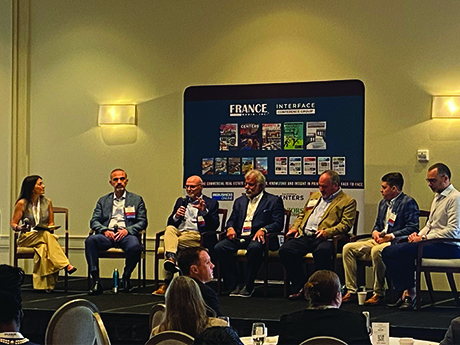
By Taylor Williams AUSTIN, TEXAS — A successful real estate strategy for both developers and operators looking to penetrate Austin’s airtight retail market must involve both a long-term growth plan and a site selection process that primarily targets suburban areas. Austin’s sizzling pace of population growth has slowed in the past year or two, but the state capital remains highly undersupplied in terms of housing. Land and other development costs have become frightfully expensive within the urban core, and like other Texas markets, Austin is emerging from a multifamily building boom within its urban core and first-ring suburbs. In addition, vacant, quality retail space within those areas of Austin is a rare commodity. Earlier this year, the Austin-American Statesman, citing data from Weitzman, reported that Austin had a marketwide retail vacancy rate of just 3 percent at the end of 2025. And according to a first-quarter 2025 report from Partners Real Estate, Austin’s retail occupancy rate has not dipped below 95 percent at any point in the past decade. Editor’s note: InterFace Conference Group, a division of France Media Inc., produces networking and educational conferences for commercial real estate executives. To sign up for email announcements about specific events, visit www.interfaceconferencegroup.com/subscribe. As such, …
By Taylor Williams The results of Texas Real Estate Business’ annual reader forecast survey are in, and they paint a somewhat surprising picture of an optimistic business outlook for the new year. Why surprising? Well, geopolitically speaking, 2026 has already picked up right where 2025 left off. The Trump administration’s capture of Venezuelan president Nicolas Maduro and his wife in early January touched off a fresh source of geopolitical angst. The administration then subsequently ratcheted up its preexisting talk about Greenland becoming part of the United States, including issuing a threat to impose more tariffs on European countries that opposed that plan. Editor’s note: In mid-November, Texas Real Estate Business sent email invitations to participate in the annual online survey to three separate groups — brokers; developers, owners and managers; and lenders and financial intermediaries. The survey was held open through mid-December. Invitations to participate were also included in the Texas Real Estate Business e-newsletter, as well as through ReBusinessOnline.com. The tariff threat has since been walked back, but it’s hardly an understatement to say that the first month of 2026 has been rocky in terms of geopolitics. And when that happens, it’s anyone’s guess as to just how rattled markets …
Editor’s note: (As of the publication of this article, Adam Gottschalk is no longer affiliated with STRIVE) By Taylor Williams The industry adage that “every deal is different” has never been an exaggeration or cop-out excuse for explaining trends and transactions — or lack thereof — in commercial real estate. It’s a simple fact that actually speaks to the nuanced, innovative and challenging structures and processes that permeate dealmaking in this business. The expression is especially applicable to investment sales and particularly convenient to invoke in times of rapidly shifting market and economic conditions. Therefore, a quasi-blanket statement that, all other factors behind held equal, Texas retail owners have minimal reason to sell right now must be evaluated in that context. As with any large sample size, there will always be multiple exceptions to the rule, and there will always be deals being brought to market as a function of an owner’s unique personal or capital situation(s). But by and large, outside of those scenarios, sources say that Texas retail owners don’t need to force things. “Unless there’s a life or a capital event — debt coming due or not wanting to add fresh equity to a deal — that …
By Taylor Williams “Economic development is the process of improving the economic well-being and quality of life for a community or nation through strategies like job creation, infrastructure development and advancements in education and health.” That’s the first sentence of the AI-driven overview that results from a simple Google search of the term “economic development.” And admittedly, that’s a very good start. Economic development is rooted in economics, a field that embodies the study of business, industry, jobs and wealth. The Google definition also pays tribute to the behind-the-scenes infrastructural work that is required to jumpstart and sustain most business endeavors, particularly regarding commercial real estate. And lastly, it covers what which may be the most important, end-all goal of economic development work: elevated quality of life for the people who live in, work at and patronize those commercial establishments. It’s that last part of the definition that appears to represent a growing niche and focal point within the spectrum of economic development work in Texas. Quality-of-life initiatives can be manifested in an array ofcommercial settings: housing, entertainment, food-and-beverage, hospitality. And as economic development professionals embrace many different roles — ambassadors of their communities, liaisons with developers and business owners, …
By Joshua Metzger, studio director, principal, Gensler The Emerging Trends in Real Estate 2026 publication jointly released by PwC and the Urban Land Institute (ULI) found that North Texas benefitted from more than 100 corporate headquarters relocations between 2018 and 2024, drawn by a business-friendly climate, robust infrastructure and a growing talent pool. The launch of the Texas Stock Exchange (TXSE), Nasdaq Texas and the reincorporation of the New York Stock Exchange’s regional office from Chicago to Dallas as NYSE Texas are further cementing the area’s status as a financial powerhouse. JPMorgan Chase, Citigroup, Charles Schwab and Fidelity are among the top employers in North Texas, while Wells Fargo recently opened a new $455 million campus in Las Colinas. All this momentum and more has made Y’all Street — the moniker used to contrast Texas’ growing market to Wall Street — the second-largest financial services market in the country, trailing only New York City. The sublease availability of office space in Dallas has dropped to 3.6 percent of total inventory, signaling strong demand and confidence in the market. The Dallas neighborhoods of Uptown and Turtle Creek are bracing for a surge in development, while suburban mixed-use projects continue to thrive. …
Newer Posts