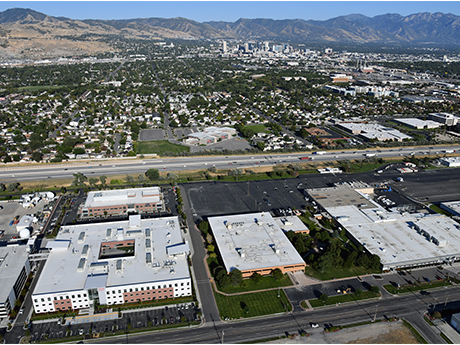
— By Walt Brown Jr. of Diversified Partners — Metro Phoenix continues to post strong retail market conditions, supported by expansion-ready corridors, dense and established trade areas, sustained population growth and retail sites positioned at major intersections with strong traffic counts. Even with shifting capital markets and more disciplined underwriting, retail remains one of the metro’s more consistent performers heading into 2026. A defining constraint today is the limited availability of well-located, credit-tenant triple-net product for sale. This is particularly true in “A” locations within “A” trade areas. That scarcity is keeping competition elevated for stabilized assets and reinforcing pricing for deals that offer clean income, durable tenancy and long-term visibility. At the same time, demand for credit-tenant, triple-net transactions remains strong across Arizona, with Metro Phoenix continuing to attract a meaningful share of that activity. A key driver has been capital migration and reinvestment from higher-cost Western markets, including owners selling assets in California and the Pacific Northwest and redeploying proceeds into Phoenix-area retail. For many buyers, the appeal is straightforward: growth, demographics and a business climate that supports continued tenant expansion. On the development side, the market remains supply constrained at the top end of quality. Across the …
Market Reports
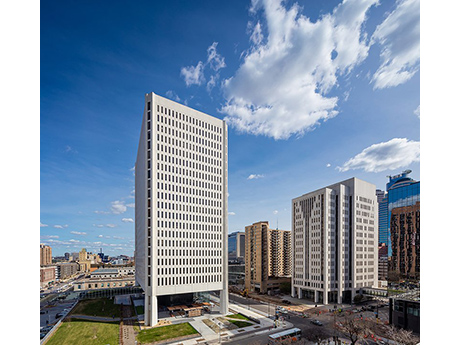
By David Steinbach, JLL As artificial intelligence (AI) acceleration, cloud expansion and high-performance computing reshape the digital economy, cities across the U.S. are reevaluating whether they can meaningfully compete for data center investment. St. Louis is increasingly part of that national conversation — and the reasons are structural, not speculative. With competitive power pricing, repurposable industrial infrastructure, developable land and a strengthening policy framework, the region is positioned to capture the next wave of large-scale digital infrastructure. This moment represents more than a real estate opportunity. It’s an inflection point that could redefine the region’s industrial future if public and private stakeholders act in alignment. Cost, infrastructure profile Data center site selection begins with power and connectivity, and St. Louis offers meaningful advantages on both. Missouri’s industrial electricity rates continue to trend below the national average, with the state at 7.69 cents per kilowatt-hour compared with the U.S. industrial average of 8.65 cents per kilowatt-hour, according to the latest EIA data. This is a significant differentiator for large-scale campuses with substantial, long-duration energy needs. The region’s legacy industrial and former generation sites also come with high capacity transmission infrastructure that can be repurposed, reducing both development timelines and the cost …
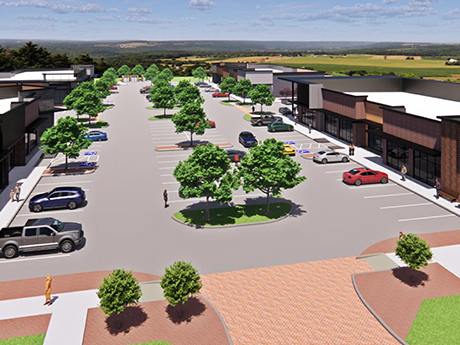
By Taylor Williams The results of Texas Real Estate Business’ annual reader forecast survey are in, and they paint a somewhat surprising picture of an optimistic business outlook for the new year. Why surprising? Well, geopolitically speaking, 2026 has already picked up right where 2025 left off. The Trump administration’s capture of Venezuelan president Nicolas Maduro and his wife in early January touched off a fresh source of geopolitical angst. The administration then subsequently ratcheted up its preexisting talk about Greenland becoming part of the United States, including issuing a threat to impose more tariffs on European countries that opposed that plan. Editor’s note: In mid-November, Texas Real Estate Business sent email invitations to participate in the annual online survey to three separate groups — brokers; developers, owners and managers; and lenders and financial intermediaries. The survey was held open through mid-December. Invitations to participate were also included in the Texas Real Estate Business e-newsletter, as well as through ReBusinessOnline.com. The tariff threat has since been walked back, but it’s hardly an understatement to say that the first month of 2026 has been rocky in terms of geopolitics. And when that happens, it’s anyone’s guess as to just how rattled markets …
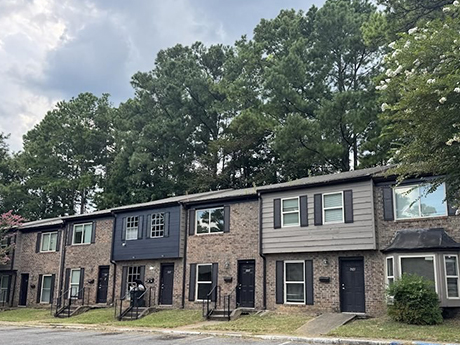
After nearly three years of wrestling with oversupply, Raleigh-Durham’s multifamily market stands at an inflection point that informed investors have been quietly anticipating. The numbers tell a compelling story: construction starts plummeted from around 15,000 units in 2022 to roughly 2,000 in 2024, a staggering 86 percent decline that’s creating the supply drought the market desperately needed. The timing couldn’t be more critical. With an 18-month construction timeline followed by 12 to 16 months of lease-up process, the wave of deliveries from those record 2022 starts peaked in early-to-mid-2025. What comes next is perhaps the most interesting chapter in the Triangle’s multifamily story since our record rent jumps of 2021. Mathematics of recovery The construction cycle’s predictable timeline creates a unique visibility into market dynamics that astute capital allocators are already pricing in. The minimal 2024 starts are translating directly into minimal deliveries stretching from late 2025 through 2028 and beyond, which is essentially a three-year window of supply constraint that stands in stark contrast to the flood of new inventory and increased concessions that plagued 2023 to 2025. Meanwhile, demand fundamentals remain exceptionally strong. Gross absorption hit approximately 11,000 units in 2024 and is tracking toward another 10,000 (estimated) …
Port Authorities Advance the Southeast’s Industrial Sector With Infrastructural Investments
by John Nelson
In 2022, the Port of New Orleans (Port NOLA) announced the Louisiana International Terminal (LIT), a new $1.8 billion container terminal coming to Violet, a small city about 10 miles downriver (or south) from New Orleans in St. Bernard Parish. The project is a public-private partnership between Port NOLA and two private maritime industry leaders, Ports America and Terminal Investment Ltd., and is being funded with private capital and public funding from the State of Louisiana and federal sources. The U.S. Army Corps. of Engineers is managing LIT’s environmental review and permitting process, after which the public-private partnership will begin construction. Set for completion in 2028, the ambitious project is expected to generate 18,000 new jobs by 2050 and handle 2 million TEUs (twenty-foot equivalent units) of cargo traffic annually. “I consider it the most important project in the entire region,” says Andrew Marcus, founder of local commercial real estate services firm Agile Coast. “From an economic development perspective and from a quality-of-life perspective, it is the single-most important project for our region, period. The LIT is going to be the beachhead for getting modernized containerized cargo ships to come in, and we have the ability to have several terminals …
— By Karl Abert and Bret Zinn of Kidder Mathews — The Phoenix multifamily market is still digesting the effects of an unprecedented development cycle, while beginning to show early signs of stabilization. Although near-term operating fundamentals remain challenged, several forward-looking indicators suggest the market is gradually moving toward equilibrium as it enters 2026. Vacancy increased to 12.6 percent in the fourth quarter, up 80 basis points year over year, according to Kidder Mathews research. This reflects the cumulative impact of elevated construction deliveries over the past several years. Average asking rents declined 3 percent year over year to $1,529 per unit, underscoring the competitive leasing environment owners continue to face. These trends confirm that Phoenix remains in a tenant-favorable phase of the cycle, particularly in submarkets that experienced outsized levels of new supply. Encouragingly, the development pipeline is contracting meaningfully. Units under construction declined nearly 30 percent year over year, while last year’s deliveries fell sharply compared to 2024. This slowdown represents a critical inflection point for the market. As new supply tapers, demand will have greater opportunity to absorb existing inventory, setting the stage for gradual improvement in occupancy and rent growth. While net absorption remained positive in …
By Doug Stockman, Helix Architecture + Design Straddling two states, Kansas City is one of the country’s most distinctive real estate markets. Since 1992, our firm has designed workplace, cultural, higher education and multifamily projects of all types in the city, with specialized expertise in adaptive reuse. We see multifamily as the most active segment in 2026. Compared with other states, Missouri’s support for new housing projects is about average. Kansas is near the bottom, because the state lacks the revenue to incentivize housing. Inventory on the Kansas side is also less, with most multifamily housing located outside the city. Looking ahead, low-income housing tax credit (LIHTC) incentives will ideally accelerate Kansas City’s biggest market demand — affordable housing. The Kansas City Affordable Housing Set-Aside Ordinance presents some obstacles. To receive city subsidies, multifamily developments must have 12 or more units, 20 percent of which need to be affordable for households earning 60 percent or less of the area median income (AMI). Alternately, developers can pay $100,000 into the city’s Affordable Housing Trust Fund. Further, developers must navigate a complex process of zoning approvals and community engagement meetings that culminates with a city council hearing. If approved, developers on the Missouri …
Raleigh-Durham’s Multifamily Market Is Normalizing Following Several Quarters of Softness
by John Nelson
The Raleigh-Durham region continues to be one of the premier pockets of growth in the Southeast, thanks to robust employment opportunities and a steady pipeline of renters graduating from area schools including Duke University, University of North Carolina-Chapel Hill and North Carolina State University. Multifamily developers have been more than eager to help satiate the demand for housing in the area in recent years. According to Yardi Matrix, the Raleigh-Durham region had nearly 14,500 apartments deliver in 2024. The research platform also reported that approximately 8,600 more units came on line in the first three quarters of 2025, which represents a 4.2 percent growth rate compared to the market’s existing inventory. Like many of its peer markets in the Sun Belt, the Raleigh-Durham region is working its way through the excess supply, which is extending the lease-up period for newer properties. “For projects delivered in late 2023 into early 2024, absorption has slowed compared to historical norms,” says Lisa Narducci-Nix, director of business and property development at Drucker + Falk. Southeast Real Estate Business recently caught up with Narducci-Nix to discuss the health of the Raleigh-Durham apartment market, as well as larger operational trends. The following is an edited interview: …
— By Sean Spellman of JLL — While Metro Phoenix’s best-of-the-best office submarkets are thriving, overall fundamentals are being shaped by our supply story. That narrative is one where new construction is metered and speculative development is expensive. The result is a lack of new inventory that could limit corporate location decisions, especially from tenants comparing top-tier availability across multiple markets. Today’s Metro Phoenix demand is definitively concentrated at the high end of the product spectrum. Downtown Tempe uniquely reflects this trend. During the pandemic — and on the heels of a flood of new office construction — this typically single-digit-vacancy office market skyrocketed to 30 percent vacancy. Fortunately for downtown Tempe, those new office deliveries were dominated by amenity-rich, Class A product. In the years since, a flight to quality has eased downtown Tempe’s office market vacancy back into the 5 percent range. Developments like Hayden Ferry Lakeside have absorbed almost all of the occupancy lost during the pandemic, and prospective tenants are actively competing for what Class A space remains. The highly amenitized Grove in the Camelback Corridor has enjoyed similar success. Along with the office space at Goodyear Civic Square, it’s one of the last speculative Class …
By Graham Smith, Multistudio A national shift is underway, and it starts with how cities listen. Across the country, communities and development teams are rethinking how reinvestment happens in legacy neighborhoods shaped by deep cultural identity but burdened by decades of underinvestment. These districts often hold irreplaceable history, yet for years they were sidelined by capital markets that prioritized scale, speed and uniformity over context and continuity. Historically, redevelopment in these areas followed a familiar pattern: projects designed first and explained later. Too often, that sequence displaced cultural institutions, local businesses and social networks that gave neighborhoods their meaning. Today, rising expectations around equitable development and renewed interest in urban cores are forcing a different calculus. Community engagement is no longer a step at the end of a project. It is a strategic input that shapes outcomes, reduces risk and strengthens long-term value. Intentional reinvestment Kansas City offers a timely example of how intentional process can align with market opportunity. After years of downtown population growth, expanded transit infrastructure and rising global visibility ahead of the 2026 FIFA World Cup, long deferred reinvestment became feasible. Local leaders recognized that this momentum created an opportunity to reinvest in the historic 18th …