

— By Hillary Steinberg of Avison Young — The Las Vegas retail market delivered a mixed but resilient performance in 2025, with vacancy remaining tight and demand holding steady. Vacancy closed the year at 5.6 percent with nearly 5.6 million square feet of available space. While these fundamentals reflect a healthy market, rent growth softened, increasing by just 2.4 percent year over year. At the same time, development activity remains robust, with roughly 880,000 square feet of retail space currently under construction. New projects continue to emphasize mixed-use and experiential concepts, positioning the market to capture sidelined capital and evolving consumer demand in the year ahead. Vacancy held steady at 5.6 percent in fourth-quarter 2025, supported by sustained population growth, a continued rebound in tourism and stable consumer spending. This momentum is being reinforced by Las Vegas’ economic diversification, which continues to fuel expansion across food, wellness and entertainment retail segments. Although rent growth has moderated from its 2022 peak, leasing fundamentals remain strong. Limited availability continues to favor landlords, who are maintaining pricing power and offering minimal concessions. However, rising construction and tenant improvement costs are placing upward pressure on deal economics. With inventory across Las Vegas, North Las …
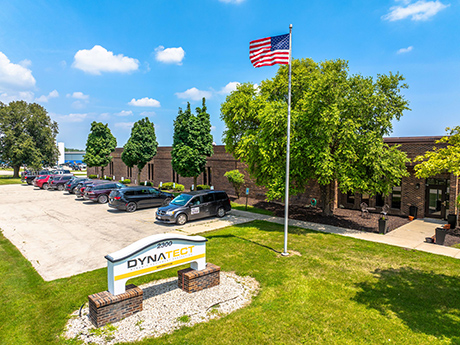
By Jim Larkin, Kyle Fink and Dylan Brown, Colliers After several years of outsized growth, southeastern Wisconsin’s industrial market entered a more balanced phase to begin 2026. While headline metrics such as vacancy and absorption have shifted from their pandemic-era peaks, the underlying fundamentals remain intact. Based on what we are experiencing across active deals and client conversations, this is less of a slowdown and more of a recalibration, one that ultimately supports long-term stability across the region. After many years on an unprecedented pace, the market is settling down into a more disciplined environment where decisions are more thoughtful, and fundamentals are driving activity again. From our perspective, that’s a positive shift that positions southeastern Wisconsin for long-term stability. Year-end 2025 data points to a market that is adjusting, not retreating. Vacancy rates increased modestly, rising to approximately 7.8 percent across southeastern Wisconsin. At first glance, that shift may appear significant given how tight conditions had become. This shift is largely driven by new big box supply entering the market rather than weakening demand. With more than 3 million square feet delivered in 2025 — most started during peak market conditions — an increase in vacancy is a natural …
Twenty-two apartment properties traded in metro Atlanta during the first quarter of 2026 for just over $1 billion, nearly double the $528 million that traded across 15 deals in first-quarter 2025. Our team’s current offerings are seeing tour volume of 30 to 40 prospects, which is up 20 percent from a couple years ago. We are also seeing 20 or more offers per property, and the quality of buyer has greatly improved — capital has stopped waiting for clarity and started competing for product. Liquidity rebounded in the Atlanta apartment market in 2025, and the supply-demand setup heading into 2027 is the reason institutional and private capital is moving now rather than later. Let’s start with the rebound. Across 2025, transaction count rose 31 percent, total dollar volume increased 18 percent and average cap rates tightened roughly 16 basis points. Buyers paid up for better-located, higher-quality assets and stayed disciplined on legacy unit-count metrics. The bid-ask gap that froze 2023 and most of 2024 finally closed, but on terms that rewarded specificity rather than just appetite. Sellers, for their part, have moved into a more pragmatic posture. A meaningful share of 2026 activity reflects fund-life timing decisions — sponsors that …
— By Justin Neubeck of CBRE — Las Vegas is approaching an important turning point in its multifamily cycle. After several years of elevated construction, the market is now moving beyond its peak delivery period. The region completed about 7,071 units in 2023 — the highest total in more than 20 years. This was followed by 5,247 units in 2024 and 6,302 units in 2025. Deliveries are expected to decline again in 2026, to roughly 5,334 units. Meanwhile, 2027 deliveries areprojected to return to the 30-year average of about 3,500 units, including the 3,321 units currently scheduled. This shift marks the beginning of a more balanced supply environment. At the same time, the region continues to attract new residents at levels that outpace the national average. Clark County reached a population of about 2.4 million in 2024, an increase of 2.1 percent from 2023. It is projected to grow to more than 2.9 million by 2040, and to surpass 3 million by 2045. Southern Nevada also welcomed more than 40,000 new residents in 2025 alone. Nearly 47 percent came from California. This included 14,200 from Los Angeles County and thousands more from Orange County, San Diego and the Bay Area. …
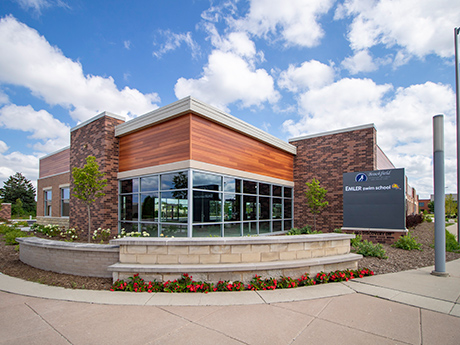
By Brian Vanevenhoven and Joseph Ziolkowski, Newmark The metro Milwaukee retail market remains strong, supported by historically low vacancy rates. Elevated construction costs — and the resulting pressure on rents — continue to limit new construction, keeping inventory low and occupancy high. The western suburbs have the lowest vacancies in the region and are seeing robust demand for available space. While the urban core continues to face challenges, the Historic Third Ward remains a bright spot, benefiting from favorable demographics and a cultivated consumer base driving strong retail sales. Recent data underscores this trend. While Milwaukee County saw modest population growth in 2025, surrounding suburban counties are expanding at a faster pace, according to CoStar Group. Waukesha County alone has added more than 10,000 residents since 2020, according to the U.S. Census Bureau. This outward migration — driven by affordability, schools and lifestyle preferences — is creating new pockets of retail demand across the metro area. Drivers of growth Several factors are fueling suburban retail expansion. The continued strength of experiential retail, particularly in the fitness and wellness sector, is the most notable driver. Concepts such as Crunch Fitness and Planet Fitness have been among the most active tenants, …
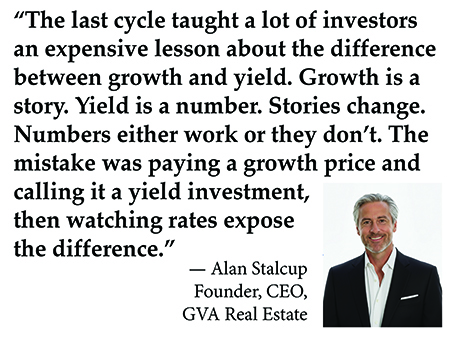
By Alan Stalcup, founder, CEO, GVA Real Estate Austin’s apartment inventory grew 33 percent from 2020 to 2025, according to data from Marcus & Millichap — the fastest rate in the country. In addition, data from CoStar Group and the U.S. Census Bureau show that vacancy is sitting at 14 percent, roughly double the national average. That’s what happens when every investor in America chases the same story at the same time. Austin isn’t a bad market. It’s a great city. But the math doesn’t work right now. When vacancy is 14 percent and new supply keeps getting added, buyers aren’t buying yield; they’re buying a prayer. The opportunities in Texas didn’t disappear; they moved. And they moved to places most investors aren’t looking. The Places Nobody’s Watching The Rio Grande Valley has between 1.4 and 1.5 million people, according to Census data. That’s not a small market. It’s a large, underfollowed one. McAllen, Harlingen, Brownsville — these cities have real population bases, stable renter demand and almost no institutional competition. Rents sit around $700 per month. GVA has been pushing $240 increases — roughly 30 percent — with light improvements. Not gut renovations or repositionings of assets, just new …
Atlanta’s office market has begun a new phase of stabilization, recovery and momentum. Following years of workplace adjustments brought on by the pandemic, real-time market data now points to a steady and sustained comeback. Companies are expanding their office footprints and establishing return-to-office (RTO) policies that are bringing employees back together. Whether you are a local resident noticing busier morning commutes or a business owner curious about the local economy, current real estate trends offer a fascinating look at where Atlanta is heading. Statewide momentum Georgia continues to prove its status as a top destination for business recruitment and organic growth. Atlanta acts as the central engine, supported by a highly skilled workforce and a welcoming business climate, which supports the health of the local office market. Recent high-profile corporate announcements highlight this momentum. For example, healthcare technology company Glytec recently announced plans to relocate its global headquarters to the Northwest Atlanta submarket. This major move will bring 500 new jobs to the metro area. Other significant commitments include UCB’s massive investment to establish its first United States manufacturing facility and Yamaha Motor Co.’s decision to relocate its national headquarters to Atlanta, not to mention Rivian’s ongoing growth in the …
— By Alma Cuevas and Jason Griffis of Cushman & Wakefield — The Las Vegas industrial market continues to evolve, shaped by new development and sustained demand. While vacancy has increased due to recent deliveries, the market tells a more nuanced story, particularly within smaller space requirements. Leasing activity in first-quarter 2026 totaled just under 3 million square feet, with an average deal size of about 21,000 square feet. Notably, about 95 percent of all leases occurred in spaces of less than 50,000 square feet. This concentration of activity underscores the continued depth of demand within the small and mid-bay segment. At the same time, the increase in vacancy is largely attributable to new construction, much of which has been concentrated in bulk distribution product. Continued development and expansion from groups like Prologis, OMP, EBS and Panattoni have added significant Class A institutional inventory to the market. While these projects enhance Las Vegas’ long-term positioning as a regional distribution hub, they have also expanded availability in spaces exceeding 100,000 square feet. This dynamic is effectively dividing the market into two distinct segments. Larger users are benefiting from increased optionality, more aggressive concessions and greater flexibility in lease negotiations. Smaller users, …
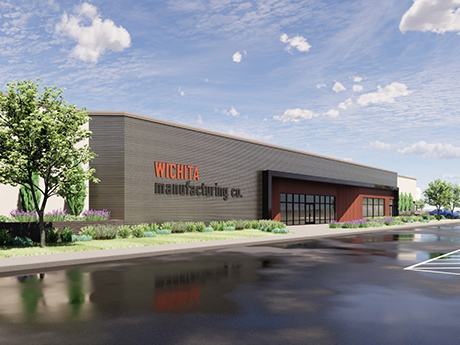
By Grant Glasgow, SIOR, NAI Martens The industrial real estate market across the Wichita metropolitan statistical area (MSA) closed out 2025 with stable fundamentals, a healthy pipeline of projects and strong demand for large-format logistics and manufacturing space. Despite a modest increase in overall vacancy, the market continues to reflect the region’s strategic position as a logistics and manufacturing hub with lasting appeal to both regional users and national firms. Metrics point to equilibrium As of the fourth quarter of 2025, Wichita’s multi-tenant industrial inventory totaled approximately 43.6 million square feet across more than 1,300 buildings. The overall vacancy rate stood at 9 percent, a tick higher than the mid-year figure. While this figure might suggest slack in the market, it is important to note that the rise in vacancy is primarily due to smaller-bay space turning over and the inclusion of buildings actively being marketed but not yet move-in ready, such as the Wichita Business Park redevelopment at the former Towne West Square Mall. For context, the vacancy rate for larger industrial buildings — those over 100,000 square feet — was just 2.8 percent, highlighting a persistent shortage of modern bulk space. Asking rents averaged $6.07 per square foot …
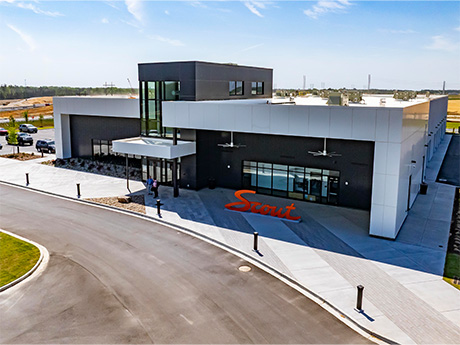
Columbia’s industrial market is evolving into a competitive contender in the Southeast, with only a low 4.7 percent vacancy rate. The Scout Motors manufacturing project is a huge win for Richland County and the Midlands and will bring back the iconic Scout SUV (and pick-up truck). The 4,000 jobs on 1,600 acres is greatly anticipated. South Carolina was the fastest growing state in 2024, according to U-Haul, and near the top in 2025, with no signs of slowing. Columbia is in the middle of this steady growth with its central location as an excellent logistics hub with I-20, I-77 and I-26 and less than two hours from the Port of Charleston. Growing inventory The Columbia industrial market now contains approximately 81 million square feet of inventory, reflecting steady expansion over recent years. Despite being smaller than major logistics markets, Columbia stands out due to its active construction pipeline, with nearly 4 million square feet under development as of late 2025. This represents one of the highest development ratios among comparable secondary markets, signaling strong investor confidence and long-term growth expectations. Much of this new supply is concentrated in: • Build-to-suit logistics facilities • Large-scale speculative distribution centers • Advanced manufacturing …