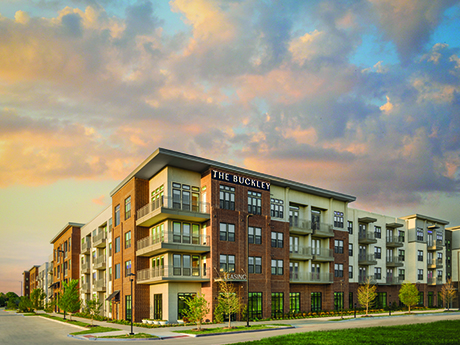

By Taylor Williams Tax cuts for the rich. The K-shaped economy. The dawn of the second Gilded Age. Regardless of your preferred cliché, if you buy into one or more of those views on the current state of the U.S. economy, then you likely have broader concerns about the natural byproducts of unchecked capitalism. But no matter the degree of government oversight and regulation, capitalism at its core is driven by competition, and sometimes that competition can be taken too far. But those in the business of economic development in North Texas see no real need to take competitive capitalism to extremes, at least at this point in the cycle. The region’s natural magnetism for attracting new commerce, as well as its established patterns of job and population growth, are somewhat self-sustaining at this point, and there’s plenty of business to go around. “There’s always competition, but we also all talk to each other and share ideas about what’s working from a regional standpoint, and because of what we have in DFW in terms of sheer population and diversity of workforce, there are plenty of opportunities,” says Michael Talley, the City of Plano’s director of economic development. “Competition is …

Texas Market Reports
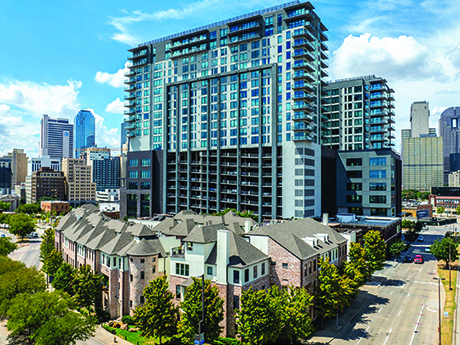
By Taylor Williams AUSTIN, TEXAS — For more than a decade coming out of the Great Financial Crisis, the Austin growth story sold itself to the multifamily investment community, and at the height of the market, faith in that narrative alone might have been enough to sway an investment committee to tour, underwrite, offer and close. The past several years have seen a major departure from that modus operandi, as Austin has perhaps borne an outsized share of pain and erosion of fundamentals amid the larger U.S. apartment boom. Back are the days of basis resets, granular scrutinization of line items, skepticism of below-market exit cap rates and highly bifurcated submarket performances. It’s an inverted version of the multifamily utopia that prevailed throughout the state capital in times of historically low interest rates, and to confidently buy in Austin today requires conviction that the current state of affairs is only temporary. Editor’s note: InterFace Conference Group, a division of France Media Inc., produces networking and educational conferences for commercial real estate executives. To sign up for email announcements about specific events, visit www.interfaceconferencegroup.com/subscribe. So spoke a handful of multifamily investment sales professionals at the annual InterFace Austin Multifamily conference, which took place …
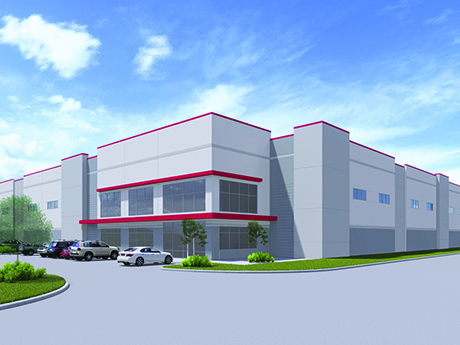
By Taylor Williams New development within the Houston industrial market is increasingly skewing toward data centers and advanced manufacturing projects, creating new hurdles for architectural, engineering and contracting (AEC) teams to overcome in terms of labor and timing. At the annual InterFace Houston Industrial conference that took place in late August at The Briar Club and was attended by more than 200 industry professionals, Jason Cooper, president at Houston-based general contractor Arch-Con Corp., immediately cited both of these issues when asked about the biggest challenges the industry faces today. Braylie Manson, business development associate in the Houston office of Texas-based engineering firm Dunaway, moderated the conference’s design and construction panel. “The most difficult thing of the past year, excluding the past month or so, has been getting highly qualified subcontractors on board that can keep the schedules that are expected,” said Cooper. “Schedules keep accelerating; we have to turn these projects over faster and faster, so [as general contractors], we have to be very selective about which subcontractors we use to avoid delays.” Editor’s note: InterFace Conference Group, a division of France Media Inc., produces networking and educational conferences for commercial real estate executives. To sign up for email announcements about …
By Maria Gutierrez, senior communications specialist, Colliers Engineering & Design Whether it pertains to acquiring sites, designing improvements or developing a residential or commercial property in Texas, land terminology can quickly become confusing. Two terms that are commonly mistaken, and often used interchangeably, are survey and plat. “In this field, people often use these terms synonymously, but they fulfill completely different steps in the development process,” notes San Antonio-based Corey Campbell, RPLS, geographic discipline leader for survey and geospatial at Colliers Engineering & Design. “A survey gathers and documents the physical facts about the land on the ground, while a plat uses those facts to legally define how that land is divided and recorded for the future.” Because an approved plat depends entirely on accurate site data, a comprehensive title survey is almost always the required first step. Navigating that transition from survey to recorded plat requires a complete end-to-end strategy. That is where Kelly Kephart, senior project manager and Texas platting director for survey and geospatial services at Colliers Engineering & Design, spends her time. Based in Houston and with 26 years of experience and over 1,000 completed plats, Kephart helps developers clear regulatory hurdles and manage the entire …
By Taylor Williams In terms of both ground-up construction and expansions and redevelopments of existing properties, retail development in the greater Houston area is pretty healthy by today’s standards, which is to say that meaningful supply gains in major markets are relatively rare in 2026. But the numbers are working in Houston, where sources say that brick-and-mortar sales are strong enough to support the rents that justify new development. Yet at the same time, margins remain thin on both the tenant and landlord sides, and owners are still very much focused on finding creative ways to manage development and operating costs lest they lose that precious, hard-fought cushion. “There’s a ton of new development around the horn, with projects in Katy, Fulshear, Tomball, Magnolia, Baytown and [New Caney’s] Valley Ranch, and those deals are penciling because retailers are keeping up with rents,” said Kenneth Katz, co-founder and principal at Houston-based brokerage firm Baker Katz. His comments were delivered at the annual InterFace Houston Retail & Mixed-Use conference at the Houston Briar Club on Aug. 25., which was attended by more than 200 industry professionals. Editor’s note: InterFace Conference Group, a division of France Media Inc., produces networking and educational conferences for commercial …
By Taylor Williams The Texas industrial market could use a little ABS. The acronym, which stands for automated ball-strike system, has been a — wait for it — game-changer in 2026 for Major League Baseball, the innings of which are often invoked as metaphors for points in real estate cycles. The ABS system establishes a clear, objective picture of the strike zone that eliminates doubt among players, managers and umpires about whether a pitch is a ball or a strike. Like any good sports technology, the system provides clarity on the rules of engagement, which leads to better operational execution. It’s been a — wait for it again — big hit for the game. Efficiency in real estate development and investment similarly hinges on data that is governed by universally accepted frameworks. While there is always the hopeful possibility of stumbling upon a hidden indicator, most real estate investors and operators are inter-reliant on themselves — in the form of industry comps — and their established metrics to understand where they are in a given cycle. There is room for disagreement, but only to a certain extent. With regard to industrial real estate in Texas, what is essentially indisputable is …
By Cyrus Khadivi, regional vice president of sales, LoopNet Inc./Ten-X For a Dallas multifamily investor considering where to allocate the next deployment of capital, the process and ultimate solution may be more complex than simply seeking the next acquisition. Looking ahead to 2027, the options could range from competing for additional assets in Dallas, pursuing lower-cost alternatives in other parts of the market, making larger investments in properties currently in their portfolio or simply keeping cash on hand until a better deal comes along. No matter what strategy the investor chooses, the deal execution will follow an extended period during which Texas multifamily owners have dealt with increasing debt rates, slowed rent growth in oversupplied markets and higher operating costs. Deals continue to happen, but investors are evaluating them with more attention to underlying fundamentals. According to a new survey among U.S multifamily investors conducted by LoopNet Inc., about a third of survey participants are planning to focus on upgrades to add value to their portfolios and increase rents in the coming year. An equal number plan to keep extra money to weather market downturns, and roughly a quarter of investors plan to make no portfolio changes at all. In …
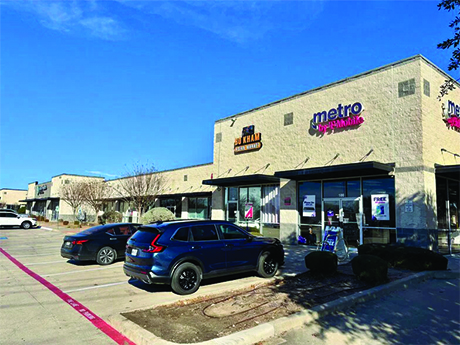
By Rafael Weiss, CEO of Sytes Everybody knows that Texas is among the country’s leaders in demand for quick-service restaurant (QSR) and coffeeshop space. That’s not the story. The story is where inside Texas that demand is actually concentrated, and it isn’t where most landlords are looking. According to Sytes’ analysis of active tenant requirements as of August 2026, Texas accounts for roughly 12 percent of every active QSR and coffee site requirement in the country right now — more than any other state, with Florida second and California third. That part is old news to most people in this business. What’s not old news: a full quarter of that Texas demand isn’t in Dallas-Fort Worth (DFW), Houston, Austin or San Antonio. It’s within the ring roads, the border corridor and towns that didn’t have a QSR conversation five years ago. Where Demand Actually Lies Here’s the breakdown of active Texas QSR and coffeeshop requirements by market, based on what tenants are posting right now, not closed transactions from 18 months ago, based on Sytes’ aforementioned analysis. That last line is the one worth sitting with. A quarter of all Texas QSR demand is scattered across secondary and tertiary markets that …
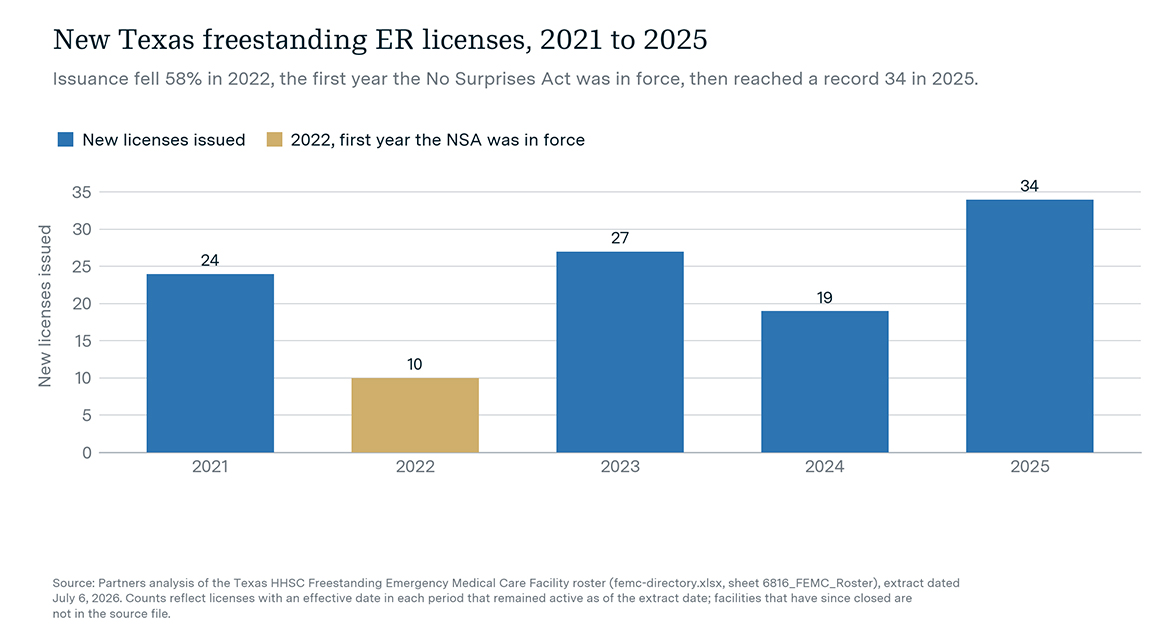
By Sean Anderson, senior associate, Partners Real Estate When Congress passed the No Surprises Act (NSA) in December 2020, the goal was straightforward: protect patients from the exorbitant, unpredictable bills that had become synonymous with emergency care and rein in some of the pricing power that out-of-network physicians and freestanding facilities had come to enjoy. On paper, the law delivered. By requiring that out-of-network emergency treatment be billed at the same rate a patient would owe for in-network care, the NSA eliminated an estimated 10 million surprise bills in just the first nine months of 2023 and pushed down the overall cost of emergency room (ER) procedures across the board, according to the second annual report to Congress from the U.S. Department of Health and Human Services. For patients, it was an unambiguous win. For the physician groups and real estate operators that had built business models around emergency medicine, however, the law landed as a direct hit to the bottom line. Out-of-network reimbursements initially fell by roughly 40 percent, according to an FTI Consulting analysis of the provider side of the law, and bankruptcy filings for healthcare operators hit their highest level in five years, tripling from 2021 to …
By Taylor Williams On some level, they knew this was coming, right? They just thought it would be over by now. Indeed, the expression, “survive till ’25” has proven insufficient as a barometer for when the multi-year slowdown in multifamily rent growth and valuations — inevitable consequences of the record-high sales prices and record-low cap rates that were achieved in 2021 and 2022 — would eventually fizzle out. Unprecedented supply growth in recent years, catalyzed by historically low interest rates and insatiable demand and taken to perhaps the highest of highs in Texas, has, unsurprisingly, generated cyclical pain in subsequent years. True, that pain is submarket-specific and is likely on its way out, but that doesn’t change the fact that it’s tough sledding for many multifamily owners right now. “Multifamily has had almost everything possible thrown at it in the past few years: interest rates rising, rental rates flatlining due to supply growth and operating expenses going up across multiple categories, from payroll to insurance to repairs/maintenance,” says John Griggs, co-CEO and co-founder of Texas-based developer Presidium. “Everything started flipping the wrong way at the same time. Some of those variables may correct in our favor, but it’s now been …
Newer Posts