

— By Hillary Steinberg of Avison Young — The Las Vegas retail market delivered a mixed but resilient performance in 2025, with vacancy remaining tight and demand holding steady. Vacancy closed the year at 5.6 percent with nearly 5.6 million square feet of available space. While these fundamentals reflect a healthy market, rent growth softened, increasing by just 2.4 percent year over year. At the same time, development activity remains robust, with roughly 880,000 square feet of retail space currently under construction. New projects continue to emphasize mixed-use and experiential concepts, positioning the market to capture sidelined capital and evolving consumer demand in the year ahead. Vacancy held steady at 5.6 percent in fourth-quarter 2025, supported by sustained population growth, a continued rebound in tourism and stable consumer spending. This momentum is being reinforced by Las Vegas’ economic diversification, which continues to fuel expansion across food, wellness and entertainment retail segments. Although rent growth has moderated from its 2022 peak, leasing fundamentals remain strong. Limited availability continues to favor landlords, who are maintaining pricing power and offering minimal concessions. However, rising construction and tenant improvement costs are placing upward pressure on deal economics. With inventory across Las Vegas, North Las …
— By Justin Neubeck of CBRE — Las Vegas is approaching an important turning point in its multifamily cycle. After several years of elevated construction, the market is now moving beyond its peak delivery period. The region completed about 7,071 units in 2023 — the highest total in more than 20 years. This was followed by 5,247 units in 2024 and 6,302 units in 2025. Deliveries are expected to decline again in 2026, to roughly 5,334 units. Meanwhile, 2027 deliveries areprojected to return to the 30-year average of about 3,500 units, including the 3,321 units currently scheduled. This shift marks the beginning of a more balanced supply environment. At the same time, the region continues to attract new residents at levels that outpace the national average. Clark County reached a population of about 2.4 million in 2024, an increase of 2.1 percent from 2023. It is projected to grow to more than 2.9 million by 2040, and to surpass 3 million by 2045. Southern Nevada also welcomed more than 40,000 new residents in 2025 alone. Nearly 47 percent came from California. This included 14,200 from Los Angeles County and thousands more from Orange County, San Diego and the Bay Area. …
— By Alma Cuevas and Jason Griffis of Cushman & Wakefield — The Las Vegas industrial market continues to evolve, shaped by new development and sustained demand. While vacancy has increased due to recent deliveries, the market tells a more nuanced story, particularly within smaller space requirements. Leasing activity in first-quarter 2026 totaled just under 3 million square feet, with an average deal size of about 21,000 square feet. Notably, about 95 percent of all leases occurred in spaces of less than 50,000 square feet. This concentration of activity underscores the continued depth of demand within the small and mid-bay segment. At the same time, the increase in vacancy is largely attributable to new construction, much of which has been concentrated in bulk distribution product. Continued development and expansion from groups like Prologis, OMP, EBS and Panattoni have added significant Class A institutional inventory to the market. While these projects enhance Las Vegas’ long-term positioning as a regional distribution hub, they have also expanded availability in spaces exceeding 100,000 square feet. This dynamic is effectively dividing the market into two distinct segments. Larger users are benefiting from increased optionality, more aggressive concessions and greater flexibility in lease negotiations. Smaller users, …
— By George Crawford of Kidder Mathews — In the city where heart-wrenching Hollywood movies originate, we bear witness to the harrowing coming-of-age story for one of the largest office submarkets in one of the largest metropolitan economies on earth, Downtown Los Angeles (DTLA). “I’m going to make him an offer he can’t refuse.” The Godfather, spoken by Don Vito Corleone It was almost too good to be true. In 2016, DTLA was the star of a commercial real estate love story. Landlords and tenants were captivated by a compelling script about creative tenants fleeing the expensive Westside into the welcoming arms of DTLA and sexy adaptive reuse offices. A steady flow of capital inspired 50 percent of DTLA’s submarket to trade in a 24-month period. Downtown was poised to rival the traditional metropolis, while retaining its gritty charm. Like any Hollywood romance, the chemistry was undeniable and the ending seemed predictable: sustained rent growth and long-term tenant demand. Then came the plot twist. “Where are we going so very quickly?” The New Adventures of Winnie the Pooh, spoken by Piglet The pandemic accelerated what technology had been threatening for years. Workplace flexibility and changing corporate …
— By Kitty Wallace of Colliers — The Los Angeles multifamily market is undergoing a short-term reset as a recent wave of deliveries has softened rents and modestly increased vacancy. However, this dislocation is proving transitory as development has slowed dramatically and the forward pipeline is effectively falling off a cliff beyond 2026, reinforcing what remains one of the most supply constrained and fundamentally durable markets in the country. Since the onset of COVID, the Los Angeles market has contended with elevated legislative risk, homelessness and crime concerns, modest population fluctuations, rising operating expenses, and, most notably, increased insurance premiums and utility costs. Yet, with a vacancy in the mid-5 percent range, this multifamily market continues to outperform the national average of roughly 8 percent. Rents are now stabilizing and beginning to inflect upward as concessions burn off and demand normalizes. Policy Headwinds, Construction Challenges, Emerging Tailwinds The ULA tax, imposing a 5.5 percent levy on transactions above $10.6 million, has further constrained new construction. This has made it increasingly difficult for projects to pencil and has driven many sites toward lower-density uses or affordable housing backed by subsidized capital. As a result, much of the current development activity is concentrated among …
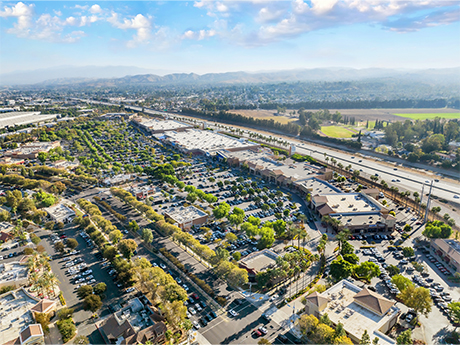
— By Mark Damiani of CBRE — Los Angeles has always been a market that requires conviction. Recent headlines have tested that conviction, but institutional capital continues to look through short-term noise and focus on long-term fundamentals. By that measure, Los Angeles remains one of the most structurally advantaged retail markets in the United States, defined by scale, supply constraints and global relevance. The market today is not without challenges, but fundamentals are stabilizing and capital is re-engaging following a meaningful repricing cycle. A Global Gateway with Structural Advantages Greater Los Angeles is one of the largest retail markets in the country, with about 378 million square feet of inventory. It benefits from a diverse economic base, significant tourism, and a consumer profile that spans both necessity and luxury spending. At the same time, new supply remains extremely limited. Total deliveries in 2025 were negligible relative to the size of the market, continuing a multi-year trend of underdevelopment. Entitlements, construction costs and land availability remain significant barriers, particularly in infill locations. This combination of scale and scarcity continues to underpin long-term investment theses for institutional capital. Leasing Fundamentals: Stabilization with Positive Momentum Leasing fundamentals across LA have proven more resilient than broader narratives …
— Matt Moore and Wes Hunnicutt of Stream Realty Partners — The Los Angeles industrial real estate market is stabilizing after a historic run of record-high rents and the all-time-low vacancy seen in 2022 and 2023. Pandemic-driven demand pushed users to take on additional space at a rapid pace, with supply chain concerns forcing tenants to carry more inventory. As the pandemic subsided, the market began a softening period in 2024 through early 2025. This brought about a massive rent correction as tenants began to give back space and right-size their operations. Stabilization has begun, however, and most investors feel the market has found its bottom and is beginning to rebound at a normalized, moderate pace. Vacancy rates at the peak were less than 2 percent in a market with nearly 1 billion square feet of inventory, while rates hit $1.85 per square foot (triple net) in early 2023. Los Angeles’ industrial market has now settled at about 6 percent and $1.43 per square foot, which most would consider healthy. Today, tenants have options when looking for larger blocks of space, and they’re no longer forced to pay record-high rents with minimal concessions from landlords. Third-party logistics providers have continued …
— By Tanner Olson of Legend Commercial — Downtown Salt Lake City has undergone a meaningful transformation over the past decade. The growth of ground-floor mixed-use retail, a rapidly expanding bar and restaurant scene, and the arrival of nationally recognized brands such as STK Steakhouse, the Capital Grille, Uchi and concepts affiliated with Fox Restaurant Concepts reflect a maturing urban core. At the same time, local operators such as Aker, Matteo, Urban Hill and many others have elevated the city’s culinary identity, with homegrown concepts adding depth and authenticity to the market. It was only 15 years ago that Salt Lake largely functioned as a commuter-based retail environment. Consumers prioritized surface parking and drive-thru convenience. Downtown activity outside of peak weekend hours was limited, while urban living lacked the density and vibrancy needed to support consistent retail demand. That dynamic has shifted. Today, tens of thousands of multifamily units have been delivered in and around the CBD, accompanied by hundreds of thousands of square feet of ground-floor retail. Just two to three years ago, downtown contained roughly 200,000 square feet of available mixed-use retail space, fragmented across 60 to 70 small-format spaces. Filling that space required not just tenants, but …
— By Patrick Bodnar of CBRE — Utah’s multifamily market remains one of the most resilient and compelling real estate environments in the country, supported by exceptional economic fundamentals and a steadily tightening development pipeline. Utah once again ranked No. 1 in the nation in 2025 in the American Legislative Exchange Council’s (ALEC) economic outlook index, marking its 18th consecutive year at the top and earning high marks for overall performance, labor participation and business affordability. These strengths, paired with ongoing population and job growth, continue to reinforce consistent long-term demand for rental housing across the Wasatch Front. Against this backdrop, rent trends are beginning to shift. After several years of rent stagnation driven by elevated supply, rent growth is positioned to rebound in the second half of 2026. The past three years were characterized by relatively flat asking rents, but CBRE’s analysis indicates that future rent growth is approaching as new deliveries decline and supply is absorbed. This shift is largely the result of two converging factors: a meaningful slowdown in new construction starts — driven by higher interest rates and sustained construction cost pressures — and persistently strong absorption, which places Utah among the top-performing absorption markets in …
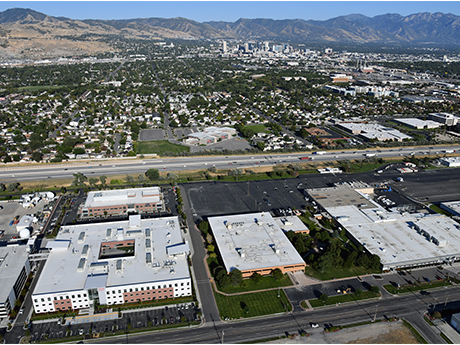
— By Mike Embree of Drawbridge Realty — After 16 consecutive quarters of either negative or negligible net absorption, Salt Lake City’s office market closed 2025 on a positive note. The end result was 114,700 square feet of direct occupancy gains, per Cushman & Wakefield. This resulted in 263,000 square feet of direct absorption for the year, spurring a 500-basis point decline in the direct vacancy rate, which now stands at 19.4 percent. It’s too early to say that the market has turned the corner, but the signs are promising. For landlords, one positive in a market with about 10 million square feet of availability is that new office construction has effectively stalled for now. Only one building was delivered in 2025, adding just 180,000 square feet to the existing inventory with no new office projects on the drawing board. At the same time, more than a dozen buildings were removed from the office leasing market, either by developers pursuing multifamily conversions or purchases by owner-users. One such sale occurred in the fourth quarter when the Salt Lake City Corporation of Public Utilities purchased One Airport Tech, a two-story, 87,657-square-foot building near Airport Technology Park campus. C&W data notes …