

— By Rebecca Lloyd of Cushman & Wakefield — Salt Lake City’s industrial market ended 2025 in a transitional period defined by rising vacancy, shifting demand across product types, and heightened activity in both peripheral submarkets and the owner‑user segment. Overall vacancy climbed to 7.9 percent, driven by more than 8.5 million square feet of new warehouse/distribution deliveries since early 2024, nearly half of which remain available. This is particularly apparent in the North West submarket, which continues to dominate the region’s industrial footprint. Despite this supply influx, tenant demand held firm with 5.9 million square feet of new leasing activity recorded in 2025. Absorption remained steady across small and mid-sized facilities, with monthly net asking rents remaining stable at $0.80 to $0.81 per square foot. Smaller 10,000- to 100,00-square-foot buildings posted the tightest availability at 6 percent vacancy, while larger big box properties over 100,000 square feet saw vacancy rise to 15.7 percent, widening the performance gap between segments. Land scarcity, power constraints and elevated development costs continue to limit opportunities in core Salt Lake submarkets, forcing more tenants and developers to pivot toward Utah County. This is where a sizeable 4-million-square-foot proposed development pipeline is helping narrow …
— By Jared Glover of Berkadia — While several Sun Belt and Rocky Mountain markets continue to work through challenging operations, elevated supply and weakening fundamentals, Reno has emerged as a bright spot in the West. The city posted 2.5 percent year-over-year employment growth, adding more jobs in 2025 than Las Vegas. This is a remarkable stat given that Reno’s population is roughly one-fifth the size of its Southern neighbor. At the same time, Reno’s population grew at roughly four times the national average as median household income climbed to just over $90,000 as the economy continued to diversify into technology, healthcare and manufacturing. In fact, Northern Nevada saw 14 site visits per month last year for potential corporate relocations, according to a recent report by the Economic Development Authority of Western Nevada (EDAWN). This places the region it in the top 1 percent of U.S. markets, reinforcing long-term growth expectations. Several major development projects look to keep this momentum going. The most significant is the $1 billion transformation of the Reno-Tahoe International Airport, which saw a record 4.9 million passengers in 2025. The University of Nevada, Reno, also continues to invest heavily in new buildings to attract and retain top …
— By Shawn Smith and Sean Retzloff of Colliers — Northern Nevada retail has entered 2026 with a sense of forward motion, shaped by population growth, changing consumer spending habits and renewed interest from national retailers. Grocery-anchored centers continue to serve as reliable engines of demand, particularly in Sparks, where national chains and quick-service restaurants (QSR) are actively pursuing space. These QSR brands continue to be fueled by the post-pandemic preference for convenience and speed — and they find Northern Nevada’s demographic expansion particularly attractive. The lifestyle shift toward wellness is also redefining the tenant mix, with concepts like Planet Fitness building on momentum and gravitating toward suburban neighborhoods where resident demand for amenity-rich environments close to home is rising. This suburban pull is especially evident in Spanish Springs, South Reno and the North Valleys. Growth is moderate in these areas, which justifies new retail infrastructure with flexibility to accommodate retailers eager to enter maturing communities. Once considered fringe, these outer markets are now central to the region’s retail growth story. Shifting Economics of Retail Space The economics of securing space are evolving as demand grows outward. Lease rates are expected to rise modestly to the $2.25 to $2.50 per square foot …
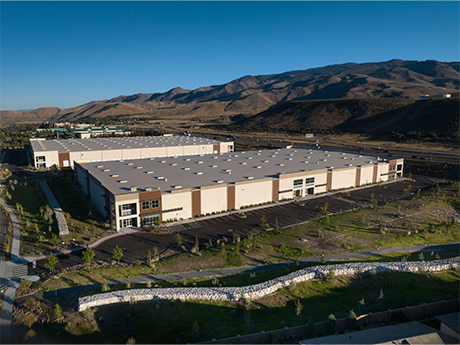
— By Joel Fountain of Dickson Commercial Group — After several years defined by rapid expansion and record development, Northern Nevada’s industrial market closed 2025 showing clear signs of stabilization. Vacancy leveled off, leasing momentum returned and capital markets activity began to pick back up. All told, these indicators point to a market that’s entering a more balanced phase. One of the most notable shifts has been the normalization of vacancy after an unprecedented wave of new supply. Direct vacancy hovered around 11 percent throughout 2025, suggesting the market has reached a temporary equilibrium between supply and demand. While elevated compared to the sub-3 percent vacancy levels seen during the pandemic-driven surge, continued positive absorption helped keep the market stable as it digested several million square feet of recently delivered product. In terms of region, submarket performance varied considerably. Central-West, Airport and South Reno tightened meaningfully during the year, with combined vacancy falling from 10.4 percent in late 2024 to 6.1 percent by the end of 2025. These areas benefited from limited new construction and steady demand from regional service users and smaller distribution tenants. Conversely, the North Valleys and the I-80 East corridor, which accounted for roughly 83 percent …
— By J.C. Casillas of NAI Capital — Orange County’s multifamily sector entered 2026 in a period of moderation. Following a recent peak in deliveries, fourth-quarter 2025 saw developers pull back sharply, allowing vacancy to stabilize at a tight 3.8 percent even as rent growth plateaued. The shift reflects strategic caution as elevated interest rates and pricing expectations continue to shape underwriting. Demand and Supply Navigating the ‘Supply Cliff’ Vacant units inched up 0.1 percent quarter over quarter to 11,926 but remained down 1.6 percent year over year, signaling gradual relief from earlier supply pressure. Developers delivered just 430 new units in the fourth quarter, a 26 percent drop from the third quarter. This brought year-to-date deliveries to 1,979 units, down 43 percent from 2024. With only 4,775 units still under construction — a 14 percent annual decline — the market is approaching a potential supply cliff that could tighten inventory by 2027. Vacancy held at 3.8 percent, suggesting steady renter demand. Average asking rents slipped $9 from the third quarter to $2,702 per unit. The good news is it still posted a 1.7 percent year-over-year gain. Since the 2024 development peak, higher borrowing costs and construction expenses have tempered the …
— By Wes Hunnicutt and Matt Moore of Stream Realty Partners — Following a record-low vacancy of 1.4 percent in fourth-quarter 2022, Orange County’s industrial market has experienced a sustained period of rising vacancy and negative net absorption, driven by broader economic caution, elevated interest rates and softening demand for space. However, it also showed signs of slight improvement at the end of 2025. Vacancy stood at 6.1 percent at the end of last year, down slightly quarter over quarter from 6.2 percent, but higher than 5.5 percent 12 months ago. For context, vacancy immediately prior to the pandemic was 3.3 percent. Availability, which includes all spaces listed on the market for lease, came in at 7.5 percent at the end of last year. A defining feature of recent quarters has been low tenant demand for space, with seven consecutive quarters of negative absorption. This reflects cautious tenant behavior as businesses delay expansion decisions amid economic headwinds and higher borrowing costs. Fourth-quarter 2025 ended this streak with the market experiencing positive net absorption of 285,000 square feet. Larger distribution and logistics facilities experienced increased pressure and longer lease-up timelines, whereas smaller spaces of less than 100,000 square feet have performed …
— By Tim Donald of JLL Capital Markets — When investment capital flows into Orange County’s office market today, it’s revealing a fundamental shift that sophisticated investors can’t afford to ignore: the distinction between quality and commodity office space has never been more pronounced, and that gap is only widening. The challenge for many investors has been identifying opportunities that offer both stability and upside in an environment where traditional core assets provide minimal growth while pure value-add plays carry significant execution risk. What we’re seeing emerge in Orange County is a compelling middle ground, deals that feel core-plus but deliver value-add returns, and there’s substantial liquidity chasing these opportunities. The Tier System Reshapes Investment Strategy JLL’s national office team has developed a tiering system that divides office properties into distinct quality categories based on amenities, location and tenant appeal. In Orange County, this frame-work has revealed a market operating on fundamentally different planes. Tier I assets, representing a small fraction of the county’s inventory, are demonstrating exceptional resilience while Tier II properties continue to attract significant tenant and investor interest. This isn’t just academic categorization. The performance differential shows that investors are willing to pay premiums for assets with clear …
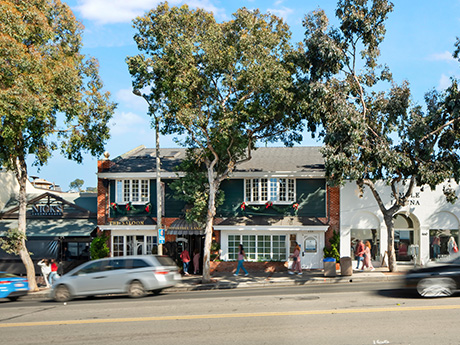
— By John Read of CBRE Retail Investment Properties-West — Orange County is often defined by its 42 miles of Pacific coastline, its globally recognized theme parks like Disneyland and Knott’s Berry Farm, and retail landmarks like South Coast Plaza and Fashion Island. Those assets contribute to the region’s visibility and appeal. But they are not what ultimately sustain its retail performance. The county’s strength is rooted in its scale and demographics. Encompassing nearly 800 square miles, Orange County is home to more than 3.1 million residents and one of the most diverse populations in the U.S., including the second-highest share of foreign-born residents in Southern California. The county’s strong retail fundamentals are supported by significant affluence and education. Average household income exceeds $157,000, and 46 percent of residents hold a bachelor’s degree or higher. Orange County is also home to major employers, including Disney, UC Irvine, Providence, Kaiser Permanente and Hoag, maintaining a low unemployment rate of 3.9 percent. These factors collectively make Orange County’s retail property fundamentals undeniable. The Orange County retail market ended the fourth quarter with a countywide availability rate of 3.9 percent, down 10 basis points from the previous quarter. Several submarkets were even tighter. …
— By Rob Martensen of Colliers — The Phoenix industrial market has always resembled a rough sea with lots of highs and lows. The market’s industrial real estate community is full of strong, confident captains who have weathered the high seas to reach the destination of a balanced market. The challenges of today are no different than those in any other market: how do we stay resilient, stay active and stay in business? Phoenix has experienced very strong absorption, mostly from the big-box market. User sales and leases have led the way, with Walmart and Dollar Tree among the most active. Then there’s the cherry on top: another big Amazon lease. What’s bigger than all of that? Retail discounter Burlington is closing on 178 acres in Buckeye to build a 2.1-million-square-foot distribution center. The latest quarterly numbers reinforce this momentum: fourth-quarter vacancy dipped below 10 percent to 9.7 percent, while year-to-date absorption totaled a healthy 18,228,088 square feet, representing some of the highest levels in the U.S. Yes, the big-box market is alive and well…but that’s only one side of today’s story. What’s struggling the most in Phoenix is mid-bay, the most common type of product built post-COVID. Some of …
— By Walt Brown Jr. of Diversified Partners — Metro Phoenix continues to post strong retail market conditions, supported by expansion-ready corridors, dense and established trade areas, sustained population growth and retail sites positioned at major intersections with strong traffic counts. Even with shifting capital markets and more disciplined underwriting, retail remains one of the metro’s more consistent performers heading into 2026. A defining constraint today is the limited availability of well-located, credit-tenant triple-net product for sale. This is particularly true in “A” locations within “A” trade areas. That scarcity is keeping competition elevated for stabilized assets and reinforcing pricing for deals that offer clean income, durable tenancy and long-term visibility. At the same time, demand for credit-tenant, triple-net transactions remains strong across Arizona, with Metro Phoenix continuing to attract a meaningful share of that activity. A key driver has been capital migration and reinvestment from higher-cost Western markets, including owners selling assets in California and the Pacific Northwest and redeploying proceeds into Phoenix-area retail. For many buyers, the appeal is straightforward: growth, demographics and a business climate that supports continued tenant expansion. On the development side, the market remains supply constrained at the top end of quality. Across the …