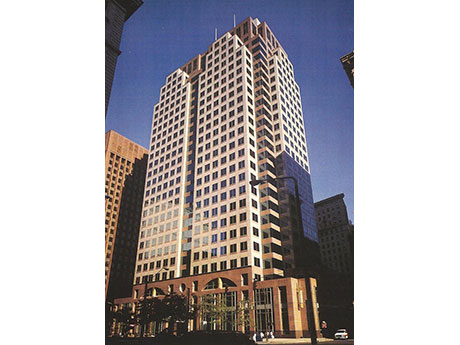
CLEVELAND — Farbman Group has taken over management of the 508,397-square-foot, 27-story Fifth Third Center in downtown Cleveland. The Class A office building is situated near the city’s historic Superior Avenue. Tenants include Fifth Third Bank, McDonald Hopkins, HWH Architects Engineers Planners, Brouse McDowell and more. Farbman manages more than 30 million square feet of office, retail, multifamily, student housing and industrial space throughout the Midwest.
Midwest
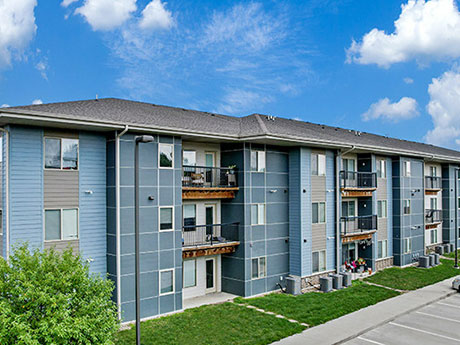
DES MOINES, IOWA — NAS Investment Solutions has purchased Broadway Apartments in Des Moines for an undisclosed price. Built in 2015, the multifamily property rises three stories with 120 units averaging 875 square feet. Amenities include an updated clubhouse, fitness center, playground, dog park and theater room. Adventureland Amusement Park, Prairie Meadows Racetrack & Casino and Outlets of Des Moines are within two miles of the property.
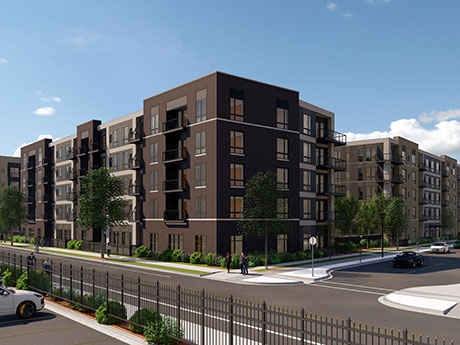
MILWAUKEE — Inland Venture Partners LLC (IVP), the private equity real estate arm of Inland Real Estate Investment Corp., has completed a more than $27 million capital raise for a joint venture multifamily development in Milwaukee. The 261-unit luxury apartment project was consummated through one of Inland’s joint venture partners, Kaeding Development Group LLC. IVP purchased the land parcel at 245 Harbor Drive in the city’s Historic Third Ward, and construction began in March 2023. Leasing is expected to begin in January 2025. The property will feature a pool, patio, dog park, parking garage and other amenities. Construction financing closed in March 2023 in sequence with the construction start, according to Rod Curtis, president of IVP. “The $27 million equity portion of the capital stack was initially backstopped by corporate funding, and as we raised capital from accredited investors, corporate funding was replaced by investor equity. The remaining portion was funding by a third-party construction loan,” he says.
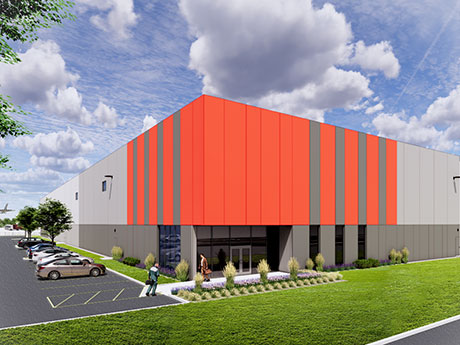
FRANKLIN PARK, ILL. — CRG has unveiled plans to develop The Cubes at ORD, a 66,552-square-foot speculative industrial facility in the Chicago suburb of Franklin Park. The project will be situated on 4.3 acres at 3901 Fleetwood Drive immediately southeast of O’Hare International Airport. The multimodal facility, which will feature direct access to I-294 and the airport, will accommodate small and mid-size users looking for Class A space in the submarket. Completion is slated for the fourth quarter. The Cubes at ORD will offer the same modern features as CRG’s other Cubes-branded facilities, including ESFR sprinkler systems, high-efficiency LED lighting, 20 exterior docks, two drive-in doors, 11 trailer storage spaces and parking for 70 vehicles. CRG’s parent company, Clayco, will serve as the builder. CRG affiliate Lamar Johnson Collaborative is the architect. Brian Colson and Brian Pomorski of Avison Young will market the project for lease. Avison Young also represented CRG in the purchase of the land, while Michael Caprile of CBRE represented the sellers.
ITASCA, ILL. — Cawley Commercial Real Estate has brokered the sale of 12 parcels of land totaling 14.2 acres in Itasca for an undisclosed price. Located on Marino Court, the site had long been a coveted location for developers over the past decade, with multiple unsuccessful attempts to secure the parcels. Andrew Maletich of Cawley worked on the deal for 27 months to secure contracts for all the parcels, overseeing the annexation and rezoning of the site into the Village of Itasca. He ultimately brokered the sale of the property, which sold to a large data center company.
STERLING HEIGHTS, MICH. — Bernard Financial Group (BFG) has arranged a $4.2 million loan for the refinancing of a 231-unit multifamily property in Sterling Heights, a northern suburb of Detroit. Dennis Bernard and Joshua Bernard of BFG arranged the loan on behalf of the borrower, One Durham LP. Symetra Life Insurance Co. was the lender.
TRAVERSE CITY, MICH. — PACE Loan Group has arranged nearly $4 million in C-PACE financing for The Boardwalk, a short-term rental condominium project under construction in Traverse City. The property is being built in two phases. The first phase, which features 42 units with first-floor retail space, received $1.7 million in early 2023 and is slated for completion in March. The second phase, which features 48 units, received $1.8 million and is scheduled for completion in the second quarter. The project is utilizing modular construction methods. The senior lender for both C-PACE loans was a local credit union. The PACE proceeds will be used to finance energy conservation and renewable energy measures, including increased building insulation, Energy Star windows, high-efficiency HVAC and plumbing fixtures, and LED lighting. The renewable and energy conservation measures are expected to save $120,140 annually in the payback period of 13.5 years. The Boardwalk marks the fourth PACE project in Grand Traverse County and the 76th in the state of Michigan. The PACE program is administered in a public-private partnership through Lean & Green Michigan. C-PACE, or Commercial Property Assessed Clean Energy, is a financing tool that provides long-term, low-cost construction financing for new and existing …
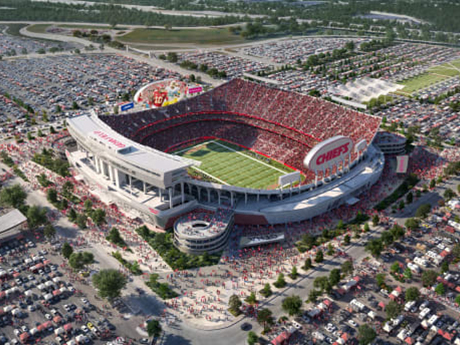
KANSAS CITY, MO. — The NFL’s Kansas City Chiefs have announced plans for an $800 million renovation of the team’s Arrowhead Stadium. Developed in 1972, the stadium most recently underwent large-scale renovations in 2010. Plans for the new renovation were created in collaboration with a team of experts from Populous, a locally based sports design and architecture firm. The Kansas City Chiefs plan to pay $300 million of the $800 million total price tag, with the remainder coming from Jackson County taxpayers funded through the extension of a 3/8th-cent sales tax, according to reports by The Kansas City Star. County voters will go to the polls April 2 during a special election to decide the issue. Plans for the project include the addition of a new turf-covered “activation zone” with tailgate areas and covered entertainment space at the current site of Kauffman Stadium, home to the MLB’s Kansas City Royals. The baseball team also recently announced plans to develop a new stadium in downtown Kansas City. The stadium’s upper concourse will receive a new connection bridge and canopy, providing weather protection for fans and additional space for food and beverage offerings. New VIP entry points and sideline clubs under the …
By Kellen Cushing, Carmody MacDonald PC Commercial and residential construction projects are inherently complex undertakings involving numerous parties working under tight deadlines and limited budgets. Change is inevitable and unpredictable in these projects, most often due to changes in project scope, incomplete or incorrect design, and unforeseen physical conditions. When something doesn’t go according to plan, it can impact the other parties’ abilities to perform their jobs in a timely manner and lead to litigation. Claims and litigation can be costly, time consuming and stressful for all parties, and may damage the relationship and reputation of the parties involved. Proper contractual planning among project owners and contractors can reduce the likelihood of litigation. Making preliminary management plans and incorporating them into the project’s contracts provides effective ways to address changes that can occur during a project and keep things moving forward. While preparation cannot always prevent roadblocks in construction projects, preemptive planning can make for much smoother sailing, even in the face of unpredictable circumstances. The best ways to avoid or minimize costly and time-consuming lawsuits include the following: Know your contract. Create a clear and comprehensive contract that defines the scope, schedule, budget, quality and responsibilities of …
Affordable HousingContent PartnerDevelopmentFeaturesLoansMidwestMultifamilyNortheastSoutheastTexasWalker & DunlopWestern
LIHTC Program Offers Lifeline to Struggling Multifamily Developers
It’s a tough time for much of multifamily development, but the Low-Income Housing Tax Credit (LIHTC) program offers incentives that make much-needed affordable housing comparatively easier to achieve under the current economic conditions. Building is expensive and financing is tight in the current multifamily market. However, as it has for the last 30 years, the LIHTC program provides solutions that increase the ease of creating and sustaining affordable housing, even when the overall multifamily market faces challenges. The program not only promotes the construction and acquisition of housing but also enforces conditions that help maintain the stability and preservation of affordable properties. The program is also needed to address the demand for affordable housing. The National Low Income Housing Coalition estimates that extremely low-income households represent 25 percent of the nation’s 44.1 million renters and reports a shortage of 7.3 million affordable and available rental homes. Historical Financial Resilience “The LIHTC asset class is resilient, if not countercyclical, under challenging economic times,” says Katie Balderrama, executive vice president of affordable equity at Walker & Dunlop. The firm typically sees a foreclosure rate of under 1 percent on properties supported by LIHTC. “Overall, our affordable housing assets tend to perform fairly …