

NEW YORK CITY — Boston-based private investment firm Bain Capital has signed a 14,765-square-foot office lease expansion at 535 Madison Avenue, a 37-story building in Manhattan’s Plaza District. The firm is essentially doubling its footprint and leasing one additional floor of space. The execution of this lease, along with deals with FTV Management Co. and Garda Capital Partners, brings the 480,000-square-foot building to full occupancy. Bryan Boisi and Connor Barnes of Cushman & Wakefield represented Bain Capital in the lease negotiations. Brian Gell and Laurence Briody of CBRE represented the landlord, Park Tower Group.

Property tax systems vary from state to state across the country, with differing procedures in each assessor’s jurisdiction. Complicating things further, the personalities of assessors and their staff influence the way they interact with property owners or their agents. It is the responsibility of the property owner or their agent to learn and adapt to the procedures and behaviors at work in their assessor’s offices. However, there are universal pre-emptive steps that property owners in any jurisdiction can take to combat excessive valuations. These property-specific action items and best practices can significantly increase the chances of a successful valuation protest. 1. Document Property Financial Statements In most appraisal systems, income-producing apartment property will be valued using the income approach. Arguably the most important pieces of information the apartment owner can present in protesting assessed values are the property’s rent rolls and profit-and-loss statements. The timely preparation and completion of these documents prior to a protest is essential to any discussion of fair market value. Key line items such as potential gross income, vacancy and collection loss, and net operating income can assist in negotiating lower assessed values. Market rent, in-place rents and occupancy are key indicators on a rent roll …
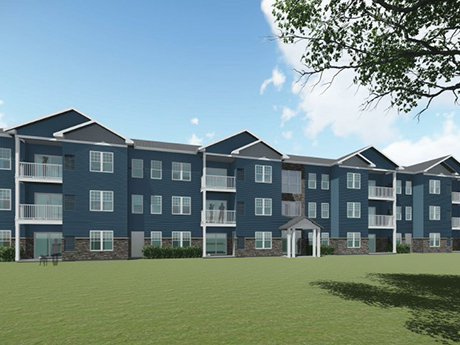
CICERO, N.Y. — San Francisco-based mortgage banking firm Gantry has arranged a $47.5 million construction loan for Lakeshore at Loso, a 248-unit multifamily project that will be located in the upstate New York community of Cicero. The community will comprise 12 three-story buildings that will feature one- and two-bedroom apartments and a clubhouse. The 24-acre property will also include walking trails, a boat launch and a 100-slip marina. Daniel Monte and Jack Stelianou of Gantry arranged the three-year loan through an undisclosed regional bank on behalf of the borrower, a locally based entity doing business as TreyJay Loso LLC.
NEW YORK CITY — Locally based investment firm A&E Real Estate has acquired a 20-story apartment building located at 1080 Amsterdam Ave. in Manhattan’s Morningside Heights neighborhood for $42.5 million. The 96-unit building was originally constructed in 1931 to house the staff of St. Luke’s-Roosevelt Hospital. The seller, SL Green Realty Corp. (NYSE: SLG), acquired 1080 Amsterdam in 2014 in a partnership with Stonehenge NYC and repositioned the asset. Amenities now include a fitness center, resident lounge, bike storage space and 24-hour lobby attendance.
MONTVALE, N.J. — JLL has negotiated a 60,000-square-foot healthcare lease in the Northern New Jersey community of Montvale. The tenant, Valley Health System, will move into North Market, an 86,000-square-foot building in the preconstruction phase of development. Frank Recine of JLL represented the landlord, The S. Hekemian Group, in the lease negotiations. Robert Rudin and Peter Hamburger of Cushman & Wakefield represented the tenant. North Market will also include 26,000 square feet of retail space.
WEST HEMPSTEAD, N.Y. — RIPCO Real Estate has brokered the $5.6 million sale of a 10,125-square-foot retail building located in the Long Island community of West Hempstead. The property is leased to CVS through 2032. A partnership between two locally based limited liability companies sold the asset to private investor Kenny Mauer. Stephen Preuss, Kevin Louie, Gene Spiegelman, Kevin Schmitz and Andreas Efthymiou of RIPCO brokered the deal.
NEW YORK CITY — HLTH, which organizes conferences and events for the healthcare industry, has signed a 19,000-square-foot office lease expansion and renewal at 10 Grand Central in Midtown Manhattan. The firm is growing its footprint from 7,000 to 19,000 square feet on the sixth and seventh floors. Marx Realty owns the 35-story building and completed a $48 million redesign and capital improvement program in 2019. JLL represented the landlord in the lease negotiations.

Affordable HousingContent PartnerDevelopmentFeaturesGeorgiaLumentMidwestMultifamilyNortheastSoutheastTexasVideoWestern
Utilizing Tax Credits to Create Affordable Housing in High-Opportunity Communities
The Section 42 Low-Income Housing Credit program has been America’s primary tool in the effort to construct affordable homes for low- and moderate- income households and ease renter cost burdens since 1986. This public-private partnership has created or preserved more than 3.1 million rental units, accounting for over 30 percent of the nation’s affordable housing stock. Congress is considering legislation that would materially expand and strengthen the tax credit program. In addition to several technical changes to tax credit accounting and rules governing the use of private-activity bond financing, the legislation would authorize increases in credit allocation in 2021 and 2022. The impact of these changes would be substantial, catalyzing construction of more than 100,000 additional units per year over a 10-year period, perhaps trimming the number of rent burdened low-income households by half. Building more affordable housing will represent a significant step toward reducing housing instability and economic inequality in America. But are quantitative gains alone enough? Constructing affordable housing in low-poverty, high-opportunity census tracts is challenging. The following discussion explores some ways in which developers, lenders and credit allocating agencies can increase the level of affordable housing construction in low-poverty, high-opportunity areas (LPHOA) and optimize the …

NEW YORK CITY AND AUSTIN, TEXAS — Blackstone Inc. (NYSE: BX) has agreed to acquire American Campus Communities (NYSE: ACC) in a deal valued at $12.8 billion, including the assumption of debt. ACC is the largest publicly traded owner, manager and developer of student housing in the United States. Blackstone plans to take the company private through Blackstone Real Estate Income Trust Inc. and Blackstone Property Partners, which unlike its traditional private-equity funds can hold properties as long-term investments, according to media sources. This move comes as the price of public equity has been more expensive than private institutional capital over the past few years, according to Bill Bayless, co-founder and CEO of ACC, in a letter to employees. During that time, many of the private players in the sector were able to acquire and develop more aggressively than the cost of public equities permitted. The purchase price represents a premium of 22 percent against ACC’s 90-day, volume-weighted average share price as of April 18, and a 30 percent premium over the company’s closing stock price on Feb. 16, the day prior to ACC disclosing an indication of willingness from Blackstone to acquire the Austin-based firm. This transaction marks Blackstone’s largest investment …

By Taylor Williams Industrial brokers and developers throughout New Jersey and Eastern Pennsylvania are flush with tenant demand, but the frenetic pace and frequency at which revenues and costs change in this market has introduced a whole new set of operating challenges. In terms of the supply side of the market, developers of industrial product, like those of every other property type, have been squeezed by supply chain disruption. Prices and lead times for ordering key materials change radically and often without warning. Developers who try to circumvent these obstacles by ordering way earlier than normal in the process now run an increased risk of having to take delivery of supplies without having all permits and sources of construction financing in place. Such a misfire in timing can create lags in delivery, potentially alienating tenants needing turnkey space and generating additional short-term costs via storage of the materials before construction begins. In addition, misaligning these timelines can spook potential investors that want the certainty of knowing that a project is moving forward. “We’re buying supplies a year in advance and trying to sync up deliveries of those materials with when we expect to have full project approval,” says Peter Polt, …