Property Type

WATERTOWN, MASS. — A pair of confectionaries, Blackbird Doughnuts and cookie maker Chip City, have opened stores at Arsenal Yards, a mixed-use development located in the western Boston suburb of Watertown. Grand opening celebrations for both stores took place last weekend. A partnership between Wilder Cos. and Boylston Properties owns Arsenal Yards.

FacebookTwitterLinkedinEmail

LOS ANGELES — Thrive Living, with the financial support of JPMorgan Chase, has announced plans to redevelop a former industrial storage facility into an affordable and workforce housing community at 1457 N. Main St. north of downtown Los Angeles. Completion is slated for December 2024. The six-story multifamily complex will feature 376 apartments for low- and moderate-income residents earning up to 80 percent of the area median income and individuals utilizing the Housing Choice Voucher program.  On-site community amenities will include a landscaped roof deck, barbecue and dining area with seating, a gym, recreation room, package delivery room and business center. The property is located near public transportation and will offer parking below the building with electric vehicle charging stations. JPMorgan Chase, through its Workforce Housing Solutions group (formerly Capital Solutions), is providing a $68.5 million construction loan to Thrive Living for the project. This is JPMorgan Chase’s first construction loan to a 100 percent rent- and income-restricted multifamily community. Thrive already secured entitlements for the site. The project aligns with Thrive’s mission to acquire and redevelop strategically located sites in urban markets that are experiencing significant housing affordability gaps. Like other Thrive communities, the project is privately financed without the …

FacebookTwitterLinkedinEmail

By J. Byron Brazier Equitable development is a knotty concept. In theory, development equity sounds easy and essential. In practice, it’s not clearly defined and not easily sustainable — economically, socially or politically.  Equitable development is generally seen as an approach that revitalizes and empowers disinvested communities by meeting residents’ wants and needs, diminishing disparities and spurring economic growth, ensuring residents benefit from such growth and creating conditions for people to live healthy and happy lives. That definition is accurate but incomplete. Equitable development has multiple meanings, some less intuitive than others.  Chicago lawyer Danielle Meltzer Cassel says there are three ways to define development equity. The first is the one above, which is the direct model of equitable development. This model rectifies inequality through what development directly produces, such as affordable housing in areas where there’s little or no such housing, good jobs for people who are unemployed or underemployed, greater access to quality healthcare and education, and other resources that allow communities to thrive. There are two other definitions, the indirect model and what Cassel calls the procedural model of equitable development. The indirect model involves real estate developments that do not directly benefit disinvested communities, such as …

FacebookTwitterLinkedinEmail
Rafi Golberstein PACE Loan Group CPACE quote

The spike in interest rates and the consequent disruption throughout real estate capital markets over the last 18 months is generating newfound interest in commercial property assessed clean energy (C-PACE) financing. The program, which emerged more than a decade ago, pays for building upgrades to improve energy and water efficiency as well as seismic resilience in new construction and rehabs. In cases where cost overruns, stabilization delays and declining values threaten the ability to refinance construction loans, developers are tapping C-PACE retroactively for a much-needed slug of so-called “rescue capital,” says Rafi Golberstein, CEO of the PACE Loan Group, a direct lender of C-PACE based in Minneapolis, Minn. Typically, developers are using the proceeds to pay down debt and fund reserves to secure loan extensions or modifications. “We are seeing a ton of opportunities right now in deals that were built over the past three years, and C-PACE can provide a liquidity infusion to get many folks through a maturity logjam,” he declares. “When confronted with other options, they’re going to prefer C-PACE all day long.” Cost-Effective Debt Indeed, the cost of those other options, such as mezzanine financing or preferred equity, can be upwards of 500 basis points higher …

FacebookTwitterLinkedinEmail
The-Oak-at-Katy-Park

KATY, TEXAS — A partnership between two developers, Austin-based Wayfinder Real Estate and Houston-based Read King Commercial Real Estate, has broken ground on The Oak at Katy Park, a 348-unit multifamily project in the western Houston suburb of Katy. The site is located within the 54-acre Market at Katy Park master-planned development. Units will come in one-, two- and three-bedroom floor plans, and amenities will include a pool, fitness center, coworking space, pickleball court and outdoor grilling and dining stations. Meeks Architects is designing the project, and OHT Construction is serving as the general contractor. Completion is slated for early 2025.

FacebookTwitterLinkedinEmail

KYLE, TEXAS — Self-storage brokerage firm Versal has negotiated the sale of Highway 21 Storage, a 240-unit facility located roughly 25 miles south of downtown Austin in Kyle. The facility was built in 2021 and 2022 and totals 68,775 net rentable square feet. Bill Bellomy, Michael Johnson, Logan Foster and Hugh Horne of Versal represented the private, Texas-based seller in the transaction. The team also procured the buyer, New York-based Andover Properties, which will operate the facility under its Storage King USA brand.

FacebookTwitterLinkedinEmail

SAN ANTONIO — A joint venture between global private investment firm Quilvest Capital Partners and Atlanta-based Axis Industrial Outdoor Storage (IOS) has acquired an 18.6-acre site in San Antonio. The site at 9415 NE Loop 410 is located in the city’s Eastgate neighborhood and houses the operations of Anderson Machinery Co. The seller and sales price were not disclosed. The deal is the first of the joint venture’s larger initiative to acquire and operate an approximately $500 million portfolio of IOS properties across the country.

FacebookTwitterLinkedinEmail

FORT WORTH, TEXAS — Marcus & Millichap Capital Corp. (MMCC) has arranged an $8.6 million acquisition loan for Renaissance Square, a shopping center in Fort Worth that totals 105,065 square feet, according to LoopNet Inc. The center was built in 2013 and was fully leased at the time of the loan closing to tenants such as Marshall’s, Ross Dress for Less and Dollar Tree. The borrower and direct lender were not disclosed. The loan carried an interest rate of 6.75 percent and a 30-year amortization schedule. Marcus & Millichap also represented the undisclosed seller in the disposition of the property.

FacebookTwitterLinkedinEmail

HOUSTON — C&T Design & Equipment, which designs and furnishes restaurants and commercial kitchens, has signed a 19,886-square-foot industrial lease in northwest Houston. According to LoopNet Inc., the building at 9555 Baythorne Drive was constructed in 2001 and totals 28,576 square feet. Jim Cooper of Cypressbrook Co. represented the tenant in the lease negotiations. The landlord was an entity doing business as Texas KBC LLC.

FacebookTwitterLinkedinEmail
224-W.-124th-St.-Harlem

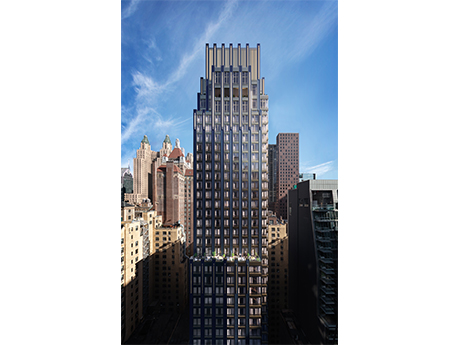
NEW YORK CITY — Dwight Mortgage Trust, the affiliate REIT of locally based lender Dwight Capital, has provided $100 million in bridge financing for a 168-unit apartment building located at 224 W. 124th St. in West Harlem. The 19-story building was completed earlier this year and offers one-, two- and three-bedroom units, as well as townhomes and penthouse suites. Roughly 30 percent (51) of the residences are reserved as affordable housing. Amenities include a fitness center, children’s playroom, business lounge and a rooftop deck. The borrower and developer, Carthage Real Estate Advisors, will use the proceeds to refinance existing construction debt and fund lease-up of the property and other capital expenditures.

FacebookTwitterLinkedinEmail