BRANSON, MO. — Marcus & Millichap has brokered the $9.1 million sale of Lakeside Shoppes at Branson Landing, a 30,763-square-foot retail strip center in Branson. Built in 2015, the property is located directly adjacent to Branson Landing, a $435 million waterfront development situated on 95 acres along the banks of Lake Taneycomo. Tenants at the center include Qdoba Mexican Grill, Tropical Smoothie Café, Cold Stone Creamery and Pappo’s Pizzeria & Pub. Chris Garavaglia, Alex Perez and Austin Sweet of Marcus & Millichap represented the seller, a limited liability company. The buyer was a Louisiana-based private investor.
Property Type
HAMMOND, IND. — Montecito Medical has acquired an 11,118-square-foot medical office building in Hammond, about 25 miles southeast of Chicago. The purchase price was undisclosed. The building is fully occupied by the Williams Eye Institute and serves as the group’s flagship location. The Williams Eye Institute provides a full range of eye care, from general ophthalmology to advanced cataract surgery. Montecito worked alongside Entheos Capital Partners in completing the transaction.
CENTEREACH, N.Y. — A partnership between a division of Simone Development Cos. and operator Catholic Health has opened a $47 million, multi-specialty healthcare facility in the Long Island community of Centereach. The facility is known as Catholic Health Ambulatory & Urgent Care at Centereach. The site previously housed a 63,000-square-foot retail building that was occupied by Ocean State Job Lot, which continues to own and operate a 36,000-square-foot store adjacent to the property. The facility also offers diagnostic imaging services, an onsite pharmacy and a dedicated suite for gastroenterologists to perform endoscopies. Newman Design served as the project architect.
HAWTHORNE, N.J. — The Bedrin Organization, a New Jersey-based development and investment firm, has completed Hedges at Hawthorne, a mixed-use project located in the northern part of The Garden State. Hedges at Hawthorne, a transit-served development, consists of 118 Class A apartments, a 120,000-square-foot self-storage facility that is operated by CubeSmart and 16,000 square feet of retail and restaurant space that is leased to Planet Fitness and Per Lei Café. Residential units come in studio, one- and two-bedroom formats, and amenities include a fitness center, coffee bar, rooftop lounge, coworking lounge, salon, pet spa and outdoor grilling and dining stations. Rents start at roughly $2,200 per month for a studio apartment.
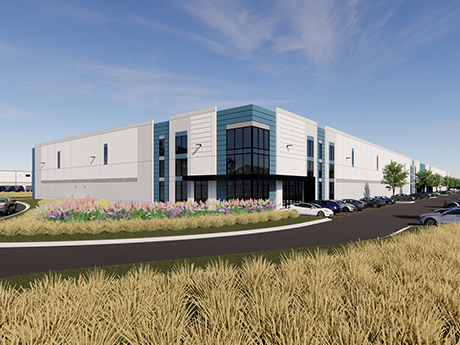
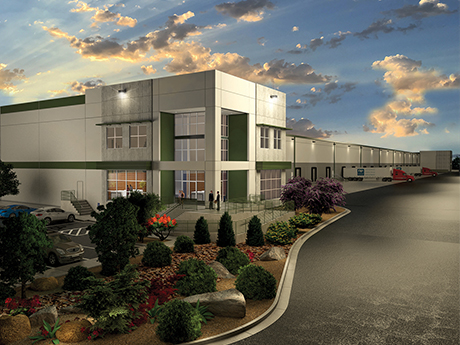
YORK, PA. — Cushman & Wakefield has brokered the $13.5 million sale of an industrial development site in York. The site, known as The Expressway Commerce Park, is fully approved for the development of two buildings totaling 673,920 square feet. Building A will total 403,000 square feet and feature 405 auto stalls, 77 trailer stalls, 74 dock doors and two drive-in doors. Building B will total 270,920 square feet and feature 269 auto stalls, 72 trailer stalls, 43 dock doors and two drive-in doors. Gerry Blinebury and Collin Potter of Cushman & Wakefield represented the seller, Maple Press, in the transaction. The buyer was MRP Industrial. The sale included a subdivision from the Maple Press manufacturing facility that will remain in operation.
NEW YORK CITY — JLL has arranged the $10.8 million sale of two apartment buildings located at 175-177 East Third St. in Manhattan’s East Village. The five-story, walk-up buildings house a total of 20 one-bedrooms units, two of which have been duplexed with the basement. Hall Oster, Teddy Galligan and Guthrie Garvin of JLL represented the seller, an undisclosed private investor that owned the buildings for 30 years, in the transaction. The buyer was Lockhill Properties.
PENNSAUKEN, N.J. — Fastener Dimensions, a manufacturer and distributor of precision bolts for the aerospace industry, has acquired a 60,000-square-foot industrial building in the Southern New Jersey community of Pennsauken. The sales price was $4.2 million. Fastener Dimensions will continue to occupy the freestanding building, where it has operated out of for the past several years. Jonathan Klear of NAI Mertz brokered the deal. The seller was not disclosed.
NEW YORK CITY — Tapestry (NYSE: TPR), owner of fashion brands Coach, Kate Spade and Stuart Weitzman, has agreed to acquire luxury fashion group Capri Holdings Limited (NYSE: CPRI) for $8.5 billion. Both companies are based in New York City. Capri Holdings consists of Versace, Jimmy Choo and Michael Kors. The group spans a retail footprint of over 1,200 stores globally, including 223 Versace locations, 237 Jimmy Choo stores and 812 Michael Kors locations. The all-cash transaction, which was unanimously approved by the board of directors at both Tapestry and Capri Holdings, is expected to close in 2024. Capri shareholders will receive $57 per share. Combined, the companies generated $12 billion in global annual sales in 2022 and have a presence in over 75 countries. “We are excited to announce the acquisition of Capri Holdings — uniting six iconic brands and exceptional global teams,” says Tapestry CEO Joanne Crevoiserat. “The combination of Coach, Kate Spade and Stuart Weitzman together with Versace, Jimmy Choo and Michael Kors creates a new powerful global luxury house, unlocking a unique opportunity to drive enhanced value for our consumers, employees, communities and shareholders around the world.” Tapestry has secured $8 billion in fully committed bridge …
By Andrew Welker, founder and CEO, Welker Properties Institutional investment in the single-family housing market is waning as high interest rates show no sign of letting up. For the first time in years, corporate investors looking to borrow money are having difficulty finding cash flow with current interest rates. As a result, some institutional investment firms are hitting pause on real estate portfolios or pivoting to all-cash deals on low-priced housing stock. This shift makes it more difficult for individual first-time homebuyers to get in on the game. With buyers and sellers holding out for better returns, a shrinking debt market isn’t helping with the supply shortage. According to data supplied by Freddie Mac and analyzed by Axios, the country needs nearly 4 million units — both for rent and for sale — to meet demand based on current rates of household formation. There simply isn’t enough housing being built to meet demand. Enter build-to-rent (BTR), an asset class that’s skyrocketed in popularity in recent years as COVID-19 pushed people out of cities and affordable homeownership further from their reach. Offering the four-walled privacy of a single-family unit and the conveniences of multifamily construction, BTR is community-style living for …
By Jamie Dunford, CBRE Outside of office product, Cleveland and Northeast Ohio haven’t historically been of interest for most out-of-town multifamily developers and investors. They viewed the region as a tertiary or secondary market with a declining population and a lackluster economy. Until recently, urban living in the central business district (CBD) and surrounding neighborhoods was rare — Cleveland was a commuter city with a strong office market from the 90s until the Great Financial Crisis (GFC) in 2008. At one point in time, Northeast Ohio boasted one of the highest concentrations of Fortune 500 companies with headquarters or other office space in the region, and the CBD had the largest job hub in the state of Ohio. Most office buildings in the CBD were owned by institutional capital or national developers. However, the GFC vastly altered this landscape as unemployment rose, companies left or downsized, and many office assets went back to the lender. This left an oversupply of office product in the market, and the older buildings suffered the most. However, this created a market opportunity that Cleveland developers seized, and the city eventually became a national leader in converting historic office assets to multifamily while taking advantage …