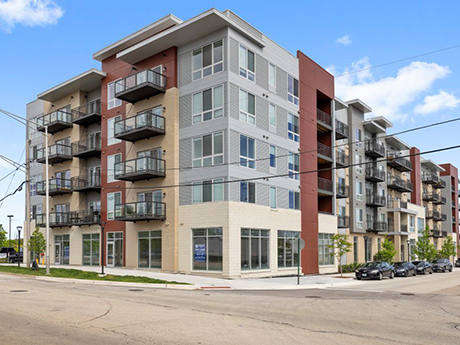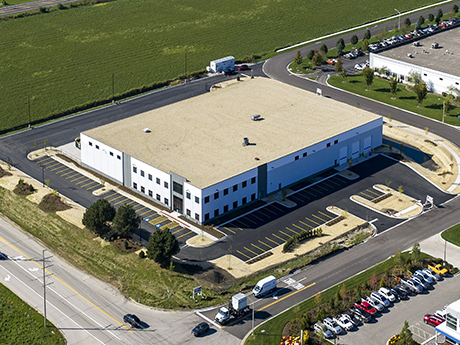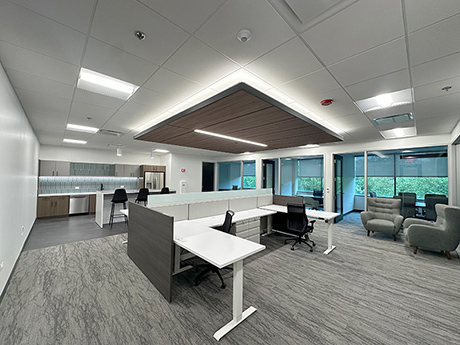

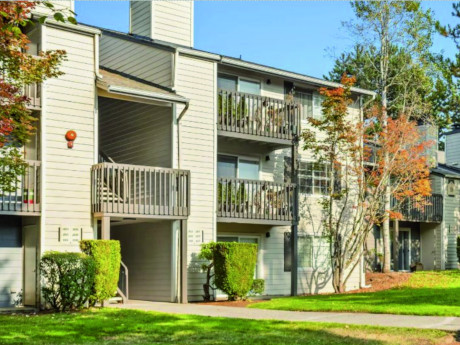
EVERETT, WASH. — Seattle-based Timberlane Partners, in partnership with New York-based EOS Residential Investors, has purchased Canopy Apartments, a multifamily community located at 923 112th St. S.W. in Everett, for $82.7 million. The name of the seller was not released. Canopy is the sixth acquisition through Timberlane Acquisition Fund II and follows the firm’s $37 million purchase of Vista Ridge Apartments in Issaquah, Wash., in August. Built in two phases in 1989 and 1991, Canopy includes 20 residential buildings and two clubhouses across approximately 15.9 acres. The community’s 336 residences include 91 one-bedroom, 169 two-bedroom and 76 three-bedroom units, with an average size of 878 square feet. Of the residences, 245 units have been fully renovated with improvements including luxury vinyl plank flooring, quartz countertops, tile backsplashes, stainless steel appliances and new cabinetry. Additionally, another 90 units have received renovated kitchens. Community amenities include a renovated resort-style swimming pool, fitness center, community lounge and kitchen, a game room, outdoor gathering areas and a dog park. Avenue5 Residential will handle property management services for the asset. Timberlane will focus on staffing, leasing and operating efficiencies.
Property Type
SALT CITY LAKE AND OGDEN, UTAH — Veritas Investments, alongside Refound Residential as capital partner, has purchased three mid-rise multifamily properties in Ogden and Salt Lake City. Terms of the transactions were not released. Northmarq’s Rawley Nielsen and Mark Jensen represented the sellers in all three transactions. Totaling 257 units, the properties include:
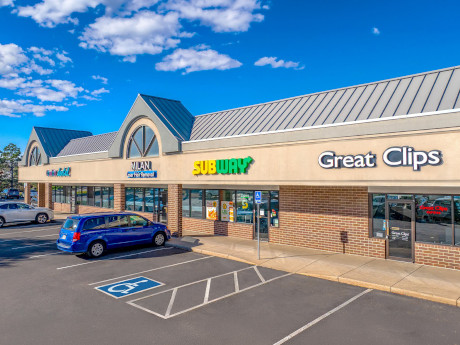
CENTENNIAL, COLO. — Continental Realty Corp. (CRC) has acquired Quebec Village Shopping Center, located at 8223 S. Quebec St. in Centennial, from Kensington Development Partners for $31 million. This adds to CRC’s regional portfolio, which includes the 266,000-square-foot Thornton Town Center that the company acquired earlier this year. Brad Lyons of CBRE represented the seller in the deal. Built in 1988, Quebec Village Shopping Center features 125,000 square feet, including a 43,000-square-foot space leased to Amazon Grocery that is currently dark. Current tenants include Chase Bank, GNC and Starbucks Coffee.
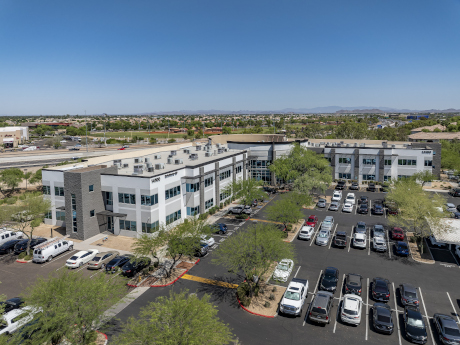
PEORIA, ARIZ. — CBRE has arranged the sale of Thunderbird 101, a two-building office park at 14050 and 14100 N. 83rd Ave. in Peoria. An undisclosed seller sold the asset to a buyer group including Holualoa Cos. and David Walter of DWRE. Geoffrey Turbow and Anthony DeLorenzo of CBRE represented the undisclosed seller in the transaction. Completed in 2005, Thunderbird 101 consists of two two-story multi-tenant office buildings on 10.9 acres. Totaling 143,597 square feet, the property offers a range of suite sizes for healthcare, financial services, real estate and other professional services users, as well as 718 parking spaces. CBRE’s Property Management will manage the property, and Ashley Brooks and Jasmina Bays of CBRE will lead leasing efforts for the asset.
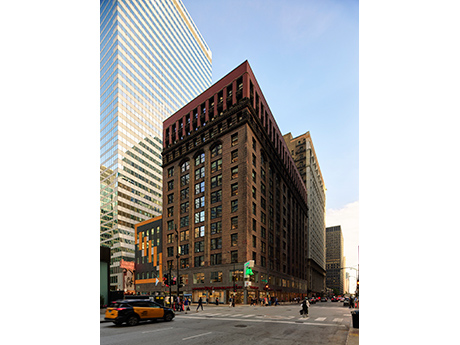
CHICAGO — R2 Cos. and Lagfin, the building’s owner, have completed development of the office-to-residential conversion at 79 W. Monroe in downtown Chicago’s Loop. Ware Malcomb’s Chicago office provided architecture and interior design services for the renovation of the historic 14-story building, which included transforming seven upper floors of vacant office space into 76 market-rate and 41 affordable housing units. Built in 1905 and historically known as the Rector Building, the masonry high-rise is the oldest surviving commercial structure by Chicago architect Jarvis Hunt. The project marks the first completed under the city’s LaSalle Street Reimagined initiative. The new residential floors offer a mix of studio, one- and two-bedroom units. Rooftop amenities include an indoor tenant lounge, a fitness center and outdoor areas. Leopardo Cos. and GMA Construction Group were the general contractors.
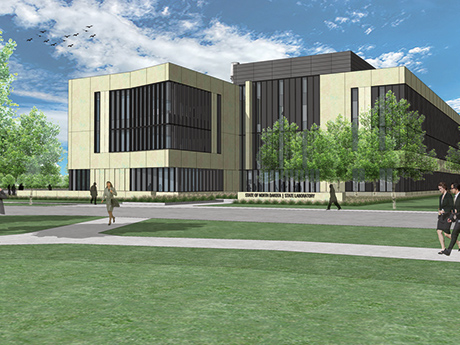
BISMARCK, N.D. — Kraus-Anderson has completed a new $63.7 million laboratory facility for the Department of Health and Human Services and the Department of Environmental Quality located on North Dakota’s State Capitol grounds adjacent to the State Museum in Bismarck. Designed by Zerr Berg Architects, the three-story, 104,230-square-foot facility features an expanded capacity for future tests such as toxicology of non-fatal overdoses, hematology and chemistry tests for North Dakota correctional facilities. Separate departments will share resources in the facility. Construction began in April 2024.
ARLINGTON HEIGHTS, ILL. — JLL Capital Markets has arranged the $25 million sale of FourNorth Apartments, a 76-unit boutique community in Arlington Heights. Completed in 2024, the property offers studio, one- and two-bedroom floor plans averaging 796 square feet. Amenities include a fitness center, resident lounge area, entertainment space, rooftop terrace and onsite management office. The five-story, pet-friendly building is 95 percent occupied. Bill Baumann, David Gaines and Sam Grohe of JLL represented the seller, Benchmark Developers. A private investor was the buyer.
BARTLETT, ILL. — Meridian Design Build has completed a 50,463-square-foot truck maintenance and tire storage facility for Pava Logistics within Blue Heron Business Park in Bartlett. The building marks the third build-to-suit project that Meridian has constructed within the park, which is owned by Abbott Land & Investment. The building features a clear height of 24 feet, two loading docks, 12 drive-in doors and accommodations for truck maintenance. Harris Architects provided architectural and structural design services, while Mackie Consultants handled the civil engineering design.
By Jim Adler, NAI Hiffman For decades, suburban Chicago’s office market was defined by abundance. Corporate campuses, office parks and multi-building complexes supported a workforce that spent most of its week in the office. Today, hybrid work has reshaped office demand, while investors and landlords have become increasingly selective about where they deploy capital. Well-located, amenity-rich properties continue to attract investment and tenants, while aging buildings face growing pressure to compete. Recent market performance reflects this divide. While suburban vacancy remains elevated at 26.7 percent, Class A properties posted 43,337 square feet of positive absorption during the third quarter, while Class B buildings recorded negative absorption of 26,098 square feet. Reinvestment and winners Despite elevated vacancy rates, leasing activity is healthier than many headlines suggest. Class A office leasing in suburban Chicago increased 16.6 percent year over year to 644,228 square feet through third-quarter 2026, up from 552,698 square feet a year earlier. Although Class A leasing remains down 11.3 percent year to date, its share of third-quarter leasing rose to 57.3 percent from 54.3 percent a year ago. The shift suggests that larger tenants are increasingly exploring higher-quality buildings they may have overlooked previously. Inland Real Estate Group’s approximately …
DALLAS — With all due respect to junior anchors, small-shop merchandisers and other inline tenants, it’s the users with the single biggest and smallest physical footprints that are fueling much of the growth within Dallas-Fort Worth’s (DFW) retail development landscape. Anchors — specifically grocers — and pad users —particularly national companies — are the elements of new shopping center development that perhaps deserve outsized shares of credit in making new projects pencil. And at the annual InterFace DFW & North Texas Retail & Mixed-Use conference that took place on Sept. 15 at the Hilton Park Cities hotel, separate panels — one of actual owners and the other of brokers — spoke to this trend within the local development market. It’s a narrative that’s fairly easily understood. Grocers represent inelastic consumer demand; pad users represent credit tenancy. Developing new centers without both of those elements is risky. Retail investors have and always will love grocery-anchored retail deals, which are bolstered by the metroplex’s steady population growth. And in these times of high construction costs and rising interest rates, developers have gained extra appreciation for pad sites as pieces of lucrative projects that can be split off and sold or developed as …