

PHOENIX — Taylor Street Advisors has brokered the sale of The Hepburn, a multifamily property located at 631 N. 4th Ave. in Phoenix. A local syndicator sold the asset to an out-of-state 1031 exchange investor for $3.9 million, or $243,750 per unit. The fully renovated property features 16 apartments with quartz countertops, new cabinetry, stainless steel appliances, in-suite washers/dryers, and upgraded bathrooms with custom tile showers and vanities. Built in 1957, the property underwent renovations in 2022 that included a new roof, plumbing, electrical, exterior and interior doors, lighting, exterior paint, courtyard landscaping, fencing, gates and asphalt parking. Brian Tranetzki and Anton Laakso of Taylor Street Advisors represented both parties in the transaction.
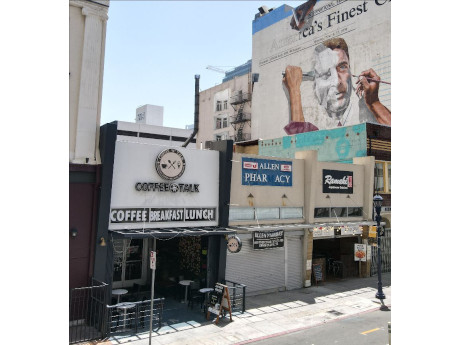
SAN DIEGO — Commercial Asset Advisors has arranged the sale of a retail property located at 1139-1143 6th Ave. in downtown San Diego. Aura Olive and Luis Lopez sold the asset to Anthem Real Estate Ventures for $2.5 million. Two restaurants and a convenience store occupy the 4,850-square-foot building on long-term leases. Gino Kalasho and Austin Fellows of Commercial Asset Advisors represented the seller in the deal.
CHICAGO — Emerald Empire has acquired Pangea Properties’ Chicago portfolio for an undisclosed price. The portfolio spans several hundred multifamily properties and thousands of units, 97 percent of which are designated as affordable for residents who earn up to 60 percent of the area median income. Arbor Realty Trust and NewPoint Real Estate Capital provided acquisition financing through Fannie Mae. Pangea’s Chicago-area employees will continue to manage the properties on behalf of Emerald Empire. Chestnut Ridge, N.Y.-based Emerald Empire maintains $2 billion of assets and roughly 17,000 units under management.
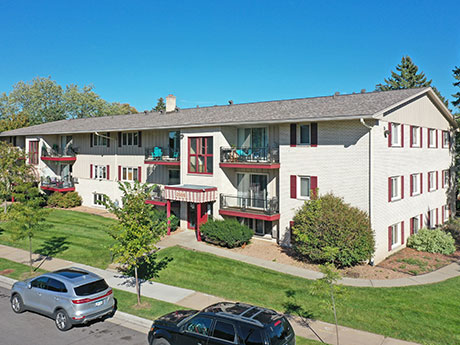
ST. LOUIS PARK, MINN. — Grandbridge Real Estate Capital has arranged a $14.7 million loan for the refinancing of a 152-unit multifamily property in the Minneapolis suburb of St. Louis Park. The unnamed property features two outdoor pools and is located on a bus line with an express bus to downtown. Tony Carlson and Will Perry of Grandbridge arranged the fixed-rate loan through a bank.
ILLINOIS — Four Corners Property Trust (FCPT) has purchased a portfolio of four retail properties occupied by Buffalo Wild Wings in Illinois for $14.3 million. The restaurant has roughly nine years remaining on the leases. The sales price represents a cap rate of 7.3 percent. The seller and specific locations of the properties were not provided. Mill Valley, Calif.-based FCPT is a retail and restaurant REIT with a portfolio of 982 properties across 47 states.
GLENDALE, WIS. — Marcus & Millichap has brokered the $3.2 million sale of Bayshore Area Retail Plaza in Glendale, a northern suburb of Milwaukee. The 13,763-square-foot retail center was 89 percent leased at the time of sale to tenants such as Fast Signs, Gyro Palace and WingStop. Jared Shapiro, Craig Fuller, Erin Patton and Scott Wiles of Marcus & Millichap represented the seller, a limited liability company. The buyer was undisclosed.
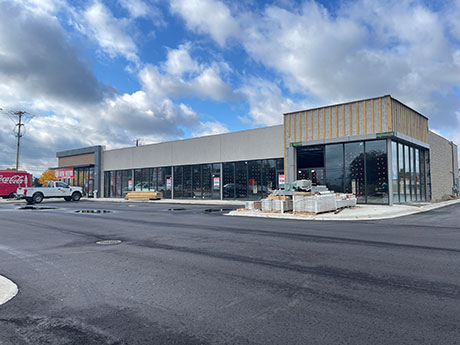
WARREN, MICH. — Green Lantern Pizza has leased 1,400 square feet at Village Plaza in Warren, a northern suburb of Detroit. The Warren restaurant marks Green Lantern Pizza’s 10th location in the state. Michael Murphy, Bill McLeod and Haley Kelly of Gerdom Realty & Investment represented the landlord, Shango Enterprise Group. Located at the northwest corner of 13 Mile and Mound roads, Village Plaza spans roughly 100,000 square feet. Green Lantern Pizza has operated in metro Detroit since 1955.
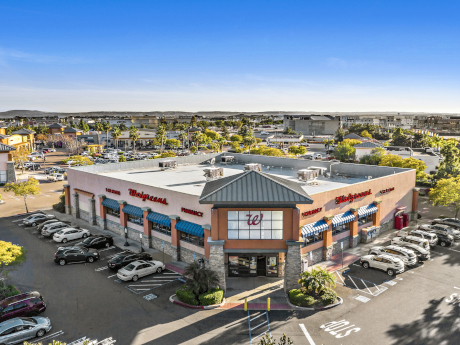
SAN DIEGO — Realty Income Corp. (NYSE: O), a publicly traded REIT, has agreed to acquire up to 185 single-tenant retail and industrial properties from subsidiaries of CIM Real Estate Finance Trust Inc. for approximately $894 million. The exact composition of the portfolio depends on completion of due diligence and the potential exercise of rights of first refusal related to certain properties. If the entire 185 properties are included, the transaction will represent a 7.1 percent capitalization rate. “We believe the deployment of net sales proceeds will continue to advance our program to generate sustainable and increasing dividends for our shareholders through earnings growth,” says Richard Ressler, president, CEO and chairman of CIM Real Estate Finance Trust. “Additionally, this transaction increases our flexibility as we seek to capitalize on investment opportunities resulting from the current market environment.” The properties feature a weighted average remaining lease term of approximately 9.2 years with approximately 48 percent of the portfolio’s annualized contractual rent derived from investment-grade rated clients. The properties total 4.6 million square feet, with 55 retail clients representing 95 percent of the total portfolio rent. The remaining 5 percent comes from four industrial clients. The top two renters in the portfolio …
WASHINGTON, D.C. — In 2022, local and state legislatures across the country raised the issue of rent control to address the high cost of living and the ongoing affordable housing crisis. Some municipalities enacted rent control measures or expanded on those already in place, while the efforts of others were shot down by city councils and state law. Rent control measures are regulations enacted by state or local governments that place a limit on the amount a landlord can charge to lease a home or increase rent upon the renewal of a lease. Rent control regulations are legally binding once signed by a governor or passed through a referendum. The intent of rent control is to keep living costs affordable for renters, particularly those who are earning lower incomes. However, the official position of the National Multifamily Housing Council (NMHC) as well as the National Apartment Association (NAA) is that rent control exacerbates housing shortages, causes existing buildings to deteriorate and disproportionately benefits higher-income households. The NMHC and NAA, both based in Washington, D.C., have stated that they are in favor of alternative methods, such as voucher-based rental assistance, to address affordable housing shortages. Rent Control Efforts Gain Traction Though …

So much has been made about the future of retail in the United States. Is it dead? Is it back? How has it evolved? No doubt, retail was the sector most affected by the COVID-19 pandemic, and that is also true here in Washington, D.C. If you look at regional data, it appears to be rebounding nicely. The overall market currently boasts a near record-low vacancy rate at just 5.1 percent, according to CoStar Group. Tighter market conditions have helped landlords restore pricing power throughout the District, and asking rents and rent growth have surpassed pre-pandemic highs. When we measure by net absorption, retail demand in the region in 2022 is on pace to reach its highest level since 2016. But numbers don’t tell the whole story as the retail sector’s recovery in D.C.’s downtown market post COVID differs greatly from all of the metropolitan area’s other submarkets in a scenario that can only be described as a tale of two markets. Downtown D.C. So, what’s driving downtown retail these days? Simply, it’s the office market. Retail’s post-pandemic recovery is almost entirely dependent on office workers, and there is no more significant factor at play for its success than corporation’s …