

STEPHENVILLE, TEXAS — Silver Oak Commercial Realty has arranged the sale of a 6,898-square-foot medical office building in Stephenville, about 75 miles southwest of Fort Worth. Liberty Dialysis anchors the building at 946 Bluebonnet St., which was fully leased at the time of sale. An entity doing business as Midlothian 67 Partners LLC sold the building to Namy Properties LLC for an undisclosed price. Russ Webb and LeAnn Brown of Silver Oak, along with Jim Turano of Henry S. Miller, brokered the deal.
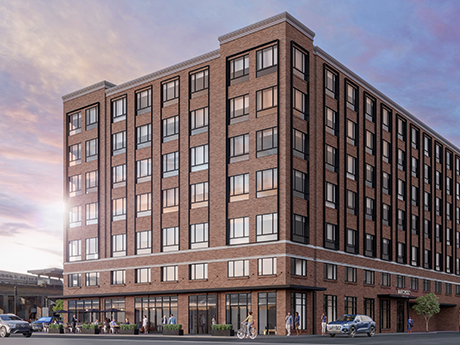
LYNBROOK, N.Y. — Breslin Realty Development Corp. has begun leasing The Langdon, a 201-unit multifamily project in the Long Island community of Lynbrook. Located at 47 Broadway, The Langdon is a redevelopment of the former Mangrove Feather factory and consists of 55 studios, 111 one-bedroom units and 35 two-bedroom apartments, as well as 2,000 square feet of ground-floor retail space. Amenities include a lobby café, concierge services, rooftop terrace with skyline views, landscaped courtyard, resident lounge with billiards, a fitness center and work-from-home stations. Breslin developed the property in partnership with Fields Grade Development. Construction began in spring 2022. Rents start at approximately $3,000 per month for a studio apartment.
TAUNTON AND HAVERHILL, MASS. — Regional owner-operator Marcus Partners has sold a portfolio of two industrial buildings totaling 192,380 square feet in metro Boston. The sales price was $50 million. The portfolio consists of an 88,000-square-foot facility in Taunton, located south of Boston, and a 104,380-square-foot structure in Haverhill, a northern suburb of the state capital. Both buildings were fully leased at the time of sale. Chris Skeffington of CBRE represented Marcus Partners in the transaction. The buyer was a fund backed by Ares Real Estate.
NEW YORK CITY — Marcus & Millichap has brokered the $10.8 million sale of a 101-unit historic apartment building located in the Prospect-Lefferts Gardens neighborhood of Brooklyn. The six-story, elevator-served building at 275 Linden Blvd. was originally constructed in 1930. Information on floor plans and amenities was not disclosed. Shaun Riney and Daniel Greenblatt of Marcus & Millichap represented the undisclosed seller in the transaction. Seth Glasser, also with Marcus & Millichap, procured the buyer, a California-based family office.
WAYNE, N.J. — Locally based brokerage firm The Goldstein Group has arranged the sale of a 68,000-square-foot retail property the Northern New Jersey community of Wayne. The property is located at 465-479 U.S. Route 46 and comprises a 50,000-square-foot space that was formerly occupied by Bloomingdale’s Furniture and an 18,000-square-foot space leased to The Suit Store. C.J. Huter, Marc Palestina and Roy Paret of The Goldstein Group represented the seller, a group of limited liability companies, in the transaction. The buyer was an entity doing business as GCL Investment LLC.
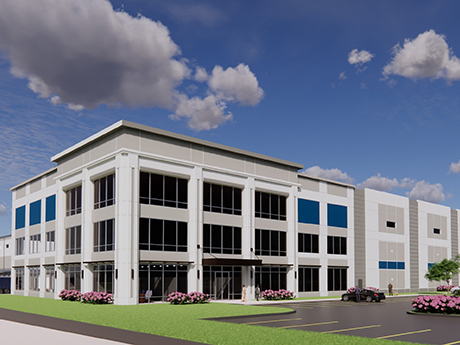
PORT WENTWORTH, GA. — Industrial real estate firm Dermody Properties has launched Port Wentworth Commerce Center, a 10 million-square-foot master-planned logistics project located roughly seven miles from the Port of Savannah and one mile from I-95. The development will be supported by a 2.5-mile road system currently under construction, where utilities such as water, sewer, power, gas and fiber optics will be installed. Situated within a designated Foreign Trade Zone (FTZ), Port Wentworth Commerce Center allows tenants to defer, reduce or eliminate tariffs on imported goods. The campus will also have onsite CSX rail service. The project is expected to be the largest near-port logistics development to begin construction in the Southeastern United States in 2025 and will serve as the premier port-centric logistics park on the Eastern Seaboard, according to company representatives. Dermody has selected Bill Sparks and Preston Andrews of CBRE to handle leasing at Port Wentworth Commerce Center. Dermody currently has four projects under construction in the Southeast region and more than 1.5 million square feet available for lease.
NEW YORK CITY — Queen One has signed a 29,718-square-foot office lease in Brooklyn. The technology-driven networking and communications startup has committed to a 10-year term at 25 Kent, an eight-story, 500,000-square-foot building that was designed by Gensler and HWKN Architecture. Scott Bogetti and Will Demuth of Savills represented Queen One in the lease negotiations. Ryan Gessin, Will Grover and Jordan Gosin of Newmark, along with internal agents Craig Panzirer and Alex Radmin, represented the landlord, Global Holdings.
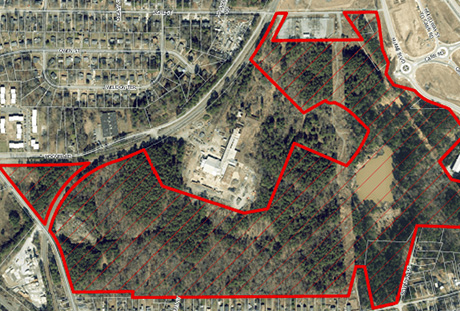
DURHAM, N.C. — Foundry Commercial has facilitated the acquisition and rezoning of a 95-acre tract in Durham for the development of Brickworks, a planned mixed-use development. The Durham City Council approved the rezoning ordinance in January, which will transform a former brick factory into a residential and commercial area. Charlotte-based SpaceCraft will serve as the master developer for the project. David Batten and Geoff Loftin of APG Advisors represented the seller in the transaction. Upon completion of the project, Brickworks will include 1,880 residential units and 49,500 square feet of commercial space. Construction of the multiphase project is expected to take place over a five-year period. One-third of the site is slated for Phase I of Brickworks, which will include a combination of apartments, townhomes and retail space. Homes will range from studio units to three-bedroom layouts, with 5 percent of the residences set aside for families earning 60 percent or less of the area median income (AMI). Public spaces like sports fields, biking and walking trails and preserved woodlands and wetlands will also be accessible at the development.
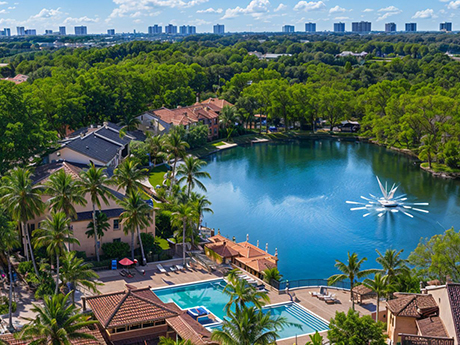
NAPLES, FLA. — Excelsa Properties has acquired Oasis Naples, a 216-unit garden-style multifamily property located at 2277 Arbour Walk Circle in Naples. The buyer purchased the property on behalf of Excelsa’s US Real Estate II LP fund and a co-investment vehicle related to Fund II LP, which are both managed by Excelsa. Built in 1992, Oasis Naples offers one- and two-bedroom floorplans ranging in size from 762 square feet to 1,012 square feet across18 residential buildings. Amenities at the property include a swimming pool, lounge areas, coffee station and a 24-hour fitness center. Excelsa plans to invest roughly $7 million to enhance the property’s appeal and performance. This marks the seventh multifamily property to be acquired through Excelsa’s US Real Estate II LP fund and the 20th multifamily acquisition across its portfolios.
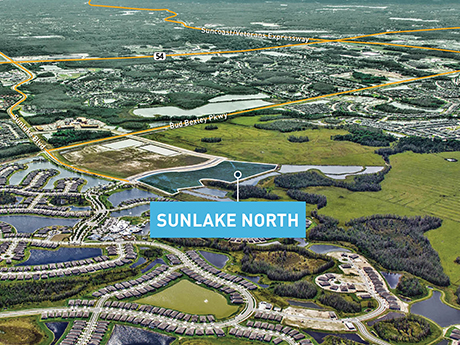
LAND O’ LAKES, FLA. — Berkadia has arranged the sale of a 28.5-acre development site located within the master-planned community of Bexley in Land O’ Lakes, roughly 30 miles north of downtown Tampa. The Dinerstein Cos., in partnership with Maymont Homes, will design the site to offer a mix of two- and three-bedroom residences featuring private yards and attached garages. Amenities at the property, dubbed Sunlake North, will include a clubhouse, fitness center, resort-style swimming pool and various neighborhood parks. Sunlake Boulevard, which forms the site’s eastern boundary, is scheduled for a future extension that will connect the development to the new Moffitt Cancer Center Pasco Life Sciences Campus and the Angeline master-planned community. Preleasing at the development is expected to begin in late spring 2026, with the first homes available for move-in by the fourth quarter of that year.