
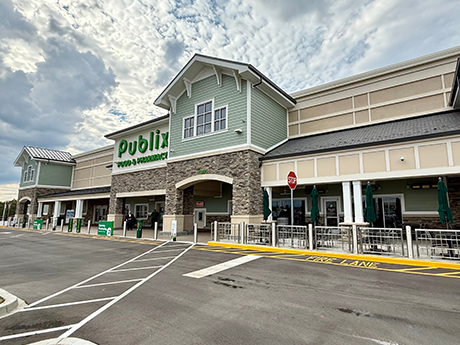
Retail investment gained meaningful momentum during the first half of 2026, reflecting growing confidence in market fundamentals and long-term consumer demand. While the national vacancy rate sits at 6 percent, Louisville’s current vacancy rate for retail is at 3.9 percent, according to the “Q2 2026 Cushman & Wakefield National Retail Report.” The Louisville market continues to demonstrate many of the characteristics that retail investors value: established trade areas, strong grocery-anchored corridors, limited new construction and a growing number of national retailers making long-term commitments to the market. Retail real estate remains particularly strong in the eastern and northeastern portions of Louisville, with grocery-anchored space continuing to perform well. Cushman & Wakefield research also points to continued investment and new development taking shape across the market. Louisville has seen roughly $165 million in shopping center transactions close over a recent 12-month stretch, driven heavily by private capital and 1031 exchange buyers. The properties that consistently attract attention are those with strong visibility, established traffic patterns, durable tenancy and demographics that support long-term consumer spending. Publix reshapes map Perhaps the clearest example of where Louisville retail is heading is Publix. From an investment perspective, we believe the significance of Publix goes well …
Restaurant
PHOENIX — Cohen & Steers Income Opportunities REIT (CNSREIT) has acquired Grand Canyon Crossing, a 303,000-square-foot shopping center located in Phoenix. Walmart Supercenter anchors the property, which was 99 percent leased at the time of sale. Additional tenants include Harbor Freight Tools, Wendy’s, YouFit Health Club, Sally Beauty Supply, Nationwide Vision Center, Denny’s, Starbucks Coffee, Sonic, Jamba and Quick Quack Car Wash. The retail center was built on 33 acres in 2005. CNSREIT acquired Grand Canyon Crossing through a joint venture with the Sterling Organization. Further details of the transaction were not disclosed.
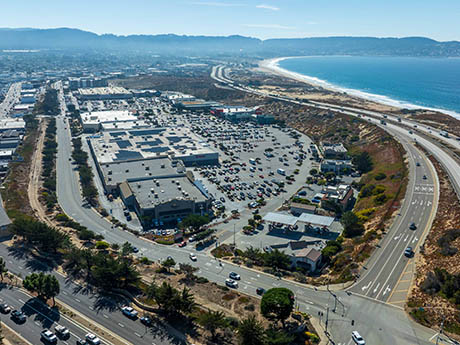
SAND CITY, CALIF. — JLL Capital Markets has negotiated the $9.5 million sale of the Shops at Edgewater, a 25,223-square-foot retail center located at 2080 California Ave. in Sand City. The fully leased property is occupied by Ulta Beauty, Panera Bread, Mancini’s Sleepworld and a Bank of America ATM. The Shops at Edgewater is also shadow anchored by Target, Ross Dress for Less and Lucky. Eric Kathrein, Andrew Spangenberg and Allie Repaskey of JLL represented the private seller in the transaction. An entity doing business as Sand City Holdings LLC was the buyer.
Galway Cos. Signs New Tenants, Advances Multimillion-Dollar Renovation at The Promenade Shops Centerra in Northern Colorado
by Amy Works
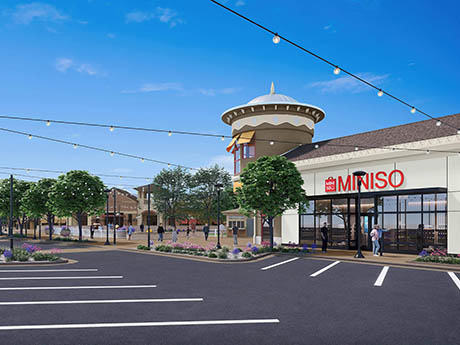
LOVELAND, COLO. — Galway Cos. has signed new tenants to leases and is advancing a multimillion-dollar, property-wide renovation at The Promenade Shops Centerra, a 494,500-square-foot open-air center in Loveland, approximately 46 miles north of Denver. Improvements will include new storefront facades; a redesigned ice rink scheduled to open next month; new landscaping along Main Street and updated property lighting; additional seating and refreshed outdoor gathering spaces; a new monument sign and new entrance signage; property-wide Wi-Fi and security enhancements; and new roofing across 10 buildings. The broader streetscape renovation is scheduled for completion in spring 2027. Additional property improvements, tenant openings and community programming will continue into 2027 as Galway advances The Promenade’s long-term repositioning. The nine new leases that have been signed within the previous year total 37,643 square feet. MINISO, Christopher & Banks and Windsor will open this fall, while JD Sports, Hot Topic, BoxLunch, Cabinet HQ, Hot Pot Grill and Los Dos Potrillos are anticipated to debut next spring. Galway acquired The Promenade Shops Centerra in August 2025 for $55 million.
Agora Realty Breaks Ground on $375M Final Phase of Mixed-Use Entertainment Project in North Las Vegas
by Amy Works
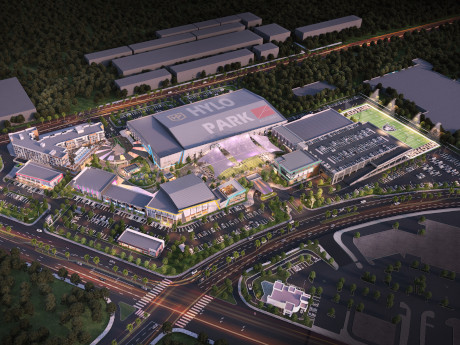
NORTH LAS VEGAS, NEV. — Agora Realty has broken ground on the third and final phase of Hylo Park, a 73-acre mixed-use entertainment project in North Las Vegas. Upon completion, the $375 million, 25-acre final phase will include a 250,000-square-foot multi-sport indoor field house; an existing multi-sport arena, fully accredited college preparatory Game Changers Sports Academy; an outdoor public space, community field, shops, restaurants and a family entertainment center; and a 177-key Hilton Embassy Suites Completion is slated for late 2027. Additional phases of the project include Hylo Park South, a 90,750-square-foot grocery-anchored retail center that was completed in July as the second phase of the project, and a nearly 400-home residential neighborhood called The West End, which was developed by Lennar Corp. Project partners include Advent, a research-driven, technology-forward storytelling agency, and PMY Group, a full-service provider of technology, data and creative solutions.
RINGGOLD, GA. — Marcus & Millichap’s Taylor McMinn Retail Group has brokered the sale of a newly built McDonald’s restaurant located in Ringgold, a Georgia suburb of Chattanooga, Tenn. The restaurant was delivered earlier this year and features a 20-year lease with 7.5 percent rent increases in the initial term and extension options. Don McMinn and Andrew Koriwchak of the Taylor McMinn Retail Group brokered the transaction. An all-cash buyer purchased the restaurant from the seller, a repeat developer of McDonald’s, in a 1031 exchange. The sales price was not disclosed. “Lower-priced, well-located properties with strong credit continue to command aggressive pricing despite market challenges,” says McMinn. “We secured an offer within 48 hours and closed near list price — proof that price point matters as much as credit in today’s market.”
The Great Cap Rate Puzzle: Rethinking How Net Lease Real Estate Responds to Interest Rates
by John Nelson
By Jeff Lefko of Hanley Investment Group Real Estate Advisors For much of the last few decades, commercial real estate investors have operated under a simple assumption: interest rates rise, and cap rates rise with them. It is a straightforward relationship: intuitive, widely accepted and deeply embedded in underwriting models and investment committee discussions across the industry. Yet in the net lease sector, the connection between interest rates and cap rates has been far less direct than many believe. Since early 2022, the Federal Reserve has increased short‑term rates by more than 500 basis points, the fastest tightening cycle in four decades. Longer‑term borrowing costs remain elevated compared to the ultra-low-rate era of 2020 and 2021, even after the Fed’s rate cuts through 2025. Conventional thinking suggests net lease cap rates should have expanded sharply. Instead, cap rates across much of the single-tenant and multi-tenant net lease market have risen only modestly relative to the scale of the rate increases. There has been movement in certain segments, particularly in secondary markets, shorter lease terms and lower credit tenants, but the broader market has moved far less than the headline rate increases alone would suggest. This raises an important question for …
SAN ANTONIO — Dhanani Private Equity Group, a Houston-based owner-operator, has welcomed several new tenants to the 635,000-square-foot Park North Shopping Center in San Antonio. The deals include leases with Cajun seafood restaurant Surfing Crab (5,200 square feet); Mexican restaurant and bar Panfila Cantina (5,000 square feet); and a 2,000-square-foot expansion for Escapology Escape Room. Taroko Sports, Hummus Republic, ArTea Café, Pet Supplies Plus and Oyin by Mulberry Prime will also soon open at the center. Vicki Adelstein of Partners Real Estate represented the landlord in all lease negotiations.
Richmond’s retail market continues to be one of the bright spots in commercial real estate, and it’s not difficult to understand why. While many markets across the country are still working through elevated vacancies and changing consumer habits, Richmond continues to benefit from steady population growth, a diverse economy and a retail inventory that remains remarkably full. Retailers continue to expand here. Investors continue to buy here. And perhaps most importantly, consumers continue to support both national brands and local businesses in a meaningful way. The result is a market that feels healthy, active and well-positioned for future growth. Quality space is hard to find If there’s one thing everyone in can agree on today, it’s that quality retail space is increasingly difficult to find in Richmond. Vacancy throughout the region remains exceptionally low, particularly in established corridors, hovering at around 3.6 percent in the second quarter. Areas like Short Pump, Midlothian and many neighborhood shopping center locations continue to operate with very little available inventory, creating a competitive environment for retailers looking to enter the market or expand existing operations. This has caused rents to continue to trend upward, leaving the landlord with the upper hand. The interesting part …
— By Tony Pierangeli of SRS Real Estate Partners — On the surface, Denver’s retail real estate market looks healthy. Vacancy remains low, rents have held firm and investment activity has strengthened. Industry sources reported a vacancy rate between 4 percent and 5 percent in the second quarter of 2026. The market has recently added a couple of new-to-market retailers, and grocery remains one of the most active and consistent segments. Grocery-anchored centers, convenience-oriented retail and quick-service concepts continue to expand, providing a strong foundation for the market. But the statistics don’t tell the entire story. Beneath the surface, a growing number of retailers, developers and landlords are confronted with a fundamental challenge: the economics of new retail development have become increasingly difficult to pencil. Construction costs remain elevated, municipal fees have increased, financing remains expensive, and protracted zoning and permitting processes add significant time and uncertainty to a project. Colorado’s property tax structure can also contribute to high triple-net expenses for retailers. At the same time, state and local requirements related to electrification, EV charging, composting and higher wages can add to operating and development costs, making the market less competitive for some concepts. The result is a market …
Newer Posts