

MATTHEWS, N.C. — Pappas Properties has broken ground on a Publix-anchored retail center at Cadia Village Matthews, an 84-acre mixed-use campus in metro Charlotte. The approximately 50,000-square-foot grocery store will feature a full-service pharmacy with a drive-thru and is expected to employ roughly 150 associates. The Publix store is set to open in fourth-quarter 2027. Other commercial tenants coming to the retail village at Cadia Village Matthews will include medical office users, a bank branch, fast-casual and sit-down restaurants and neighborhood retail and services. The mixed-use project also features single-family homes and townhomes under construction by David Weekley Homes. Choate Construction is building the retail village on behalf of Pappas Properties.
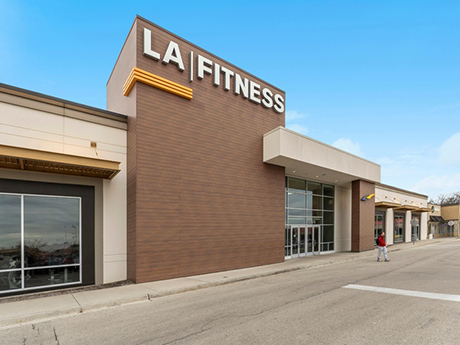
LOMBARD, ILL. — Mid-America Real Estate Corp. has negotiated the sale of High Point Centre, a 240,345-square-foot shopping center in Lombard. The property presents a value-add opportunity, as it is 68 percent leased. Tenants include LA Fitness, Altitude Trampoline Park, Ace Dental, Burger King, Mango Mango Desserts, Sport Clips, Seoul Bites Korean BBQ, Souq Market and Tropical Smoothie Café. Ben Wineman of Mid-America represented the seller, a publicly traded REIT. A private investment group was the buyer.
NEW YORK CITY — National general contractor JT Magen has completed construction of a 15,000-square-foot cinema project in Manhattan’s Chelsea district. Designed by Weiss Architecture, the two-story venue at 131 Eighth Ave. is known as Metro Private Cinema and is a retrofit of a former Duane Read drugstore. The venue features 20 individual private movie suites that can each accommodate between four to 20 viewers, as well as a full kitchen and bar.
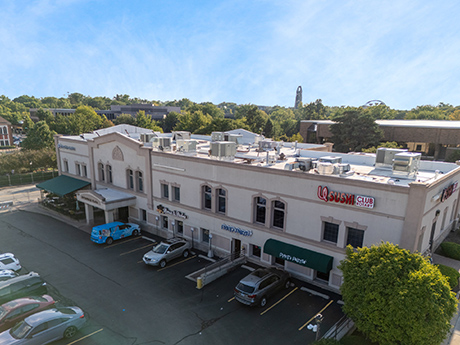
NAPERVILLE, ILL. — Quantum Real Estate Advisors Inc. has brokered the $7.3 million sale of a 23,000-square-foot retail center in Naperville. Located at 175 W. Jackson St., the property consists of eight suites. The buyer was a Chicago-based family office, and the seller was a private family that had owned and managed the property for over 30 years. Brett Berlin of Quantum brokered the transaction. At the time of sale, the asset featured two vacancies.
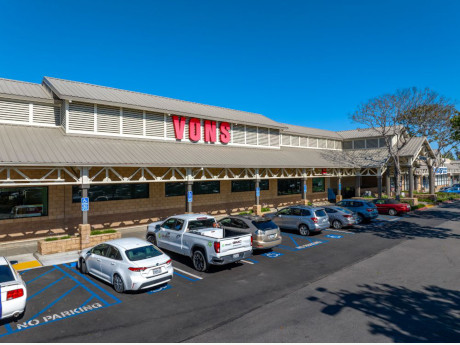
SAN LUIS OBISPO, CALIF. — First Washington Realty has sold Marigold Center, a grocery-anchored shopping center in San Luis Obispo, about 200 miles north of Los Angeles, to Nuveen Real Estate for $58.2 million. Gleb Lvovich, Geoff Tranchina, Daniel Tyner and Eric Kathrein of JLL Capital Markets represented the seller in the deal. Located at 3900 Broad St., Marigold Center offers 174,428 square feet of retail space. Situated on 17.5 acres, the property was 91.6 percent leased at the time of sale. Tenants include Vons, CVS/pharmacy and Planet Fitness, as well as a mix of grocery, pharmacy, fitness, sporting goods, restaurant, medical and service-oriented tenants.
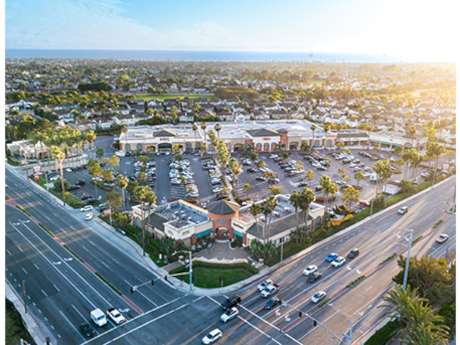
HUNTINGTON BEACH, CALIF. — Westwood Financial has acquired Peninsula Marketplace, a 95,416-square-foot shopping center located in Huntington Beach in Southern California. Grocer Ralphs anchors the property, which was 99 percent leased at the time of sale. Other tenants at the center include Planet Fitness, Carl’s Jr., Woof Gang Bakery & Grooming, Sourdough & Co., Rubio’s Baja Gril, Peninsula Orthodontics, Aim Mail Center and 602 Coffee & Acai.
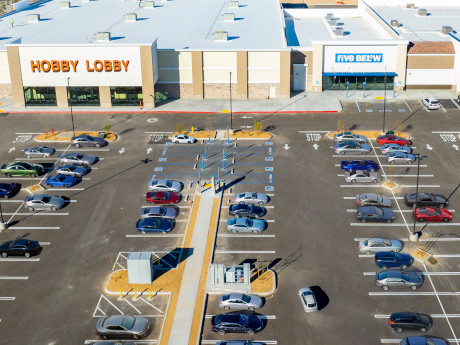
APPLE VALLEY, CALIF. — Hanley Investment Group Real Estate Advisors has arranged the sale of Apple Valley Towne Center, a regional shopping center in San Bernardino County. Kevin Fryman, Bill Asher and Sean Cox of Hanley Investment Group represented the seller and developer, San Pedro, Calif.-based Rich Development Enterprises, in the transaction. The buyer and sales price were not disclosed. Completed earlier this year o a 7.9-acre site at 19390 Bear Valley Road, Apple Valley Towne Center features 87,042 square feet of retail space that was fully leased at the time of sale to three national junior box tenants: Hobby Lobby, Marshalls and Five Below. The tenants operate under new initial long-term triple-net leases with scheduled rental increases every five years. Additionally, the property is shadow anchored by Stater Bros. Markets, Lowe’s and Walgreens.
CLINTON TOWNSHIP, MICH. — Four new tenants are opening at The Mall at Partridge Creek this fall. The open-air regional shopping center is located in Macomb County and is home to more than 80 stores, restaurants and entertainment sites. Cherry Republic, a northern Michigan business that makes cherry products, is now open in a 6,277-square-foot store next to Pandora inside the mall’s main entrance. The Noble Duck Japanese Sushi & Steakhouse, a new local concept, will open this holiday season. Owned by Chef Omar Mitchell, the creator of Detroit’s Table No. 2 Restaurant, The Noble Duck will offer modern Japanese dining in a 4,831-square-foot space near Cooper’s Hawk and Powerhouse Gym at the east end of the mall. See’s Candies will open at the mall in November with a 1,499-square-foot location next to Express at the mall’s main entrance. Apparel and accessories retailer Aeropostale will open in late November. The 3,760-square-foot store will be located at the east end of the mall next to American Eagle.
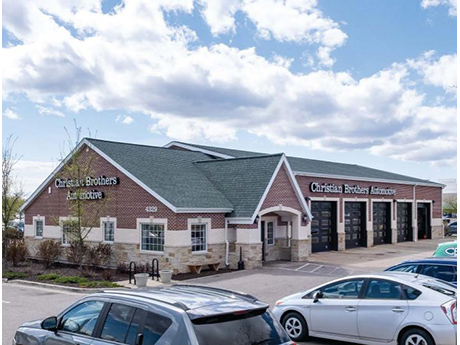
GRAND RAPIDS, MICH. — Marcus & Millichap has brokered the $3.2 million sale of an automotive service property occupied by Christian Brothers Automotive in Grand Rapids. Built in 2021, the property totals 5,810 square feet. Jeff Rowlett and Paul Kerber of Marcus & Millichap procured the buyer, a private investor based in Illinois.
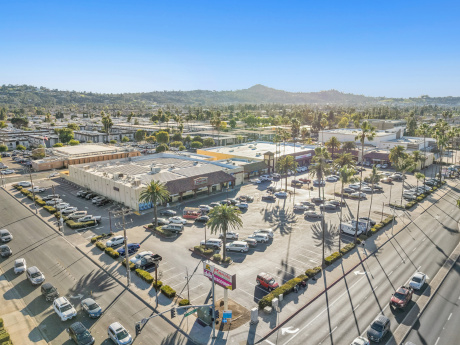
EL CAJON, CALIF. — DPI Retail has sold Main Street Marketplace, a grocery-anchored shopping center in El Cajon, located in San Diego County, for $17.5 million. The buyer, an entity doing business as First Corner LLC, is the owner of Manolo Farmers Market, which has anchored the property since 1988. Enrique Wong of Marcus & Millichap, along with Tom Lagos, Patrick Toomey and Jose Carrazana of Institutional Property Advisors (IPA), a division of Marcus & Millichap, represented the seller in the deal. Built in 1979 at 1045-1099 E. Main St., Main Street Marketplace offers 75,328 square feet of retail space. Other tenants includes Bellus Academy, D C Cleaners, Fresh Up Barber Shop, Total Vision El Cajon, Boost Mobile, Freeway Insurance and El Cajon Eco Laundry. At the time of sale, Main Street Marketplace was 94.7 percent occupied, with dd’s Discounts accounting for two-thirds of the gross leasable area.