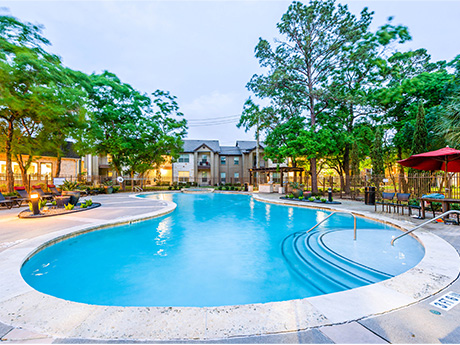
ROCKWALL, TEXAS — Mumford Co., a hospitality brokerage firm with regional offices around the country, has arranged the sale of the 98-room Tru by Hilton Rockwall Dallas hotel, located on the city’s eastern outskirts. The property was built in 2020 and features a fitness center, business center and an outdoor pool with patio seating. The name of the seller and the Alabama-based developer that purchased the property were not disclosed.
Texas
DALLAS — Bolour Associates, an investment firm based in Southern California, has sold a 7,190-square-foot medical office building located at 12222 Coit Road in North Dallas. David Zoller and Corbin Tanenbaum of Weitzman represented Bolour in the transaction as well as in its original acquisition of the property in 2022. Justin Utay of NAI Robert Lynn represented the undisclosed buyer.
HOUSTON — Vard Marine Inc., a provider of naval architecture and marine engineering services, has signed a 6,694-square-foot office lease at 1311 Broadfield Blvd. in Houston’s Energy Corridor area. According to LoopNet Inc., the building was constructed in 2000 and totals 155,407 square feet. D.J. Hale of Oxford Partners represented the tenant in the lease negotiations. Jack Russo of JLL represented the landlord.
By Herb Weitzman, executive chairman, Weitzman The major Texas metro areas of Austin, Dallas-Fort Worth, Houston and San Antonio all share one thing in common: Their retail markets are posting balances of supply and demand that outpace every other major commercial real estate category. This milestone was not achieved without overcoming significant obstacles. The major Texas retail markets have survived decades of back-to-back challenges, including major market disruptors like e-commerce, the 2008 Financial Crisis that knocked out several major chains and 2020’s pandemic-induced shutdowns. Each of these significant disruptions and challenges first resulted in store closings and higher vacancy rates. But retail operators as well as commercial brokers and landlords all learned from the setbacks by embracing the lessons of these disruptions to understand how to creatively bounce back stronger. As a result of the market’s careful pivoting, the retail markets in Texas’ major metros have right-sized and are reporting a yearslong trend of balance in supply and demand. To illustrate this point, we used the mid-year reports from CoStar Group on the non-retail CRE types. We compared retail vacancy rates in the four Texas markets to CoStar’s mid-year rates for the industrial, office and multifamily spaces in each of …
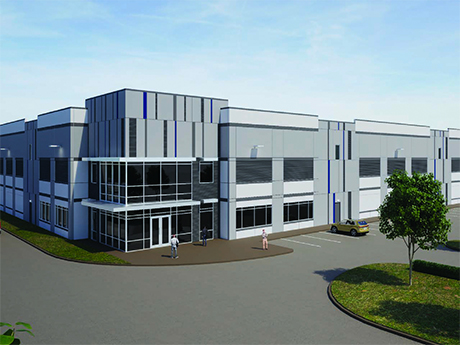
NEW BRAUNFELS, TEXAS — Developer CLX Ventures is underway on construction of New Braunfels Commerce Center, a 651,010-square-foot speculative industrial project that will be located on the northeastern outskirts of San Antonio. Designed by Powers Brown Architecture, New Braunfels Commerce Center will consist of four buildings ranging in size from 129,632 to 204,874 square feet on a 46.7-acre site. All four buildings will feature 32-foot clear heights and rear-load configurations. Stream Realty Partners is the leasing agent. Delivery is slated for spring 2024.
CELINA, TEXAS — Mill Creek Residential has completed construction of Amavi Celina, a 271-unit build-to-rent residential community located about 40 miles north of downtown Dallas. The 45-acre site houses cottage- and townhome-style residences as well as single-family detached homes. Residences come in one-, two-, three- and four-bedroom layouts. Amenities include a clubhouse with a fitness center, pool, dog park, playground, green space and onsite walking trails. Preleasing is underway, and the first move-ins are scheduled for later this month.
OKLAHOMA CITY — Dallas-based Gatehouse Capital has topped out a 132-room boutique hotel that is part of Phase I of OAK, a 20-acre mixed-used project in Oklahoma City. The first phase also includes 135,000 square feet of retail and restaurant space, 320 apartments and a 7,000-square-foot central green space. Phase II will feature 100,000 square feet of office space and an additional 85,000 square feet of retail space. Full completion is slated for next September. Veritas Development is the master developer of OAK.
AUSTIN, TEXAS — Locally based brokerage firm Muskin | Elam Group has arranged the sale of Cielo at Burnet, a 48-unit apartment complex in North Austin. Daniel Elam and Lyles Carter of Muskin | Elam Group represented the undisclosed, Georgia-based seller in the transaction. The buyer, which also requested anonymity, plans to implement a value-add program and rebrand the property as Colony Creek Apartments. Cameron Hart and John Romano of Berkadia originated acquisition financing for the deal.
DALLAS — Royal Finish Inc., a provider of building restoration services, has signed a 11,533-square-foot lease renewal at Sandhill Business Center, an industrial flex property in northeast Dallas. Brian Pafford of Bradford Commercial Real Estate Services represented the landlord, OMO Investment Co., in the lease negotiations. Reegan Busby of Colliers represented the tenant.
Location’s importance to commercial real estate has become a cliché. But in logistics and industrial considerations, the idea is new again — it’s not about where you are but where customers need to go and the primacy of transportation. If you’re not at the place and time that clients need, it doesn’t matter how theoretically fine the setting or how impressive the facilities are. “Transportation is roughly 12 times the cost of industrial real estate,” says Adam Roth, executive vice president at NAI Hiffman. Finished products, goods and materials are sent into and out of facilities over and over again. Shipping and trucking are a stiffly recurring expense and a much higher spend than real estate. “If I can impact your transportation spend, the real estate is a much smaller factor in the supply chain. If you can address the current concern of transportation, real estate rates almost doesn’t matter, due to a location’s supply chain advantages. Real estate can be one of the best ways to combat transportation costs.” The Rule of 1.5 In practical terms, customers’ plans for transportation are a series of changes, starting at factories, going to ports or warehouses for inventory, on to major and …