

The Washington, D.C., commercial real estate market is intricate, shaped by broad economic trends and local dynamics. The recent federal government shutdown underscored ongoing challenges, intensifying uncertainty and slowing local transactions. Continued ambiguity around trade and tariff policies further complicates business planning, adding to the region’s cautious dealmaking environment.

Anxiety affects the region’s key economic source: federal workers and contractors, who make up 40 percent of its economy. Since January 2025, federal job losses here have outpaced the national average, increasing the risk of a local slowdown. Despite the area’s wealth, ongoing job uncertainty should guide all investment and operational choices.
The interplay between federal employment trends and local business activity means that investors and operators must remain vigilant, adapting strategies to respond to shifting workforce dynamics and consumer sentiment.
Tale of two markets
The D.C. retail market is split: downtown faces challenges due to office vacancies and low weekday traffic, while suburban and residential-heavy urban areas are thriving. Affluent spots in Northern Virginia and Suburban Maryland have the lowest vacancy rates thanks to stable local shoppers. These areas benefit from consistent foot traffic and resilient spending patterns, which help insulate them from broader economic volatility.
From a capital markets perspective, the retail sector experienced a marked deceleration in sales volume in third-quarter 2025, partly on a psychological basis. The most significant positive news were the federal funds rate cuts in September and October, providing a much-needed signal to the market that a shift in the price of debt was probable.
Washington’s suburban strength has helped offset urban weakness, keeping price per square foot firm and cap rates stabilizing over the past several quarters. This demonstrates that investors remain interested in well-located, high-quality assets. The divergence between urban and suburban performance highlights the importance of location and demographic analysis in retail investment decisions.
What do consumers want?
Today’s consumers value accessibility, variety and innovation. With more remote work, shopping patterns have shifted toward residential areas, favoring convenient and diverse options. As a result, grocery-anchored and essential services retail, as well as experiential or destination retail, are leading the market.
The most resilient of the two are centers anchored by grocery stores, particularly those in neighborhood and community shopping centers. They continue to enjoy strong and steady demand in densely populated areas and affluent suburbs.
Experiential retail is also thriving because it provides value that e-commerce can’t deliver. High-quality food-and-beverage providers, entertainment venues and well-curated, mixed-use developments are not easily replicated online.
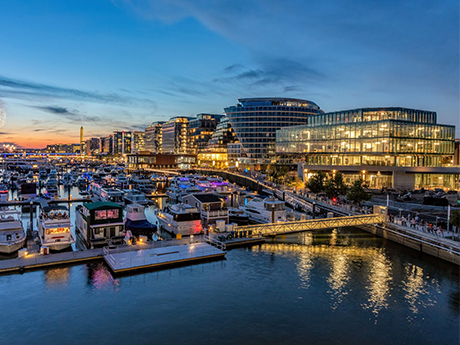
Projects designed to be true destinations, like The Wharf in D.C., are seeing near-zero vacancy rates, demonstrating that creating a “reason to visit” is key to success. Retailers that innovate with unique experiences and tailored offerings are best positioned to capture evolving consumer preferences.
Focus on flexibility
Success in this evolving landscape requires a clear, forward-looking strategy from both sides. Landlords must transition their properties from simple transaction hubs into experiential destinations.
Innovative landlords are increasing GLA (gross leasable area) within their centers, often through the development of pad sites that drive additional traffic and synergize with existing co-tenancy. Flexible lease terms are also a critical tool to sign high-quality tenants and mitigate risk in challenged areas.
For tenants, the focus must be on selective location and value-add experience. Successful retailers are those that deliver a unique product, personalized service and/or an experiential offering. Their financial models must account for local economic factors, and they must be proactive partners with their landlords to foster long-term stability.
Collaboration between landlords and tenants is increasingly vital, as both parties seek to create environments that attract and retain customers while adapting to market shifts.
With 2026 approaching, the D.C. retail landscape is full of opportunity for those ready to adapt and invest strategically. The enduring trend is a focus on stable residential density, convenience and high-quality, experience-driven retail. The savviest retail professionals will capitalize on these trends well into the new year and beyond.
By embracing innovation, flexibility and a deep understanding of local market forces, stakeholders can position themselves for sustained success in a rapidly changing environment.
— By Chris LeBarton, Director of Research, KLNB. This article was originally published in the November 2025 issue of Southeast Real Estate Business.