

By Taylor Williams
The challenges are multi-faceted. The timelines are elongated. The costs are brutal. The capital is tight. The consumers’ incomes are strained. The prevailing logic favors buying over building. The list goes on.
And yet some retail developers in Texas and Oklahoma see the current environment as one that represents a unique chapter in the saga of their business — one that makes them glad they do what they do.
That sentiment is not just a factor of a post-COVID resurgence built on the realization that brick-and-mortar stores and e-commerce platforms work better in tandem than in opposition. And it’s not just a natural byproduct of favorable supply-demand dynamics that have pushed retail occupancies and rents to record highs in most major markets. It goes beyond being the beneficiary of new capital flows as the commercial real estate darlings of the past decade — industrial and multifamily — have experienced softening fundamentals.
The feeling is, in the words of Stevie Wonder, all these things and more.
“It’s a special time in this business, even if it’s a different one,” says David Neher, president at Dallas-based Rainier Development Co. “There’s a fair amount of front-end risk and planning for vertically integrated mixed-use, and these projects can take a long time, but if you got into this business to change the built environment and improve people’s quality of life, you’re checking a lot of boxes right now.”
“It’s a really fun time to be in the retail development world,” agrees Michael Platt, executive vice president of mixed-use development at Centennial, another Dallas-based developer. “There are great [tenant] prospects out there. There’s capital that really wants to invest in the right projects, and there are people who have great visions and experiences. Projects have undoubtedly gotten more complex, but also much more interesting.”
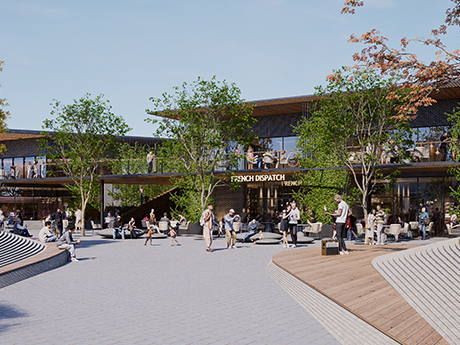
This past fall, Rainier unveiled plans for Riverline, a $400 million mixed-use development in Tulsa that is planned to include about 200,000 square feet of shopping, dining and entertainment space. At the time, Neher noted that Riverline would “create a destination that reflects the city’s forward momentum, integrating shared infrastructure, vibrant streetscapes and thoughtfully designed public spaces. From morning coffee to evening events, Riverline will be alive with energy throughout the day.”
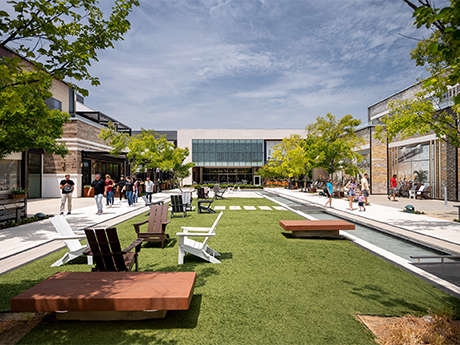
This past spring, Centennial revealed its redevelopment plans for The Shops at Willow Bend, a 1.4 million-square-foot regional mall located on the northeastern outskirts of Dallas in Plano. Platt said at the time that the overarching goal of the project was to “transform The Shops at Willow Bend into a vibrant, walkable destination that thoughtfully integrates retail, dining, entertainment, residential, hospitality and office uses.”
In both cases, the emphases on “energy” and “vibrancy” are very much intentional and reflective of the mindset that exists within the business today. Indeed, the idea of being deliberate and purposeful in the design and delivery of retail projects has arguably never been more important.
“Thoughtful execution is being rewarded again, and that is perhaps the most exciting part of being a retail developer in Texas today,” says Ahsan Daredia, partner at Plano-based development firm SLX Capital. “In today’s market, quality clearly outweighs quantity, and developers that prioritize strong sites, durable tenant demand and long-term cash flow are seeing better outcomes.”
In addition, the routine use of upbeat language to describe these destinations speaks to the unspoken psychological aspect that comes with developing retail and mixed-use projects. Because within the pantheon of commercial real estate, retail, restaurant and entertainment have always been the best barometers of how people think and what they really want. A successful retail and/or mixed-use project is a window into the human psyche of the general population.
But humans are fickle creatures who today are subjected to more outside influences — and influencers — than ever before. Delivering on those whims in a timely, profitable manner is an immensely challenging endeavor that requires constant flexibility and hyperattention to detail, especially in an elevated cost environment.
Being in Texas Helps
Fortunately for developers in Texas, the state does some of the work for them.
“Texas remains one of the few markets in which strong demographics, pro-business policies and real consumer growth intersect, making it an ideal place to build durable retail that serves real communities,” says Daredia.
“The current retail cycle in Texas is defined less by speculative growth and more by disciplined,
fundamentals-driven development,” he continues. “Rising interest rates, tighter capital and higher construction costs have forced developers to be more selective, which has limited new supply and kept well-located retail resilient. In this environment, patient developers that focus on neighborhood-oriented retail and securing quality national credit tenants, rather than chasing marginal deals, are positioned to perform.”
Other developers agree that simply being in Texas is a big boost.
“We as retail developers are all fortunate to be doing business in a dynamic and growing state,” concurs Buck Cody, managing principal at Austin-based Endeavor Real Estate Group. “Growth in Texas leads to more retail opportunities. Out-of-state buyers continue to come to Texas to invest their capital. Best-in-class retailers see specific Texas markets as ones in which they want to expand into at early stages of their growth plans.”
Cody adds that while those basic growth patterns within the Texas retail scene have been around for a good 15 or so years, they’ve really accelerated in the post-COVID era. In addition, the past few years have given rise to more unique and engaging concepts while thinning the herd of run-of-the-mill operators.
Cody also believes that retail development in Texas has a leg up on the competition when it comes to the capital markets, though some valuation metrics have perhaps retreated a bit in recent years.
“Retail is very in favor right now with regard to institutional capital,” he says. “Unlike other asset classes that in some markets or submarkets may have been overbuilt, the retail tenant supply and demand balance remains very strong. And while values and pricing in Texas remain as good or better than almost anywhere in the country, exit cap rates have still moved between 75 and 125 basis points from 2021 to 2022.”
Yet all this positive activity and momentum has coincided with fresh challenges, and developers recognize just how much conditions have either shifted or been exacerbated in those respects.
Hard Costs Rising
Hard costs of development, whether for ground-up projects or repositioning plays, have always been difficult to control and even more difficult to circumvent.
Ground-up development of course has its own set of expenses: land, zoning, entitlement, etc. But interior build-outs — as embodied in tenant improvement (TI) allowances — are a piece of the puzzle that applies to both business plans. And those costs continue to rise.
According to Cushman & Wakefield’s U.S. Retail Fit Out Cost Guide, which surveyed general contractors across 15 markets, the average build-out cost for an inline retail space in 2025 was about $155 per square foot. That figure represents a 4 percent increase from 2024.
“Costs are still the biggest [adverse] factor right now in new development, from construction to land pricing, although the latter is getting better,” says Stephen Pheigaru, managing partner at Houston-based brokerage and development firm Palo Duro Commercial Partners. “There’s still a significant difference between what developers can pay and what construction costs are such that we can get our yields to where they used to be. Acquiring properties versus developing them right now is more of a focus because costs of new development are so high and costs to buy and reposition are marginally better.”
Pheigaru also sees a solid delta between what landlords and tenants believe they can afford on build-out costs. Meeting in the middle on TIs is a painstaking process, he says, particularly with deals for food-and-beverage or medical users. Yet it’s well worth the slog given the high level of demand in the market. In addition, Pheigaru sees better potential in 2026 for macroeconomic machinations that could create relief for both sides.
“If interest rates come down, capital will be cheaper, including equity,” he says. “As [yields] on bonds and money markets come down, equity groups will look to place capital elsewhere, including in commercial real estate, at a cheaper cost. This should help tenants with costs and make it easier for them to spend money on their build-outs. At the same time, if landlords can get better interest rates, it creates relief on the yields we’re chasing.”
Platt says that successfully managing hard costs at the underwriting level is crucial to creating projects that will attract the best tenants.
“For existing projects that we’re redeveloping, costs of materials are elevated and are outpacing rent growth, which puts pressure on spreads and makes developments that much harder to get to a financeable point,” Platt says.
“With acquisitions for new developments, we’re seeing a little bit of cap rate compression, which puts stress on the dollars,” he elaborates. “So we have to be really sharp with our underwriting. It’s a combination of cap rates, construction costs and rent projections, and it becomes a complex matrix of considerations to land at an outcome that is sustainable.”
A Silent Killer
Austin Alvis, president and chief development officer at NewQuest, says that in 2025, his company saw flattening of costs associated with tilt-wall retail buildings and sitework. But he points to another cost driver as equally problematic, not to mention difficult to quantify: the cost of time.
“A big chunk of our budget deals with project duration, lead times, financing costs, et cetera,” Alvis says. “The longer a project takes, the more it costs via interest on loans, costs of capital and delayed onset of NOI [net operating income].”
Lease negotiations are also taking longer to close these days, Alvis says. Whereas a standard retail lease might have taken three months to negotiate in the past, many larger leases are closer to nine months today, all other factors being held equal. Alvis says some of the biggest hurdles in leasing with anchors are co-tenancy requirements in new projects in which multiple leases are being negotiated simultaneously.
“It’s hard when you have a lineup of five or six tenants, and nobody wants to pay rent until the others are open,” he says. “It’s like a game of chicken. None of them want to open until the others do, and if nobody blinks, we get penalized and still have to pay our lenders. That’s a challenging dance that relies on good tenant relationships. In addition, the timing of delivering these projects is tied to securing critical amounts of leases that determine the specifics of what you’re going to build.”
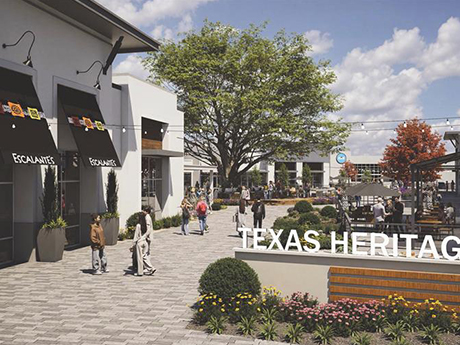
NewQuest plans to break ground on several projects in 2026. The company most recently commenced work on the 750,000-square-foot Texas Heritage Marketplace, anchored by Target, and an 87,502-square-foot expansion at The Grand at Aliana, its power center in the southwestern Houston suburb of
Richmond. Fortunately for NewQuest, the latter space is already fully preleased to two tenants — Dick’s Sporting Goods and Atlanta-based Havertys Furniture — both of which plan to open their stores before the end of the year.
Other developers agree that time is not on their side these days.
“Annual rent increases have been trending in the past couple years, which seemed to happen overnight after COVID,” says Jeff Hayes, managing partner and co-founder of Palo Duro. “That has jolted both sides from a negotiating standpoint, but especially the tenant side. It’s also taking longer to get deals done because everybody is more lawyered up and more sophisticated. Approval processes are longer, and there’s more stringency.”
Like his partner, Pheigaru, Hayes also believes that added time is just another cost of doing business in a field that rewards patience.
“Retail is strong; demand is there for growing, healthy concepts. We just have to figure out how to get them built in a timely fashion, because business is taking longer than it should,” he concludes.
Neher of Rainier Development highlights an unfortunate irony in the retail development world that speaks to the issue to timeliness — or rather the lack thereof. He notes that entertainment concepts, particularly those that are family-friendly, have been and continue to be among the most sought-after deals for new developments and/or repositionings. Yet due to their size and other factors, those deals often cost more money to bring to fruition and entail major decisions for any owner.
At the same time, Neher recognizes that entertainment concepts are perhaps the ultimate embodiment of what makes retail development so exciting and interesting today.
“Entertainment deals are incredibly valuable and wonderful complements when they work; they’re just big bets by landlords,” he explains. “In the final analysis, owners are smart and follow their gut, particularly as it relates to their instincts as a consumer. However, due to the often-elevated cost of such deals, it is especially important to do your homework, crunch the numbers and understand the true revenue picture.”
“With a deal for a national tenant with a couple hundred stores or more, you understand the transaction, but with an entertainment-centric deal, more often than not, it’s fewer units and a very sensitive business model,” Neher continues. “The wins look great and the losses sting, so they require more time to analyze. But those uses really bring a lot of people in and juice your peak [traffic], so it’s a wonderful thing when an entertainment tenant enjoys sustained success.”
[You’re] The Best Around
Platt views the elongated timelines not only as a sign of the times but also the evolution of the business.
“Gone are the days of calling a retailer and doing a dozen deals across a portfolio via a few phone calls,” he says. “We do more one-off deals these days, and it’s a greater investment of time. But that’s crucial to bringing in retailers or merchandising plans that resonate with the community.”
“Today’s retail environment is much more localized and curated,” he continues. “There’s a richness and tactile quality to the environment, leasing plan, strategy and the story you’re telling to attract those best-in-class retailers. Big deals, like anchors, have always taken a long time, but today smaller deals do too. It’s taking more hand-holding and conversations; everyone wants to understand the vision of the project.”
Between costs, timing and everything else that complicates retail development in 2026, it takes an exceptional level of resolve and commitment to see deals and projects through to the end. The fact that developers can bring that mentality to work every day speaks to the built-in motivation that the job affords them.
But at the same time, none of that matters if the rents don’t justify the means, and that requires seeking out the best tenants, whether national or local, that can actually afford those rents.
“Landlords today really have to be strategic about the best long-term fit for the project and what concepts play well together, complement each other and don’t cannibalize — all that is important given costs and equity requirements to get these projects built,” says Hayes.
“Good retail sites are difficult to come by, and unlike other sectors which are a little — and in some cases a lot — less sensitive to location, quality retailers require excellent real estate,” adds Cody. “While the underwritten profits for developers and/or their investors have decreased in many instances from 2021 to 2022, rents are still as high as they’ve ever been. As a result, it’s challenging to develop for any retail users other than the very best.”
— This article first appeared in the January 2026 issue of Texas Real Estate Business magazine.