

Builders have “dampened” expectations for construction activity in 2026, apart from data centers and power projects, according to the Associated General Contractors of America (AGC). Citing broader worries about the direction of the economy, the findings were part of the AGC/Sage Construction Hiring and Business Outlook Survey, which was released in early January.
Kurt Steinmann, vice president and residential business unit leader at Swansea, Illinois-based Holland Construction Services, says “the market is clearly more disciplined than it was a few years ago, but that’s not a bad thing.
“We’ve moved out of a speculative cycle and into one where projects need to be fundamentally sound to move forward,” he explains. “For general contractors, that means fewer starts overall, but stronger alignment on the projects that do proceed.”
In other words, developments are better planned, more realistic on budgets and supported by experienced ownership groups.
“Owners are moving forward with intention, prioritizing projects that are well-defined and aligned with long-term operational needs,” echoes Caitlin Russell, president of Davenport, Iowa-based Russell. “While interest rates and financing conditions continue to influence timing, demand for experienced general contractors who can provide cost clarity and early collaboration remains strong. Our outlook for the year ahead is steady, with opportunities driven by mission critical (data centers), manufacturing, industrial and healthcare.”
For example, Russell is leading construction of the new 431,180-square-foot A.Y. McDonald Foundry in Dickeyville, Wisconsin. The brass casting facility will significantly expand manufacturing capacity with a new sand plant and upgraded shipping infrastructure.
Steinmann says he is cautiously optimistic about the year ahead. “Financing conditions are still challenging but improving, and there’s steady demand in needs-based sectors like affordable housing and senior living. Contractors who understand these markets, manage risk well and bring value early are positioned to stay busy.”
With a slowdown in market-rate multifamily development, Holland is focused on affordable, student and seniors housing projects. These segments are experiencing growth fueled by tax credit programs, housing shortages across the Midwest, university enrollment increases, old dormitories requiring replacement and demographic shifts toward independent and assisted living. Holland is under construction on Stevens Apartments, an affordable housing property in Wood River, Illinois.
Minneapolis-based Ryan Cos. is actively engaged in healthcare projects as well as data centers, medical technology and industrial/light manufacturing. The firm is under construction on a 157,000-square-foot advanced technology project for Micro Control Co. in Arden Hills, Minnesota. The development will serve as the company’s headquarters and will manufacture test equipment for the electronics industry.
Ryan Cos. experienced a record year in 2025, so a slightly lower volume of business is anticipated for this year, according to Jason Gabrick, regional senior vice president of operations.
“We have some exciting large projects on the horizon, and we will spend much of 2026 designing, planning and preparing for them to start late this year,” says Gabrick. “2027 and 2028 are already shaping up to be robust years.”
Ramiro Trevino, vice president of construction with Chicago-based Urban Innovations Construction, says that business inquiries have increased over the past few months. “Some of the activity that we are finally seeing come to life are those projects that were sidelined for a while either for funding or timing purposes,” he states. “Our goal is to increase our revenue by 5 to 8 percent from last year, which currently is looking very likely.”
The impact of high costs
Input prices for new nonresidential construction rose 3.6 percent in November on a year-over-year basis, according to producer price index data from the Bureau of Labor Statistics. The year-over-year change was the largest since January 2023, according to the AGC.
Rising construction costs are more challenging for smaller businesses and projects as opposed to large-scale, long-term clients, says Sean Hollister, senior vice president of the North Central business unit at Barton Malow, which is headquartered in Southfield, Michigan. “We’re adapting by proactively seeking more cost-effective delivery methods, such as prefabrication and early purchasing, to ensure that all of our projects can continue.”
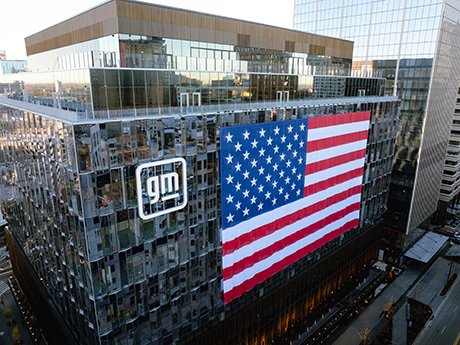
Barton Malow is the contractor behind high-profile projects such as the new Ford World Headquarters in Dearborn, Michigan, and Hudson’s Detroit, the redevelopment of the former J.L. Hudson Department Store in downtown Detroit.
“Thankfully, even during economic turbulence, we’ve found that construction labor, materials pricing and inflation have remained relatively predictable. This is a significant shift from the challenges and volatile pricing the industry faced during the pandemic,” says Gabrick. “While tariffs initially created uncertainty, our trade partners and vendors are now able to provide much more assurance of their impact.”
In the AGC/Sage outlook survey, roughly 70 percent of construction firms indicated that they were affected by tariffs. Forty percent reported responding to actual or proposed tariffs by raising bid prices, and 20 percent of firms added price-sharing adjustments or other terms to contracts.
When it comes to project costs and budgets, general contractors emphasize the importance of early collaboration and the preconstruction phase.
For Russell, successful preconstruction efforts are driving momentum for her firm. “Rising construction costs and a slower pace of development have sharpened the focus on disciplined decision-making and trusted partnerships,” she says. “In response, we are leaning into the value we bring through early engagement, rigorous preconstruction and transparent cost leadership.”
“We continue to keep an eye on construction costs but have been successful mitigating most of those risks by locking in pricing with key vendors and subcontractors early in the project lifecycle,” states Howard Green, executive vice president of Rosemont, Illinois-based Meridian Design Build. He says Meridian’s preconstruction group has been very active in recent months assisting clients and providing budget assistance on conceptual site plans.
Green also cites Meridian’s familiarity with national markets and the relationships built over the years with developers and tenants for keeping his firm “busy during challenging times.” With an uptick in the number of speculative projects on the drawing boards for markets like Chicago and Columbus and a healthy backlog going into 2026, Green expects this year’s revenue to be 30 to 40 percent higher than 2025.
One such project already in progress is University Park Logistics Center, a 970,123-square-foot speculative industrial facility being constructed as a joint venture between developers Hillwood and Clarius Partners. Meridian was awarded the Chicago-area project in late August after several rounds of competitive bidding, according to Green. Precast wall panel installation is underway, and Meridian expects to have the building under roof in early June.
Dulcinea Gillman, partner with Villa Park, Illinois-based North Arrow Partners, expects 2026 to be a modest growth year compared with 2025. Part of the reasoning is more diversification across project types and funding sources. North Arrow Partners primarily builds affordable housing projects.
“In 2025, we spent a meaningful amount of time navigating funding cycles, interest rate pressure, high construction costs and the reality that some deals simply couldn’t close without additional soft funds or rental subsidies,” says Gillman.
One project that did get completed in 2025 was Wildwood Commons & Trace in Elgin, Illinois. The 74-unit property provides supportive housing for individuals with disabilities, people experiencing or at risk of homelessness and low-income families.
As more speculative developments start to move forward, Principle Construction Corp. is forecasting its 2026 revenue to increase roughly 20 percent from 2025. Jim Brucato, president of the Rosemont, Illinois-based company, shares three ways his firm operates during any down market: by using technology and training to become more efficient and grow expertise; by pursuing other regional markets; and by closely monitoring materials costs to provide clients with the best possible solutions.
Principle is currently in the design, permitting and long-lead procurement phases for a 600,000-square-foot technical manufacturing facility with hundreds of pieces of equipment.
Early procurement
Engaging a general contractor early in the development process also helps alleviate any supply chain issues. For example, through its Direct Procurement Program, Cincinnati-based Messer Construction Co. pre-purchases critical materials early in the preconstruction process.
Nick Rumpke, estimating principal with the firm’s Indianapolis office, says that lead times for large mechanical and electrical equipment such as chillers, generators and switchgear remain problematic.
Extended lead times for these types of items often range from 40 to 60 weeks, according to Russell.
Ryan Cos. maintains a tracking program that monitors the lead times of more than 200 common materials used in commercial construction projects. The system tracks the materials on a monthly basis and produces a heat map that identifies risk, according to Gabrick.
“Given the artificial intelligence (AI) boom and surge in data center construction, it is no surprise that generators and electrical gear require early planning and procurement,” he says. “Some lead times are improving, but they can vary significantly depending on manufacturers.”
Gabrick also notes that the lead times for elevators are increasing, with some traction elevators experiencing lead times of up to 54 weeks.
“Supply chains have improved compared with the peak disruption years, but there are still pressure points. Electrical gear, elevators and some HVAC components continue to carry extended lead times,” says Steinmann. “The key difference now is predictability. We’re planning procurement earlier, releasing long-lead items sooner and coordinating closely with design teams so schedules stay realistic.”
According to Green, lead times for key building components such as precast, steel and roofing materials have normalized due to the general slowdown in industrial development over the last few years.
Ways to address labor
Today, labor availability remains a challenge across the construction industry, particularly within the skilled trades. Many general contracting firms are devoting resources to supporting the next generation of builders.
In addition to training, mentorship and leadership development for its employees, Russell is partnering with schools, hosting student jobsite tours and participating in career fairs “to introduce construction as a viable, rewarding career path,” says Russell.
Ryan Cos. is involved with youth outreach and mentorship programs as well as pre-apprentice and university partnerships.
“A labor shortage is looming. While projects are getting done now, a generation of skilled workers is nearing retirement, and we’re facing a shortage of skilled craft workers and experienced project managers and supervisors,” says Gabrick.
According to Hollister, labor availability is currently the largest issue that Barton Malow faces. “Finding qualified labor for specialty work, particularly for large-scale projects, is increasingly difficult,” he says. “We’re attempting to offset some of these challenges through actively recruiting the next generation of builders by supporting multiple universities, collaborating with unions and working with training providers in non-union areas.”
Beyond offering co-ops and internships, Messer has Department of Labor-certified apprenticeship programs in Ohio, Indiana, Kentucky, Tennessee and North Carolina.
“Through our Urban Workforce Development Initiative, we’ve helped more than 150 individuals overcome employment barriers and step into sustainable roles, with participants continuing projects in Cincinnati and Columbus,” says Pete Bergman, a vice president with Messer in Cincinnati.
In addition to building a new inpatient tower and trauma center at Grant Medical Center, Messer’s Columbus office is leading a plant expansion for Hikma Pharmaceuticals as part of the company’s long-term, billion-dollar investment in U.S. manufacturing and research and development.
Messer’s Cincinnati office recently completed a comprehensive renovation of the Cincinnati Convention Center and Elm Street Plaza. Work is ongoing at the Farmer Music Center outdoor amphitheater and a new College of Osteopathic Medicine at Xavier University in Cincinnati.
North Arrow Partners plans to begin outreach to local colleges and trade schools in some of the areas that it currently has developments under construction. Site tours are set to begin soon.
“Students will have the opportunity to visit our job sites alongside our project managers and site supervisors, gaining hands-on insight into construction careers and seeing firsthand the skills and teamwork required to bring projects to life,” says Gillman.
Brucato emphasizes that data center construction is putting pressure on electrician availability, as these developments require hundreds of electricians for long-duration projects.
According to AGC and Sage, construction firms are increasingly investing in technology to address productivity and labor challenges. Sixty-one percent of survey respondents say their firms are using AI or plan to increase investment in it, up from 44 percent last year.
“Labor remains tight, particularly among skilled trades. That hasn’t changed. What has changed is the level of collaboration,” says Steinmann. “We’re seeing better coordination between contractors and trade partners to address the issue long term.”
— Kristin Harlow
This article originally appeared in the January 2026 issue of Heartland Real Estate Business magazine.