

Mixed-use development across the Southeast continues to change and evolve. What was once as straightforward as building residential apartments located above a street-level retail component has become something far more sophisticated and intentional. Today’s mixed-use communities offer integrated, experience-driven environments where all elements of living, working, shopping, dining and recreation are thoughtfully curated, with connectivity as a primary focus.

The North Georgia region, located approximately 40 miles north of Atlanta, is where residential demand is rising, incomes are growing and consumer preferences are changing. As these trends converge, developers seek the opportunity to create true neighborhood hubs in the area.
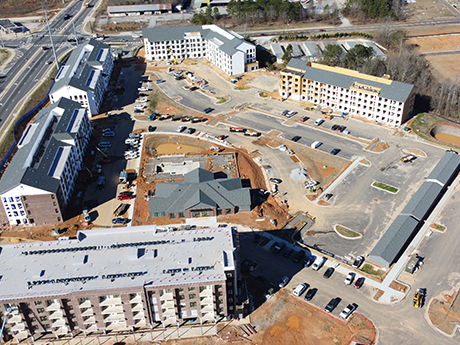
The Crossing at Coal Mountain, located in Forsyth County, is a new 140-acre mixed-use destination by Atlantic Residential that reflects how development strategies are evolving in response to these market shifts. The project will feature walkable streets, activated green spaces, local dining, daily lifestyle services and a carefully programmed retail plaza alongside luxury homes being developed in partnership with national homebuilder Toll Brothers.
Each of the project’s planned elements is designed to support a true live-work-play environment. Phase I of the project’s retail district is on track to open this year, positioning the development to contribute to the region’s broader mixed-use landscape as it continues to expand.
Strategic opportunity
Forsyth County remains one of the fastest-growing counties in the Southeast, with its population continuing to increase year-over-year. From 2020 to 2024, the county’s population grew by nearly 30,000 people, reaching just over 280,000 residents by the end of 2024. Beyond population growth, the area also benefits from strong demographics, top-rated schools and expanding infrastructure.
As a result of this transformation, the area has evolved from being solely residential into a suburban-urban hybrid, offering new gathering places, essential services and modern lifestyle amenities. It now attracts both families and professionals, and is well-suited for vibrant mixed-use developments like The Crossing at Coal Mountain to help meet unmet demand. At the same time, this growth has created a more competitive environment, requiring projects and developers looking to move forward in the area to differentiate themselves through thoughtful planning and execution.
Additionally, tenants’ expectations have increased, seeking more than just high visibility and foot traffic. Today’s tenants prioritize locations that offer a strong sense of community, intentional placemaking and the flexibility to meet current and future operational needs.
Expectations, placemaking
Retail can no longer focus solely on physical stores. The industry has evolved from a transactional, product-centered model into an experience-based approach that integrates both offline and online customers. As a result, retail environments must now support a more complete, connected customer journey.
To meet these evolving expectations, mixed-use environments must balance authenticity with functionality, supported by a strong, well-curated tenant mix that includes local operators alongside regional and national brands. At The Crossing at Coal Mountain, the project’s planning reflects this shift through a pedestrian-focused design that supports gathering spaces and year-round activities for the surrounding community.
Approximately 60 percent of the retail tenant mix at The Crossing at Coal Mountain will be food-and-beverage focused, with the remainder featuring soft goods and services such as salons, spas, fitness studios and other daily conveniences, including a 20,000-square-foot pad that can accommodate a small-format grocery or market. As households continue to seek modern amenities closer to home, this balanced mix supports destinations that are integrated into daily routines.
Construction progressing
After breaking ground in July 2025, Phase I of the project’s retail plaza, which spans approximately 47,000 square feet, continues to move forward. Key infrastructure is in place, and finishes are being installed in the residential portion of the flagship mixed-use building. The development’s first residential units remain on track for completion this June.
Maintaining a summer 2026 opening timeline is particularly notable given ongoing fluctuations in construction costs, supply chain dynamics and capital markets. In this environment, clarity around delivery timelines provides an added level of confidence for future tenants and partners. To support this momentum, brokerage firm JLL is leading leasing efforts and helping to identify operators that align with the property’s overall vision.
Designed for engagement
JLL has noted that “successful, purpose-built developments use effective strategies to keep revenue flowing between different asset types,” and that philosophy is reflected throughout the project.
One major component of The Crossing at Coal Mountain is the activation of its green spaces and common areas. As a core part of the project’s placemaking strategy, these areas will incorporate seasonal programming, community-oriented events and outdoor gathering spaces. These elements are designed to encourage repeat visits and sustained engagement, supporting both tenant performance and the broader user experience.
Residential integration
The retail plaza is just one component of the overall vision. Toll Brothers is building luxury homes, including both single-family residences and townhomes, designed around resort-style amenities that include community gardens, pickleball courts, a 3,800-square-foot pool and a clubhouse.
By positioning the residential component of the project within a walkable environment, retailers benefit from built-in residential support, while residents gain convenient access to daily services and amenities. Together, these elements reinforce long-term functionality and resilience within mixed-use properties.
The Crossing at Coal Mountain was conceived as more than a standalone mixed-use project. It reflects the character of the region while responding to evolving market conditions, illustrating how thoughtful planning, integrated uses and phased delivery can support sustainable growth in North Georgia.
— By Kecia Tomlin, senior director of development, Atlantic Residential. This article was originally published in the February 2026 issue of Southeast Real Estate Business.