

By Taylor Williams
DALLAS — Costs are always a sensitive subject in all types of residential and commercial development. But with projects that draw heavily on alternative and public-sector sources of financing to pencil out — namely affordable housing — the margin for error on cost overruns is even tighter.
That’s a very unfortunate reality for developers working to mitigate America’s profound shortage of both affordable housing and housing that’s affordable. But with measured, deliberate upfront planning and collaboration between architects, engineers and general contractors, some of that risk can be mitigated.
Editor’s note: InterFace Conference Group, a division of France Media Inc., produces networking and educational conferences for commercial real estate executives. To sign up for email announcements about specific events, visit www.interfaceconferencegroup.com/subscribe.
To keep these critical developments on time and on budget, these project partners have had to not only adjust some of their traditional forms of value engineering (VE) — the term given to the collective effort of cost minimization and utility maximization over the course of a project — but also embrace completely new ones. The framework for trying new types of VE hinges on the notion that the whole of the project is greater than the sum of the individual efforts — and that in some ways, the work does not stop when the building is delivered.
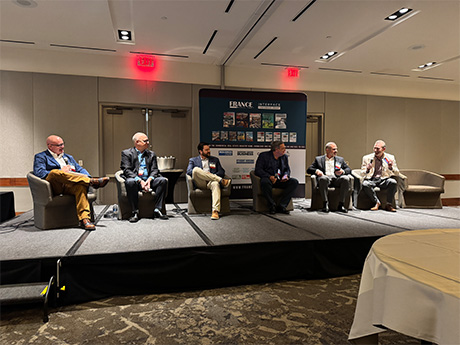
Examples of new practices that project partners have embraced include early-stage VE with architects and engineers, acceptance of preconstruction agreements, development of project prototypes and the use of modular or prefabricated construction. And at the annual Texas Workforce & Affordable Housing conference that took place on Feb. 19 in Dallas, a panel of architects, engineers and contractors spoke to the importance of these principles and practices, both individually and wholistically. The conference drew about 200 attendees in its first year.
In fact, the theme of “early planning and collaboration” would prove so instrumental to the discussion that one panelist, Thomas Straight, vice president of new construction at Pavilion Construction, invoked the concept during introductions. Traditionally, this segment also allows panelists to briefly touch on deals/projects they’re working on that speak to trends that will likely factor into the forthcoming discussion.
“We’re engaging very early with owners and design teams to help [make sure that] these projects pencil,” Straight said after introducing himself. “A lot of our current work is risk mitigation; we’re constantly looking at cost volatility, contractor availability and schedule pressures, from early phases to the closing table, to get projects across the goal line.”
“What we’ve learned and now know is that these deals aren’t breaking or failing due to [poor] design,” Straight continued. “They’re failing once we get drawings into the field. So if we’re not hyper-focused [on costs] very early on before pencils start drawing, it’s costing time and money that these projects can’t afford.”
Later in the discussion, Straight posited another slogan of sorts on the subject: “Early clarity beats late heroics.”
“The most successful projects bring construction [teams] in early, not to limit design, but to bring real pricing and constructability throughout the design phase,” Straight added. “In real time, that looks like OAC (owner-architect-contractor) meetings taking place very early and being a friendly asset to the design team, as well as talking through MEP (mechanical, engineering and plumbing) and all the work that happens underground.”
“The VE process happens eventually on every deal, and we want to VE the things we can’t see,” Straight concluded. “We don’t want to limit the integrity or quality of the product, but we do want to be able to improve it and provide the finishes that rent apartments. We can look at plans upfront before pencils are drawing and save time on redraws, which cost time and money, and that’s so important when there’s zero contingency in the budget.”
Multiple panelists stated that the shift to upfront, preliminary VE dates back to around 2020, when the uncertainty of the pandemic had real estate professionals of all types questioning everything they’d ever learned. But regardless of how the shift in VE thinking came about, it’s now here to say, others asserted.
“More and more, we’re seeing developers bring general contractors into the design process to manage change orders, RFIs (requests for information) and long-term surprises on construction costs,” said Edward Tekin, founder and CEO of Steel Tech USA. “That allows a lot of projects to pencil out a lot easier as opposed to doing VE at the end.”
Panelist Mike Krych, senior design leader at BKV Group, added that early-stage brainstorming and collaboration by project partners shouldn’t be limited to planning and design phases.
“Getting on the same page as the developer in terms of programming — how the property will be operated, what the goals are, what maintenance elements are required — as designers, we need to know as much of that information as possible,” he said. “When everybody is transparent about what’s needed from a cost perspective and understanding all the factors that go into programming — that’s how we best serve our clients.”
New Practices
Kevin Wallace, founding principal of Vision + Architecture Studio, was the first panelist to cover some basic practices that can save affordable housing developers money in the design phase.
Wallace began by noting that “simplifying design” was instrumental to achieving cost savings. He identified philosophies like avoiding rectilinear design and right angles, minimizing the different types of units within a given project’s mix and limiting the frequency of material changes on the building exterior as examples of this trend in action. He also spoke to an intangible practice that can help design teams and their clients feel aligned on cost-saving goals and ultimately facilitate those endeavors.
“As designers, we impact costs of construction for developers from the outset by bringing the right attitude to the table,” Wallace said. “The disposition, personality and processes of our design team — if those can be aligned with the construction and development teams while working through site selection, financing and construction — that reduces the time and stress of bringing the project to market. We’ve found that to be one of the best ways that we can reduce costs for developers — bringing a significant level of commitment to ensuring that their projects are delivered on time.”
Other panelists then gave additional examples of how the school of thought surrounding VE has changed in recent years.
“We’ve done a lot of projects in which the contractors were brought in toward the end, and they wanted to VE aspects of the project that really can’t be [altered],” said moderator Patrick Burke, managing director of DNA Workshop, an architecture firm that specializes in affordable housing projects.
“They might want to remove elements that are part of the application process for the housing authority or a planning or zoning piece associated with the jurisdiction that can’t be changed,” Burke continued. “So the more those groups are brought in at the beginning, the more we can have those discussions to rule those things out and VE other parts of the project.”
Straight cited preconstruction agreements as another manifestation of the new thought framework. These contracts allow builders and contractors to provide more thorough cost estimates, as well as assemble the design team, prior to ground being broken. He said that preconstruction agreements do not necessarily eliminate competition among general contractors bidding on a project, which would traditionally act as a governor of sorts on the developer’s hard costs.
“If the general contractor has won the deal and is there during the design process, they’re in the best position [to VE], but the preconstruction agreement still doesn’t tie the owner to that particular contractor,” Straight explained. “It doesn’t eliminate competition, which keeps the numbers real, and in the agreement, the contractor will typically say, ‘if we win [the deal], this money will roll into our contract.’ So it’s a free service at that point, and that’s what something in which we’ve seen a huge uptick.”
Straight then humorously noted that when he tried to push preconstruction agreements on clients in 2020, people wouldn’t take his calls afterward. “Now it’s a necessary part of the process,” he concluded.
“The game has definitely flipped from pre-2020, when everybody had ample budgets, not only to get the desired project [greenlit], but also competitively bid it and see what extra [savings] they could get from the general contractors,” concurred Shane Bright, director of construction operations at The Stellar Family of Cos., an owner-operator based in Lubbock.
“Now the resources fall short of what owners need to achieve. So they need to get comfortable with sharing that information on the front end and bringing in a preconstruction team and construction manager as opposed to just a general contractor,” Bright added. “If you try to design your project, then bid it, then build it, you’re going to over-design your budget. Then you’re trying to VE out costs that, penny for penny, you don’t ever get back out of the deal. So get comfortable on the front end with a full design and general contracting team.”