

By Taylor Williams
(Editor’s note: This story was finalized in advance of the Federal Reserve meeting on Wednesday, Oct. 28.)
When it comes to “normalization” in commercial real estate, the investment sales community is usually last in line to experience the trend.
Recovery, rightsizing, recalibration — whatever “R” word you prefer — increased tenant absorption is usually one of the first indicators of a positive inflection point in any commercial market. Although investors and their brokers can see leasing activity in real time — and for the industrial markets of the Northeast, that activity is encouraging at the moment — determining whether said absorption is a trend or a blip requires a certain amount of data. Aggregating sufficient data takes time. And when the broader economy is subject to violent, unexpected swings like it is today, by the time that information has been digested by the investment sales community, the broader landscape may have shifted considerably.
In addition, now that fundamentals and supply-demand balances across most Northeast industrial markets have settled back to more normal dynamics, investors too must get back to more standard underwriting practices. That means stipulating an exit cap rate that is legitimately achievable and putting forth to capital sources a clear path to that number over the course of the business plan. Again, this process is aided by data — sales comps — as well as some level of clarity on macroeconomic X factors such as inflation, short-term interest rates and 10-year Treasury yields. And at the moment, those metrics are wild and getting wilder.
The Consumer Price Index jumped 0.6 percent in September, bringing the annual rate of inflation to 3.7 percent, the highest reading in three years save for April of this year (3.8 percent). The Federal Reserve has already raised short-term rates once this year and appears poised to do so again in response to this level of inflation. The
10-year Treasury yield soared in the third quarter, eclipsing 5 percent between mid-September and mid-October before closing just below that mark on Oct. 22. The 10-year Treasury last crossed that threshold in 2007.
Like most factors that people on the ground can’t control, those variables carry a lot of weight.
“Over the past year, whenever we’ve started to see some stability in the market, something changes, with interest rates being the latest example of that,” says Chris Todd, senior managing director at New Jersey-based brokerage firm NAI James E. Hanson. “People are trying to figure out what the new normal is.”
“If you had a perfect deal — a Class A building, core location, 10 years of tenancy with an Amazon or FedEx — 16 months ago, your exit cap was sub-5 [percent],” Todd continues by way of example. “Then a few months later it was in the low 5s. Now with interest rate hikes, there’s less clarity, so we’re seeing groups take that Class A, core cap rate and sort of triangulate other exits and see what the spread is on a less-perfect A deal or a B deal. But if you don’t know what A is, it’s hard to solve for anything else, and that’s kind of where we are in the market right now.”
Rob Borny, partner and head of the East region at Dermody, a Nevada-based owner-operator, says that markets are clearly trying to bake in both quantitative and qualitative considerations into their models. He believes, however, that markets are unlikely to establish clear resolution on those fronts, which may have a negative impact on investment sales in New Jersey and Eastern Pennsylvania through the end of the year.
“As we work through lagging supply from 2025 and deal with geopolitics and rate increases that the market is baking in, that will probably lead to more hesitation and delay in investment sales,” Borny says.
“Unlike some other cycles, debt and equity are not the issue; it’s pricing,” he continues. “What are the appropriate underwriting assumptions, cap rates and interest rates to solve for? Investors need to feel good about the underwritten rent and assumptions based on customer and leasing activity. They also have to figure out the appropriate returns to solve for based on what’s happened with the Fed and anticipation of higher rates in the near term. Some deals are seeing
real-time pricing adjustments based on that.”
Complications from the recent runup in the 10-year Treasury yield are also most plainly visible within the Class A segment of the industrial market.
“It’s tough to justify buying real estate [at a cap rate that is] slightly north of the 10-year [Treasury yield],” says Borny. “That’s an easy deployment for 10-year capital versus buying real estate [at cap rates] in the mid- to upper 5s, and right now, the traditional spread isn’t there. So that’s giving investors pause and raising questions about timing and whether 2027 will be more stable in terms of interest rates and the 10-year.”
Seth Zuidema, director with Cushman & Wakefield’s Northeast industrial capital markets group, points out that despite the recent rise in long-term bond yields, investor appetite for Class A industrial product has remained strong.
“Core industrial real estate has historically had one of the tightest spreads to the 10-year Treasury,” Zuidema says. “Accordingly, core industrial is still viewed as a stable investment and is supported by growing long-term conviction in the sector.”
“In recent months, as treasury rates have increased, liquidity has remained in the industrial space,” he continues. “We see strong interest in Class A assets at premium pricing, while projects that are more heavily reliant on financing are being affected by the run up in rates. But overall, any impact is very deal-specific.”
Zuidema adds that 3.5 to 4 percent contractual annual rent steps and a return to rent growth in underwriting will help owners outperform relative to alternative investment opportunities and asset classes.
Cushman & Wakefield’s research group estimates that the volume of industrial sales throughout the Tri-State area is down about 30 percent year-over-year, but Zuidema notes that the market has long been characterized by an imbalance between capital demand and supply of properties for sale. He also points out that many owners in the region prefer to be long-term holders due to the market’s exceptional underlying fundamentals and demand drivers.
“New Jersey/New York is still viewed as a stronghold and gateway with the port, population and fortified institutional backing,” he says. “National investors have some of their best-performing product here and are hesitant to sell. So historically, Class A industrial product doesn’t trade often in New Jersey, whereas older vintage deals make up a larger share of the transaction volume. With larger properties that trade for nine figures, there’s usually a single-digit number of those deals trading in New Jersey/New York on an annual basis.”
It’s Not All Murky
While industrial buyers, sellers and brokers in all corners of the sector are attempting to make sense of national factors they cannot control, sources say that some patterns in the regional investment sales market have nonetheless been established or further entrenched.
For example, there is still a healthy contingent of users looking to own their buildings.
“While it used to be rare, users buying buildings lately has happened too much to be a coincidence,” says Tony Hayden, principal and CEO at regional investment firm Maguire Hayden Real Estate Co. “Users are taking advantage of better financing terms with banks and the fact that pricing has come down a bit due to higher interest rates and all the
re-trading going on right now. So that’s a positive trend in that it’s another piece of liquidity and [profile of] buyer that’s out there looking at deals.”
Hayden also says that his company currently has five dispositions in some stage of negotiations, three of which are likely to be awarded to end users.
Jordan Avanzato, senior managing director and Todd’s partner at NAI Hanson, says owner-occupiers in the Tri-State area, especially Northern New Jersey, have typically targeted Class B deals. This activity has been a source of stability for that segment of the market given that many tenants have demonstrated a “flight to quality” amid sagging rent growth over the past couple years.
“Depending on the submarket, leasing for Class A [buildings] is generally outpacing that of Class B. But that’s where users see more opportunity because going back to 2020, pretty much every building with vacancy was bought by investors,” Avanzato explains. “Users weren’t really able to compete, but now they feel like the pendulum has swung.”
In addition, some groups have reverted to more traditional investing principles, such as valuing long-term credit tenancy over short-term weighted average lease terms (WALTs).
“There was a time in which vacancy was viewed as opportunity and leases were viewed as encumbrances,” recalls Zuidema. “Today, it’s back to the basics of credit, term and location. Tenant financials are being put under the microscope, with buyers interviewing company personnel to see where the building fits and will be used in the business plan. A few years ago, buyers would dismiss tenant credit concerns, arguing that they would prefer for the tenant to vacate so they could replace them with a
higher-paying occupant.”
While many groups seem to have resigned themselves to the notion that the pendulum has swung back to
pre-pandemic dynamics, once again, bigger concerns about the macroeconomy can cause some companies to deviate from the group-think.
Boston-based Marcus Partners is one such company. Specifically with regard to shunning deals with low WALTs, Ryan McDonough, the firm’s chief investment officer, believes that those deals can still make sense given the broader economic landscape.
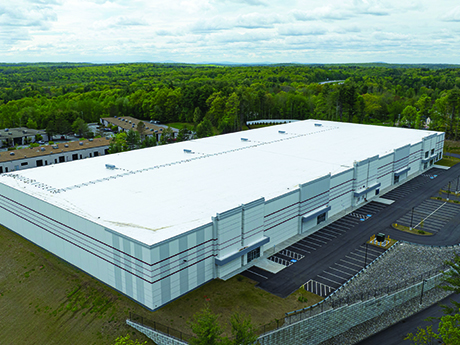
Earlier this year, Marcus Partners acquired this 155,000-square-foot building at 6 Industrial Way in Salem, New Hampshire. At the time, the company cited limited supply in the submarket and Class A specifications within the building as the key drivers behind the purchase.
“We’re concerned about inflation, which gives us concern about longer-term leases,” declares McDonough. “Credit is solid, but without [annual] rent bumps of about 3 to 3.5 percent, if cap rates move, you’re in trouble. So we’re not buying longer-term leased properties. We’ll develop, lease on a longer term and look to sell, but we’re [still] looking for shorter average lease terms and chances to reset rents as a hedge against inflation.”
Multiple sources also see a stream of virtually incessant tenant demand for small-bay industrial product. These facilities are characterized by very small suites — usually 5,000 square feet or less — and widespread appeal to local contractors and tradespeople of all varieties.
“Small-bay has very strong investor demand by it and very little distress,” says McDonough. “Those deals routinely attract 10 to 15 bidders, and that’s a subcategory of industrial real estate that should continue to perform well, even in this interest-rate environment, because there’s strong potential for rent growth.”
McDonough adds that he’s seen the appetite for small-bay industrial play out over the past two years at The Crossings, Marcus Partners’ 1.2 million-square-foot portfolio in Southern New Jersey. The company bought The Crossings in 2024 and has since executed 34 leases within the portfolio, with the average deal size being about 6,000 square feet, according to McDonough.
“The increase we’ve realized between the rent that was in place and the new rent is about 75 percent,” McDonough says of this activity. “This tells us that these tenants can absorb those rent increases, as they are smaller pieces of their overall business expenses, and they can typically pass through these increases to their customers. And since we’re concerned about inflation, we have to ensure we have enough opportunity to increase the yield to hit returns in spite of that inflation.”
Hayden of Maguire Hayden also recognizes that industrial investment is highly subject to group-think and that compelling opportunities can be found by going against the grain.
“It’s like in football — if a safety gets too expensive, you have to buy an inside linebacker,” Hayden says by way of analogy. “Flight to quality, Class A buildings for the future of AI [artificial intelligence] and robotics, higher ceilings, larger parking lots, more power capacity — these are all trends and buzzwords we’re seeing. But the reality is that it’s extremely expensive to build those buildings.”
“So we really try to understand where too much money is being funneled,” Hayden continues. “We know we can’t compete on certain deals, so we have to find other sources of value, but the tremendous amount of group-think makes that harder.”
At the moment, that sort of trend-bucking mindset could mean targeting older, Class B buildings that have high power capacities and within which some other features — clear heights, floor loads, parking capacities — can be finagled without breaking the bank.
“There’s a lot of value in Class B product, mostly because it’s half the cost, if not more [than building Class A product],” Hayden concludes. “It may not be perfect, but there are amenities that tenants and owners can work with, and they know that now’s the time to get in.”
Other Trends
While most core industrial markets in the Northeast tend to have relatively few “big bombers,” or buildings above 500,000 square feet, bifurcations within demand do still exist based on building sizes.
Borny of Dermody says that today, overall demand is strongest within the sub-150,000-square-foot segment of the market. However, throughout this year, customers with larger requirements, such as in the 300,000- to 500,000-square-foot range, as well as in the 1 million square-foot segment, have been signing leases, which was not as prevalent throughout 2025. Between the large deals that have been signed in 2026 and the pending large lease deals that are expected to be signed, those deals will be a big boost in terms of absorbing some of the remaining supply from the building boom earlier in the decade, he says.
Again, however, big-picture macroeconomic and geopolitical concerns can and could continue to complicate those efforts.
“We’ve started to see a push from larger companies and 3PL [third-party logistics] companies to grow and take new Class A space, whereas absorption of those mid-sized buildings was lagging in 2025 and into 2026,” Borny says. “There was real optimism in early 2026, whereas 2025 was more speculative hope that the market would come around, but tariffs and the war have impacted a lot of users.”
“As industrial demand begins to recover, we’re seeing opportunities to make existing warehouses more competitive through strategic upgrades rather than ground-up development,” notes Blake Chroman, principal at Sitex Group. “Improvements to power capacity, loading configurations and other building infrastructure can help older properties meet evolving tenant needs while offering a more cost-effective alternative to new construction.”
Multiple sources also say that one stage of the investment sales process — the recycling of capital to investors — also speaks to how the market has shifted over the past several years. The difference essentially boils down to the fact that today, investors require hard money back in their pockets before kicking off the next fund, deal or project, whereas a few years ago, there could be some overlap based on the virtual certainty that healthy returns were forthcoming. In other words, faith is no longer sufficient.
“Owners definitely have to return capital to investors [today], especially when they’re in the fund business,” says Hayden. “As an owner, you want to feel like your investors can self-finance into their next commitment from the money you’re recycling back to them. Groups have been stuck with higher interest rates, and if you’re stuck, you can’t raise the next fund. Then there’s slightly less money chasing deals, so the market will favor groups that have the liquidity to go after that product type.”
“Recycled capital is a big issue for equity funds and institutions right now,” agrees Borny. “Industrial has still performed well relative to other asset classes, but a lot of institutions have exposure across different equity platforms and within commercial real estate portfolios, and some holdings may not have performed as well as industrial or multifamily.”
“There are winners and losers, and funds have to recycle the good returns with the bad to reset for the next fund cycle, which they may view as more stable,” he concludes.
— This article first appeared in the October 2026 issue of Northeast Real Estate Business magazine.