

By David Hodge and Tom Nickols, NAI Pfefferle
While the national headlines often focus on trends such as rising vacancies and cooling rent growth, Milwaukee and its surrounding metros are telling a different story. Here resilience defines the market, and in some cases, opportunities are emerging due to our strategic location, balanced development and supportive business climate.

Rate cuts change landscape
The Federal Reserve’s recent rate cuts have altered the investment landscape. For the first time in years, capital markets are starting to unlock. Lower borrowing costs are already sparking new conversations with investors who had been sitting and waiting on the sidelines. This adjustment matters. Refinancing options are improving for property owners, development projects are resurfacing after being shelved for high financing costs and capital is beginning to flow again.
For occupiers, rate cuts also open doors. Lower borrowing costs for developers encourage new construction and tailored build-to-suit options. This ultimately expands the range of available facilities and results in a healthier environment where tenants can negotiate from a position of choice rather than constraint. While many national markets remain hampered by an oversupply of speculative space, Milwaukee’s pipeline positions it for long-term strength compared to its peers.
Local development activity
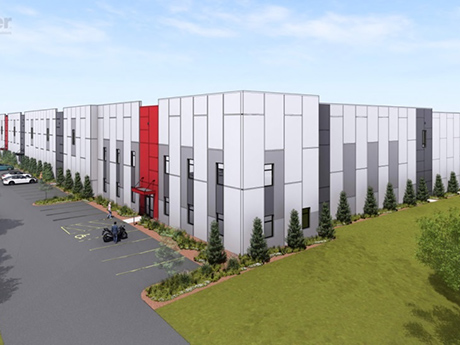
What’s driving that confidence in the market? It’s the local development activity happening that’s building that confidence. Regional design-builder Keller Inc. is delivering exactly the kind of projects and facilities that tenants demand. In Oak Creek, Keller is advancing a 60,710-square-foot warehouse for Redwall Printing LLC, while in Kimberly the firm is adding 43,000+ square feet of production and warehouse space for Crane Engineering.

These are not speculative “mega-boxes” that risk sitting vacant. Instead, these are tailored facilities tied directly to user demand. That kind of precision development that aligns supply and demand keeps Milwaukee’s industrial market balanced. It shows developments are coming online with purpose and not risking the volatility that has been seen in other similar markets.
3PLs are doubling down
Third-party logistics (3PL) providers are some of the most active players in the market, and their moves speak volumes about long-term confidence of Milwaukee’s position as a logistics hub.
• Ryder recently launched a 75,000-square-foot last-mile hub in Milwaukee, strengthening delivery networks across the Upper Midwest.
• Kenco completed a 57,000-square-foot tenant improvement project at DeBack Farms in Racine County, equipping the space for food-grade distribution.
• DHL Supply Chain continues to expand its U.S. footprint, adding over 1.3 million square feet of multi-customer warehouse space, capacity that benefits regional markets like Milwaukee.
These investments aren’t just about space, they’re about capabilities. Cold storage, food-grade handling and omnichannel fulfillment are some of the specialized services 3PLs are investing in, all of which align perfectly with Milwaukee’s manufacturing and distribution strengths.
With these projects driving demand, it positions the market to continue to benefit from this wave of investments.
Why Milwaukee stands apart
Milwaukee’s market advantage begins with location. Southeastern Wisconsin sits in a sweet spot with proximity to I-94 and I-41, two major interstate systems. It provides cost-effective access to Chicago and its massive consumer base without the higher costs. Milwaukee’s workforce, steeped in logistics and manufacturing, further enhances the market’s competitiveness.
Additionally, the $75 million, 337,000-square-foot cargo facility under construction at Milwaukee Mitchell International Airport will improve air freight capacity and attract more users to the market.
When combined with the Port of Milwaukee’s strategic role in shipping, the region offers a multimodal transportation network that few comparable metros can match.
Looking ahead
While we have been through multiple market cycles, this time feels unique. National industrial vacancy rates keep creeping higher and speculative development has slowed, but Milwaukee’s fundamentals remain strong.
Coupled with renewed capital from rate cuts, this is the moment to lean in on the market.
For owners, it is the time to invest in upgrades to keep properties competitive. For occupiers, it’s an opportunity to lock in favorable lease terms before demand accelerates again. And for investors, Milwaukee is a market where well-located assets will continue to outperform.
Milwaukee’s industrial market isn’t just steady — it’s positioned to grow, and we’re excited to help shape what comes next.
David Hodge and Tom Nickols are senior commercial real estate advisors with NAI Pfefferle. This article originally appeared in the November 2025 issue of Heartland Real Estate Business magazine.