

By Mandi Backhaus-Barr, The Lerner Company
As they say, when one door closes, another one opens, and the same is true in commercial real estate. In 2025, the Omaha market experienced a plethora of activity, from store closures to quick backfills, and numerous new developments either announced, commenced or completed. Omaha’s market continues to demonstrate strong momentum, showing little sign of slowing down.

This strength was reinforced when the metro-area population recently surpassed the 1 million mark, a milestone that appears to carry more weight with retailers than slightly lower population figures. As a result, the market has responded positively, with year-over-year asking rents increasing by 5.4 percent. Despite rapid growth and development across the city, Omaha’s core market fundamentals remain solid.
From a retail standpoint, we are seeing retailers continue to test new formats and refine their store footprints, while a recent wave of international brands has begun entering the U.S. market, signaling a new level of global interest and underscoring the growing appeal of well-positioned retail environments.
Additionally, the consumer is still spending, just differently. Beauty, footwear and apparel are categories with strong momentum. The trend of mid-tier retailers being squeezed into an increasingly polarized market, where value-focused consumers gravitate toward lower-cost options and higher-income shoppers favor premium brands, is expected to persist into 2026.
Historically speaking, Omaha normally outpaces the nation in growth for the sectors of finance, insurance, health and information. The metropolitan also prides itself on keeping the cost of doing business below the national average, as well as a low cost of living and competitive wages, which ultimately create a notable spending power. Additionally, Nebraska GDP grew 5 percent in the third quarter of 2025, according to the U.S. Bureau of Economic Analysis.
Development highlights
From a visual perspective, if you were to drive the Omaha market starting at the border of the Missouri River and continue west along or within a block of Dodge Street, you would see evidence of new development and commercial growth every couple of miles. Examples include the new 44-story Mutual of Omaha headquarters skyscraper that is slated to open in 2026 downtown, or UNMC and its ever-expanding campus, with the recent opening of the Catalyst building in Midtown.
As you continue west, you’ll come along the Crossroads redevelopment at 72nd and Dodge streets, where construction for the Gamescape by Cinemark is underway. At Westroads Mall, Dillard’s is expanding the former Younkers box, with opening planned for 2027.
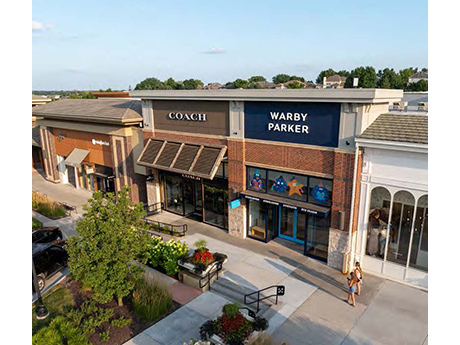
Once you hit the West Dodge Expressway, it seems as if everywhere you look, there’s a new project or a new retailer opening soon. At Village Pointe specifically, there has been an influx of a “restaurant revitalization.” Meddy’s, North Italia, KPOT and Culinary Dropout are just four of the new restaurants at the shopping center, with more in the works.
Vacancy figures
According to The Lerner Company’s Retail Market Summary for 2025, which accounts for retail properties of freestanding stores and multi-tenant shopping centers in excess of 15,000 square feet, the overall vacancy rate hovers around 8 percent. This accounts for 378 centers, for a total of 31.5 million square feet.
Generally speaking, multiple submarkets of metro Omaha experienced a large decrease in vacancy at year-end. One of these includes the north central area of the metro where Auto Zone Mega Hub and Crunch Fitness each opened their doors, collectively taking over 60,000 square feet of space off the market.
Similarly, box space was filled in Sarpy County, with Barnes & Noble and Ace Hardware opening in the former Best Buy at Shadow Lake Towne Center, VASA Fitness opening along Fort Crook Road in Bellevue and Burlington calling dibs on the former Joann space at Wolf Creek Plaza that shuttered in February 2025.
Conversely, big box retailer closures impacted several submarkets, including parts of southwest Omaha, the downtown area and Council Bluffs. Notable closures included Rush Market at Oak View, Family Fare on North 30th Street and At Home at Marketplace in these respective areas.
All in all, leasing demand has remained robust in Omaha, through not only the standard activity but also an influx of those who choose to lease existing space rather than purchase land to build due to interest rates, increased costs and certain lead times on materials.
As we look ahead, Omaha’s commercial real estate market is projected to continue strong momentum, supported by a stable economic foundation and multiple long-term growth catalysts. Major infrastructure investments, including the airport expansion and the development of the streetcar corridor, will enhance connectivity, stimulate urban activity and attract new retailers and businesses.
At the same time, continued suburban expansion, driven by robust residential development and complementary commercial growth, will further strengthen demand across the metro area. Together, these factors position the Omaha market for sustained performance, highlighting its ability to adapt, grow and remain competitive in an ever-evolving economic environment.
Mandi Backhaus-Barr is an associate broker with The Lerner Company. This article originally appeared in the April 2026 issue of Heartland Real Estate Business magazine.