

By Taylor Williams
Much like the two major cities that border its northern and southern ends, New Jersey is, for retailers, restaurant groups and entertainment operators that are serious about establishing and growing national footprints, a market that checks every key box.
Yet for all the similarities between the Manhattan or Center City Philadelphia retail markets that also apply to New Jersey — tight availability of space, high rents, time-consuming regulatory processes, strong residential density, healthy disposable incomes — brokers and owners that call the Garden State home also know that it’s a market unto itself.
“Northern New Jersey is not the same as New York City,” confirms John Azarian, CEO of The Azarian Group, a longtime owner-operator of shopping centers in New Jersey and New York. “Retailers that want to venture into New York City want a different environment, and while we have a lot of density in Northern New Jersey, it’s just not the same as New York City. But if retailers are willing to do deals with different [store] formats, their businesses can do just as well here.”
Kevin Pelio, Azarian’s executive vice president of leasing, says that tenants that started in other parts of the country and want to expand into New Jersey are typically willing to make sacrifices with their physical footprints. Tenants’ willingness to bend their models speaks not only to the reality that high-quality available space is rare, but also to the notion that the changes are worth it to take advantage of the state’s demographics and economics.
“Compared to the Midwest or Texas or Southeast, 70,000-square-foot boxes really just don’t exist [in Northern New Jersey], so tenants have to be flexible on their prototypes,” Pelio says. “That’s something that’s really important to understand when it comes to this market.”
Pelio adds that he sees the rightsizing of store formats to fit New Jersey’s availabilities most frequently among entertainment and fitness users.
The Jersey Way
The uniqueness of the New Jersey market as a whole is underscored by strong senses of individuality within the state’s many municipalities. David Townes, managing director of retail brokerage at JLL’s New Jersey office, says that while operators typically recognize that New Jersey is “its own animal” compared to New York City or Philadelphia, that is hardly the extent of the market bifurcation.
“As an operator, you can’t just throw a dart at the map in this state and [expect to] make a good [site selection and leasing] decision,” he says. “Submarkets are vastly different, and it takes a lot of diligence and understanding of the nuances of each submarket to find the right opportunities.”
“Some towns are way harder than others when it comes to getting things done; others will roll out the red carpet for mixed-use developers and tenants looking for approvals and permits,” Townes continues. “New Jersey is always on the map of where people want to be, but it’s a tough egg to crack, and many out-of-state retailers may take a year or more to break into the right locations in the right way. So it’s crucial for retailers to work with professionals who know those ins and outs.”
Pelio says that operators making their initial foray into New Jersey frequently experience sticker shock in terms of rent, especially if they were previously focused on non-coastal markets. However, that tends to wear off fairly quickly.
“Once tenants get up and running, they realize that outstanding store performance with corresponding occupancy costs are typically equal to — or maybe even below — their metrics in their other stores and are usually exceeding their pro formas,” he says.
“New Jersey and the Northeast as a whole are competitive and expensive in terms of real estate, but there’s great opportunity as well to build brand recognition here,” notes Matthew K. Harding, CEO of Plainfield, New Jersey-based Levin Management Corp. (LMC). “Eventually, if you’re a successful chain that has already expanded around the country, you’ll come to the Northeast too.”
On paper, it may seem as though the intangible factors that appeal to retailers are not so different between New Jersey and New York City and/or Philadelphia. But sources say that there are visible, palpable differences in how the retail is experienced that can really only be had in New Jersey.
“Not to be trivial, but our retail has parking,” says Townes. “People can drive right up to the store and walk in, which makes things a little different from a leasing perspective right away.”
Townes’ partner, Alana Friedman, vice president of retail brokerage at JLL, emphasizes the importance of these seemingly mundane parts of the New Jersey retail experience as key differentiators from the big cities.
“New Jersey is already a no-brainer for so many groups due to the density and disposable incomes, but there’s also a real attractiveness to the way the retail landscape is laid out here,” she explains. “We have urban environments with suburban feels; people can drive up [to stores or restaurants] or walk up with their kids in strollers and just experience the retail the way they would in suburbia.”
For owners of multi-tenant centers, having this type of accessibility is a big benefit because it promotes cross-shopping and longer stays.
“We do see [parking and accessibility] as an advantage because it really allows us to showcase our merchandising mix,” says Pelio. “If you’re a high-street retailer in Manhattan, you’re not necessarily getting that cross-pollination of multiple shopping visits per week, which is important to creating the complementary nature of tenant mixes.”
Tenant Trials, Tribulations
Like so many other brick-and-mortar retail markets in 2026, New Jersey simultaneously suffers and benefits from the combination of low supply growth and high demand. Tenants want the density and income levels, but it’s a landlord’s market, and some users, especially mom-and-pops, inevitably get priced out.
That monetary barrier to entry speaks to a dilemma that defines retail leasing today: While landlords appreciate and often want the cool, quirky mom-and-pop tenants in their centers, to some degree they have a fiduciary obligation to give preferential treatment to credit tenants that can afford top rents.
Danielle Brunelli, president of Old Bridge, New Jersey-based brokerage firm R.J. Brunelli & Co., has seen this dilemma play out on multiple occasions, most recently with a deli operator client.
“This tenant had a great concept, and a lot of landlords liked them, but they just couldn’t afford the rents,” Brunelli recalls. “It’s getting harder for
mom-and-pops to compete because occupancy costs are so high. Landlords are essentially now at the point in which there’s so little space available that they sometimes don’t even need to give tenant improvement [allowances] to credit tenants, unless maybe it’s an anchor tenant and the space has been vacant awhile.”
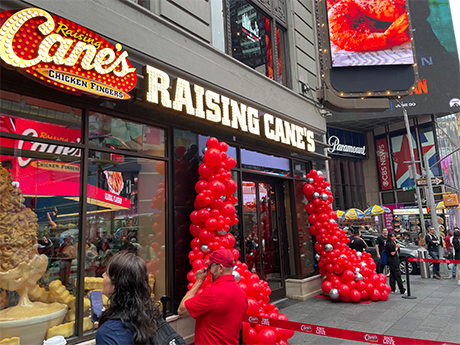
Brunelli represents Raising Cane’s, a fast-casual, fried chicken chain that was founded in Louisiana in 1996 and recently eclipsed the 1,000-unit store count. In plotting its expansion to the Tri-State area, Raising Cane’s first opened a flagship restaurant in the Times Square submarket of Manhattan and has since followed up with multiple new restaurants in Northern New Jersey, including two in Edison and Fairfield that are now open. Brunelli says that the restaurant’s Northeast expansion story speaks to the importance of both carefully formulating a modest rollout plan for this region, as well as being exceptionally diligent in terms of site selection.
“Strategy is important, as is picking the right trade areas to open in and making sure you have the right location, even if it’s not available when you want it,” Brunelli explains. “Retailers have to be patient, and when space comes available, they [and their brokers] have to pounce because there are so many groups vying for the same location.”
An unexpected availability could result from a tenant declining to exercise an imminent renewal option. In other cases, brokers will leverage their relationships to monitor attractive spaces in which current tenants may be struggling. Brunelli says that to some degree, that type of activity has always been part of tenant brokers’ jobs. But it’s even more common today because so many market conditions are forcing higher rents.
Harding of LMC has also followed the Raising Cane’s trajectory as a sort of model of successful penetration of the New Jersey market. Construction is scheduled to begin soon at a new Raising Cane’s restaurant at Blue Star Shopping Center, a newly renovated, 420,000-square-foot center in Watchung that Levin manages and leases.
“Raising Cane’s did a fairly big store for its Northeast flagship restaurant at 44th and Broadway in Times Square and really did a good job of making its brand and presence felt in New York City, which helped its expansion into the New Jersey suburbs,” Harding says. “There’s not always that connection between New York and New Jersey because there are different brokers and reps in different states, but that’s an instance in which the [strategies] for the city and suburbs really worked well together.”
Sources say that nonregional operators that are currently finding success in New Jersey — unsurprisingly — tend to be clustered within experiential categories: grocery, fitness, wellness,
fast-casual dining and entertainment.
“We’re seeing a wide array of children-focused entertainment concepts like trampoline parks and indoor playgrounds,” says Townes. “We’re also seeing a big boom in the fitness space with brands like Crunch and Planet Fitness, as well as local and regional operators that are planting their flags in our suburbs. We also see very qualified regional medical groups taking down large retail spaces.”
Harding and Brunelli both specifically cite two such users within those categories — Phoenix-based grocer Sprouts Farmers Market and indoor playground concept Kids Empire — as examples of incoming tenants that they expect to do well in New Jersey.
“Service-oriented uses that cover food, fitness and entertainment, as well as medspas and the like — concepts that allow people to get out — are expanding,” says Brunelli. “Our company represents [trampoline and adventure park operator] Fun City, which is expanding across the country, and we’re also seeing some brands like Chuck E. Cheese change their concepts to compete with the likes of Kids Empire and be more of a family play and entertainment concept and less of an arcade. So family entertainment is really a huge category for us.”
Harding says that LMC has also done a deal with Kids Empire. In addition, LMC has recently inked deals with entertainment groups like ActivateGames, which took space at St. Georges Crossing Shopping Center in Woodbridge, and Back Nine Golf, which committed to the aforementioned Blue Star Shopping Center.
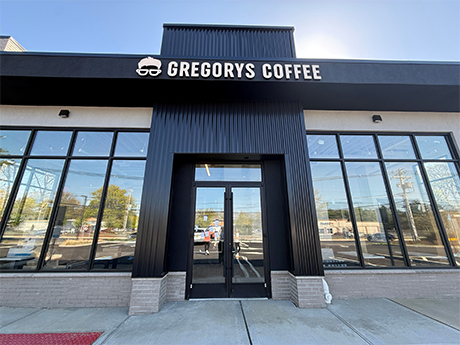
Multiple sources also point to two specific segments of the food-and-beverage user base that are aggressively expanding in New Jersey: fried chicken and coffee. Harding cites Dave’s Hot Chicken and Namkeen Hot Chicken as prominent examples. Brunelli says that drive-thru-only coffee chain 7 Brew is actively scouting and closing on new locations and that Arizona-based Dutch Bros Coffee is not far behind. In addition, New York City-based Gregorys Coffee, another R.J. Brunelli client, has recently opened coffee shops in Old Bridge and Manalapan, with another in Brick soon to follow.
Friedman concurs on both counts.
“Fried chicken concepts are having their Renaissance moments; whether in freestanding buildings or 1,200-square-foot spaces in downtown districts, all cultural and flavor concepts of fried chicken are doing well in New Jersey,” she says. “We’re also seeing an influx of all-day cafés and food-and-beverage concepts that cater to brunch and early-evening crowds as opposed to fine dining. Coffee shops, places that allow for remote work or impromptu meetings and that don’t require liquor licenses — those are growing here.”
While not every mom-and-pop operator may be destined for success in the Garden State, many of these examples attest to the fact that even in times — and places — of high costs, retail owners in New Jersey still value diversity within their portfolios.
“New Jersey remains a vibrant market with a lot of leasing from a wide variety of retailers, restaurants and experiential operators,” Harding concludes.
“We have a variety of tenants coming in, and it’s all due to New Jersey’s demographics and to some degree, proximity to the urban cores,” concurs Townes. “That and the fact that New Jersey has better pizza and bagels.”
— This article first appeared in the May 2026 issue of Northeast Real Estate Business magazine.