

By Joshua Allen and David Kelpe, JLL
One year ago, CBRE Research forecasted a shortage of prime office space in Heartland Real Estate Business. That prediction has proven accurate. Since the beginning of 2025, demand for top-tier office space has continued to drive leasing activity across the region. This persistent appetite for quality has pushed prime Class A availability to record lows, creating a competitive environment for tenants and landlords alike.

The St. Louis office market encompasses approximately 53 million square feet of competitive space. Yet, a closer look reveals a critical challenge: 73 percent of this inventory was constructed before the 1990s. This aging supply base means that only 2.6 million square feet qualifies as truly “prime” — the newest, most desirable assets located in walkable urban areas with abundant amenities. These buildings represent the gold standard for tenants seeking modern design, energy efficiency and proximity to vibrant neighborhoods.
Currently, prime Class A availability sits at a mere 5.5 percent, a stark contrast to the 25.2 percent average for non-prime Class A assets. This gap reflects a clear and ongoing preference among tenants for buildings that combine high-quality construction with strategic location. In short, companies are willing to pay for the best, and the best is in short supply.

Construction pipeline
The shortage of prime space is not just a function of tenant demand; it’s also the result of historically low construction activity. Over the past 12 quarters, no new office developments have broken ground in St. Louis. Rising construction costs and an increasingly challenging economic environment have made speculative development nearly impossible.
The most recent delivery, First Bank’s new headquarters in the second quarter of 2024, added only 12,500 square feet of third-party leasable space. While this project was a milestone for the bank, it did little to alleviate the broader market’s need for large blocks of prime space suitable for corporate tenants.
This lack of new supply has amplified competition for existing prime assets, forcing tenants to act quickly when opportunities arise. It has also created a ripple effect across submarkets, as companies unable to secure space in premier locations begin exploring alternatives.
Clayton leads submarkets
St. Louis’ premier office market, Clayton, remains well-occupied, largely by tenants who capitalized early on the flight-to-quality trend. With prime buildings in Clayton effectively spoken for, leasing activity has begun to shift toward other submarkets. Owners of non-prime Class A assets in suburban St. Louis are responding aggressively, investing in upgrades designed to attract tenants who might otherwise gravitate toward fully leased prime properties.
These renovations are not cosmetic; they represent a strategic repositioning. Landlords are revamping lobbies, modernizing facades and enhancing amenity packages to meet the expectations of today’s workforce. Fitness centers, collaborative lounges and upgraded technology infrastructure are becoming standard features as owners seek to bridge the gap between “near-prime” and true prime status.
Renovation vs. new builds
The financial calculus behind these upgrades is compelling. Renovating a Class A asset typically costs $130 to $150 per square foot, a fraction of the $450 to $500 per square foot required for new construction. This cost differential allows owners to deliver high-quality space at competitive market rates, avoiding the $60 to $70 per-square-foot asking rents that new construction would necessitate to achieve feasibility. For tenants, this means access to upgraded environments without the premium pricing associated with ground-up development.
Case study: CityPlace 6
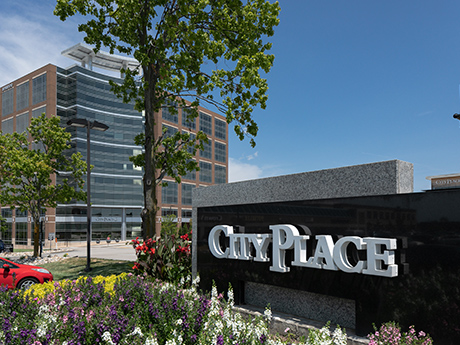
Perhaps the most notable recent example of this trend is CityPlace 6, a 2007-vintage building in Creve Coeur. In the first quarter of 2023, availability at CityPlace 6 peaked at 52 percent, as non-prime Class A assets struggled amid the flight-to-quality movement. At that time, the only prime options in Creve Coeur — Edge@West and the First Bank headquarters — were unable to accommodate larger tenants.
Recognizing the imbalance between supply and demand, RGA announced a renovation of CityPlace 6, including a redesigned lobby and new amenity spaces. The results have been dramatic. Just four quarters later, CityPlace 6 is 91 percent leased, with strong ongoing activity driven by continued demand for prime-quality space in a market where availability remains constrained. This turnaround illustrates the power of strategic investment and the willingness of tenants to embrace upgraded properties when true prime options are scarce.
Looking ahead
As prime space continues to be limited with little new supply on the horizon, competition among users is intensifying. For owners of “near-prime” Class A assets, this environment represents a significant opportunity.
By reinvesting in their properties and aligning with the expectations of modern tenants — flexible layouts, robust amenities and technology-forward infrastructure — landlords can position themselves as viable alternatives to fully leased prime buildings.
In the absence of new construction, these adaptive strategies will define the next chapter of St. Louis’ office market. For tenants, the message is clear: Act decisively when prime space becomes available or prepare to compete for upgraded alternatives. For owners, the imperative is equally straightforward: Invest now because the flight-to-quality trend shows no signs of slowing.
Joshua Allen is a Midwest research manager and David Kelpe is a senior vice president with CBRE. This article originally appeared in the January 2026 issue of Heartland Real Estate Business magazine.