Search results for

"stock"

Industrial geoffrey moffett unsplash

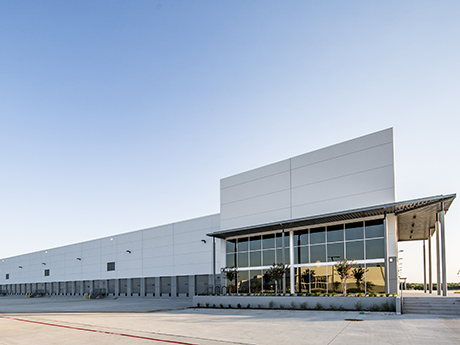
The end of the first quarter of 2025 saw market uncertainty in the face of new U.S. trade and tariff policies combined with an unclear geopolitical outlook, according to Lee & Associates’ 2025 Q1 North America Market Report. The effect of these concerns within the commercial real estate world are most evident in the industrial sector, which is also contending with oversupply and softening rent growth. Development is slow across property types. Retail, despite high-profile store closures in early 2025, remains historically tight on space as years of underbuilding keep availabilities near record lows. Office demand has stabilized in several major metros following years of contraction, though vacancy remains elevated. The pipeline of new construction is both drying up and favoring new types of tenants beyond traditional office spaces. Multifamily is seeing strong tenant demand in certain markets despite a flood of new deliveries. Lee & Associates has made their full market report available here (click through for detailed breakdowns and city-by-city information). The information below for the industrial, office, retail and multifamily sectors offers clarity on market-wide demand, rent growth trends and challenges likely to shape trajectories throughout 2025. Industrial Overview: Soft Markets Face Tariff Disruptions North America’s industrial markets …
FacebookTwitterLinkedinEmail
Marcus-Millichap-Webinar-Slide-1

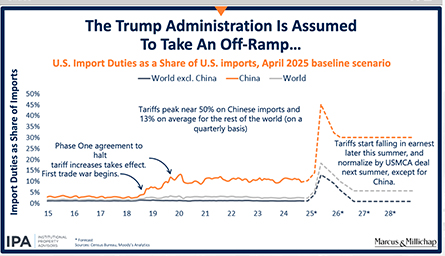
By Taylor Williams Editor’s note: This article covers the opening session (approximately the first 20 minutes) of the “Real Recession Risk or Temporary Distraction?” webcast. To watch a replay of the entire event and listen to the subsequent conversation, please use the link at the bottom of the page. At least for one week in April, Mark Zandi was to economics what Tony Romo has been to professional football — a broadcaster who sees the play before it happens. As a featured speaker on a Marcus & Millichap webcast titled “Real Recession Risk or Temporary Distraction?” that took place on Monday, April 21, the chief economist for Moody’s Analytics expressed major concerns over the impacts that the Trump administration’s tariffs had on business sentiment and investor confidence. Zandi qualified his analysis by stating unequivocally that while damage had already been done, he expected the administration to take an “off ramp,” and revise its tariff policies. Doing so would be crucial to avoiding further sinking the stock and bond markets and potentially hurting the commercial real estate market too by extension, Zandi said. His prediction, which was made as a market selloff was unfolding — appeared to come true almost instantaneously. …

FacebookTwitterLinkedinEmail

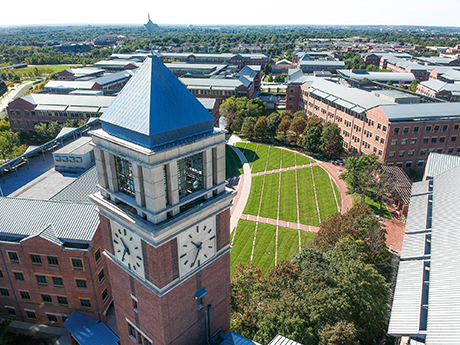
OVERLAND PARK, KAN. — Fiserv Inc. (NYSE: FI), a global technology company specializing in financial services and payments, has unveiled plans for the development of a $175 million fintech headquarters in the Kansas City suburb of Overland Park. The company will renovate two buildings on the Aspiria corporate campus — formerly the headquarters of telecom company Sprint that is now owned by Occidental Management — which houses 3.9 million square feet of office space across 20 buildings. The new office will join a growing list of innovation centers across the country for Fiserv, including locations in Alpharetta, Ga.; Milwaukee; Omaha, Neb.; Berkeley Heights, N.J.; and New York City. “The greater Kansas City metro area offers a dynamic environment with a growing population of tech talent, making it the ideal location for Fiserv’s next strategic fintech hub,” says Frank Bisignano, chairman and CEO of Fiserv. Situated at 6500 and 6550 Sprint Parkway, Fiserv’s new headquarters will span 427,000 square feet, marking the largest office recruitment in Kansas history, according to the office of Kansas Gov. Laura Kelly. Fiserv picked Overland Park for its central U.S. location, in addition to its proximity to the company’s Midwestern clients and the region’s affordability. The new …

FacebookTwitterLinkedinEmail
Avalon-Wesmont-Station-Wood-Ridge-New-Jersey

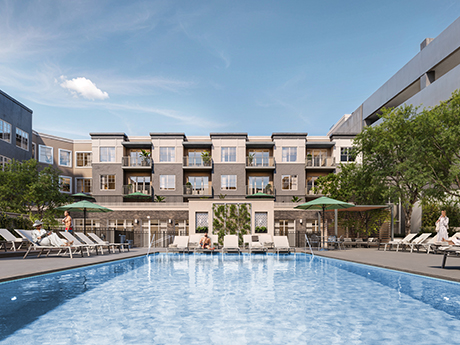
WOOD-RIDGE, N.J. — JLL has brokered the $161.5 million sale of Avalon at Wesmont Station, a 406-unit apartment community located at 100 Rosie Square in Wood-Ridge, about 15 miles west of Manhattan. Avalon at Wesmont Station was built in 2012-2013 and offers one-, two- and three-bedroom units with an average size of 959 square feet. Amenities include a pool, outdoor grilling and dining stations, resident clubroom with workstations and a fitness center. The property also houses 18,000 square feet of ground-floor retail space that is fully leased. Jose Cruz, Steve Simonelli, Michael Oliver, Elizabeth DeVesty and Austin Pierce of JLL represented the seller, Virginia-based REIT AvalonBay Communities Inc. (NYSE: AVB), in the transaction. The buyer was New York-based Cammeby’s International Group. Ryan Koehler of NewPoint Real Estate Capital originated a $112 million Freddie Mac acquisition loan, which carried a 10-year term and six years of interest-only payments, for the deal. “The sale of Avalon at Wesmont Station demonstrates the continued investor appetite for well-located, institutional-quality multi-housing assets in strong suburban markets near New York City,” says Cruz. “This property’s strategic location, coupled with its value-add potential through unit renovations, made it an attractive investment opportunity in today’s market.” The apartment …

FacebookTwitterLinkedinEmail

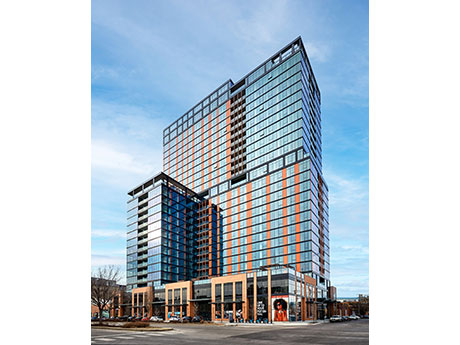
CHICAGO — Greystone has provided a $120 million Fannie Mae loan for the acquisition of Fulbrix Apartments in Chicago’s Fulton Market. The 27-story apartment tower features 375 units at 160 N. Elizabeth St. Eric Rosenstock and Jesse Yodice of Greystone originated the financing on behalf of the borrower, Normandy Real Estate. The loan features a 10-year term with seven years of interest-only payments. The $170 million purchase marked Chicago’s largest multifamily sales transaction since 2023, according to Greystone.

FacebookTwitterLinkedinEmail

SANTA CLARA, CALIF. — NVIDIA Corp. (NASDAQ: NVDA), a Santa Clara-based tech firm that primarily designs and manufactures graphics processing units (GPUs) for artificial intelligence (AI) use, plans to develop two new AI supercomputer manufacturing plants in Texas. The new projects will include a plant in Houston that NVIDIA is co-developing with Foxconn and a factory in Dallas that NVIDIA is building with Wistron. Further real estate specifics for the new facilities were not shared, but NVIDIA plans to create “digital twins” to design and operate the factories, which will be reliant on automation and robotics. Mass production of NVIDIA AI supercomputers at both plants is expected to ramp up in the next 12 to 15 months, according to NVIDIA. Additionally, NVIDIA announced that it has started production of NVIDIA Blackwell chips at the TSMC Arizona campus in Phoenix. NVIDIA is partnering with Amkor and SPIL for packaging and testing operations in Arizona. The new Texas plants and the production of NVIDIA Blackwell chips in Arizona are part of the company’s $500 billion push to mass produce NVIDIA AI supercomputers on U.S. soil, which would represent the first time that the company’s supercomputers were made entirely domestically. Together, the announcements …

FacebookTwitterLinkedinEmail

PORTER, TEXAS — Baseball and softball training operator D-BAT will open a 15,000-square-foot facility at the Valley Ranch, Signorelli Co.’s master-planned development located northeast of Houston. The facility, which will be constructed on a 1.3-acre site that D-Bat purchased, will offer lessons, camps, workshops, event space, batting cage rentals, a fully stocked pro shop and monthly memberships. The facility will be D-Bat’s 10th in the Houston area and is scheduled to open this summer.

FacebookTwitterLinkedinEmail
Wildlife-Commerce-Park_Dallas

DALLAS AND HOUSTON — Blackstone Real Estate (NYSE: BX), the largest owner of commercial real estate globally, has agreed for its Core+ funds business affiliate to acquire a 95 percent stake in an industrial portfolio in Texas totaling 6 million square feet. The purchase price is $718 million.  Crow Holdings, the Dallas-based real estate and development firm that developed the properties, is the seller and will retain a 5 percent ownership stake.  The transaction is expected to close in the second quarter of 2025.  The portfolio comprises 25 Class A buildings located predominantly in submarkets of Dallas and Houston. According to Blackstone, the metros are two of the top-performing logistics markets in the country.  “We are thrilled to acquire this high-quality portfolio located in some of the best performing U.S. industrial markets,” says David Levine, co-head of Americas acquisitions for Blackstone. “With limited vacancy and new construction starts down over 80 percent from the 2022 peak, logistics remains a high conviction theme for us; we are proud owners of more than $90 billion of warehouses in North America and nearly $170 billion in total around the world.” Founded in 1991, Blackstone currently has $315 billion of investor capital under management …

FacebookTwitterLinkedinEmail

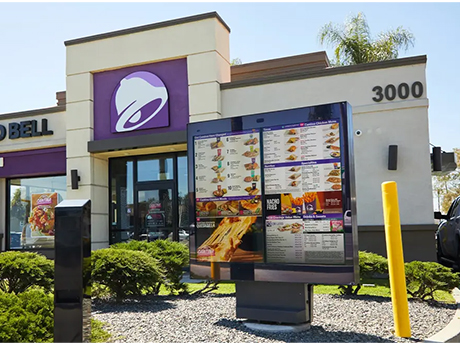
By Casey Smallwood of SRS Real Estate Partners In today’s fiercely competitive quick-service restaurant (QSR) market, digital transformation and artificial intelligence (AI) are reshaping how brands operate, engage with customers and create value. An industry once defined by speed and consistency is now being reshaped by data, automation and intelligent personalization. Across the country, QSRs are embracing cutting-edge technologies to improve operations, enhance the customer experience and maximize profitability. From mobile ordering apps to AI-powered drive-thru automation and predictive inventory management, these innovations are redefining the QSR business model. To stay competitive and relevant in today’s fast-changing market, franchise operators, developers and commercial real estate investors must understand and adapt to these technology-driven shifts. At the heart of this evolution is digital transformation — the integration of digital technology across all aspects of the business. In the QSR landscape, this includes everything from mobile ordering apps, digital menu boards to contactless payment systems, smart kitchen equipment and sophisticated customer relationship management (CRM) tools. Unlike full-service restaurants that emphasize ambiance and table service, QSRs succeed by offering speed, convenience and consistency. Digital transformation amplifies these core strengths, allowing operators to serve more customers faster and more accurately while also collecting and …

FacebookTwitterLinkedinEmail

By Trina Sandschafer, AIA, Project Management Advisors Adaptation and reinvention are core parts of what makes American cities great, and Chicago is a prime example. Whether rebuilding, reimagining space for modern usage or creating new neighborhoods from formerly empty lots, the city has become known for its unique ability to bring new energy and life to formerly underutilized areas. Chicago knows how to reimagine the built environment and is leading the way with several transformative development strategies.  Adaptive reuse: A well-tested Chicago tactic Chicago’s long history of adaptive reuse began with the pioneering residential loft developers. In the wake of nationwide manufacturing declines, these enterprising developers saw opportunity in the city’s largely vacant warehouses and manufacturing buildings. The success of these early loft conversions encouraged further reimagining of Chicago’s aging industrial and office stock into condominiums, apartments, offices, entertainment venues and hospitality spaces, which continue to this day.  Now, adaptive reuse strategies are helping to increase the supply of housing and restore economic viability to communities dealing with the lingering impact of the pandemic on local businesses. Converting legacy structures to new and better uses is more environmentally sustainable and can be more cost-effective than demolishing older buildings and starting …

FacebookTwitterLinkedinEmail