Search results for

"stock"

CHARLOTTE, N.C. — Build-to-rent (BTR), or purpose-built neighborhoods of single-family rental homes, has been an emerging subsector of the multifamily continuum the past several years. The housing type fills a niche for renters as it offers more living space and privacy than typical apartments, but is more affordable and amenitized than for-sale homes. The BTR sector began its ascent during the early years of the COVID-19 pandemic when a confluence of factors —the rise in work-from-home and hybrid work schedules, an increase in household formation of younger millennials, the desirability of more private space including garages and backyards — led to a sharp increase in demand for single-family rental (SFR) homes. Underpinning the increased demand for BTR living is the unaffordability of homeownership for a large swath of Americans. As of mid-year, home prices are now 47 percent higher than they were in early 2020, according to Harvard’s Joint Center for Housing Studies. Home insurance premiums have also risen aggressively in the recent past — up 21 percent between 2022 and 2023, according to the study. Meanwhile, mortgage payments are increasingly untenable as interest rates have also risen dramatically in recent years. For these reasons, institutional investors are actively participating …
FacebookTwitterLinkedinEmail

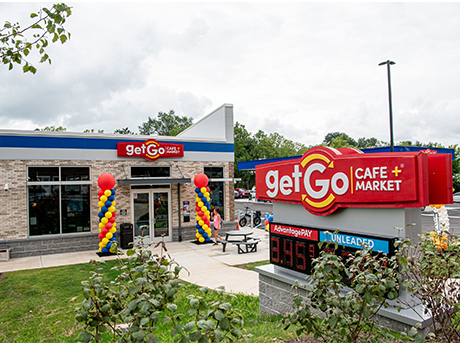
LAVAL, QUEBEC AND CRANBERRY TOWNSHIP, PA. — Alimentation Couche-Tard Inc., the Canadian parent company of Circle K, has agreed to acquire GetGo Café + Markets from Giant Eagle Inc., a supermarket chain based in Pennsylvania. GetGo operates 270 gas station and convenience store locations in Pennsylvania, Ohio, West Virginia, Maryland and Indiana. The company staffs approximately 3,500 employees. “We are excited to welcome GetGo into the Couche-Tard family,” says Brian Hannasch, president and CEO of Couche-Tard. “We look forward to growing together as we learn from and continue GetGo’s innovative approaches to serving its local customers and communities.” “We are energized by the potential for both Giant Eagle and GetGo as a result of this transaction,” adds Bill Artman, CEO of Giant Eagle. “This enhances our focus on our core supermarket and pharmacy businesses.” GetGo has multiple retail models, including open-concept stores and standalone kiosks, with an emphasis on “food first.” As part of this transaction, Couche-Tard and Giant Eagle have agreed to maintain and partner together on Giant Eagle’s myPerks loyalty program for customers. Couche-Tard expects the deal to close in 2025 following standard regulatory approvals and customary closing conditions. The financial terms of the transaction were not disclosed …

FacebookTwitterLinkedinEmail
Thrive-Sweet-Auburn-Atlanta

By Derrick Barker, founder and CEO, Nectar Many founders and CEOs in commercial real estate have seen their fair share of market cycles. Analyzing today’s affordable housing crisis within the current multifamily rental market lends itself to sharing personal insights and most importantly, discussing how we can address these challenges head-on. A Cautionary Tale from 2013 Consider this personal story as anecdotal evidence. In 2013, this writer, a private investor at the time, acquired an apartment complex in Austell, Georgia, a suburb of Atlanta. It was a prime investment: cash-flowing and competitively priced due to it being a buyer’s market. For a while, we were the crown jewel of the submarket, which gave us a competitive advantage when leasing. But the tide turned quickly. Neighboring properties that were previously underperforming sold at discounts. New owners used their cost savings to renovate and undercut our rental rates. Suddenly, our competitive edge vanished, and we found ourselves with overpriced, outdated units. This experience imparted a crucial lesson: In real estate, you must always be prepared for market shifts — because the market ALWAYS shifts. Fast forward to today, and we’re seeing some eerily familiar patterns in the following areas: The Developer’s Dilemma …

FacebookTwitterLinkedinEmail
Retail Investment Jeffrey Salladin Revere Capital Quote

For more than seven months in 2024, the commercial real estate investment market remained on a sluggish path. High interest rates continued to not only challenge many asset owners who needed refinancing, but also buyers and sellers looking to make deals. For instance, some $174.7 billion in property investment sales during the first half of the year was 7 percent below a year earlier, according to MSCI Real Assets. In such uncertain times, it’s not unusual for the commercial real estate market to experience bouts of bifurcation. Typically, those are marked by trends such as rising demand for higher quality offices during economic slumps when tenants can fetch discounted rents. Early in the recovery phase, it’s not unusual for investment to flow into tech-oriented metros at the expense of other cities. The Federal Reserve’s aggressive hike of the federal funds rate has created another category of bifurcation, especially as it relates to floating-rate bridge debt and how lenders are managing their loan portfolios. That is, the difference between the performance of assets depending on when owners financed the properties, says Jeff Salladin, a managing director with Dallas-based private debt fund Revere Capital. “It’s a question of vintage,” he explains. “Loans …

FacebookTwitterLinkedinEmail

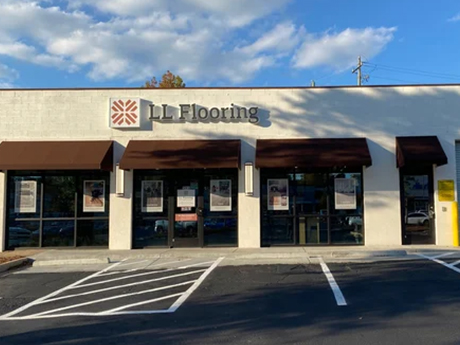
RICHMOND, VA. — LL Flooring (NYSE: LL), a specialty retailer of hard- and soft-surface flooring, has commenced voluntary Chapter 11 bankruptcy proceedings. The Richmond-based company, which operates more than 300 stores and a distribution center in Sandston, Va., will also be delisted from the New York Stock Exchange. The retailer plans to use the Chapter 11 proceedings to pursue a “going concern sale” of its business, meaning that LL Flooring’s future buyer could continue the business as usual post-transaction. LL Flooring says it “remains in active negotiations with multiple bidders” and hopes to seek approval from the U.S. Bankruptcy Court for the District of Delaware of a sale of its business in the first few weeks of the proceedings. Concurrent with the filing, LL Flooring announced it has reached an agreement with Hilco Merchant Resources LLC to assist the company in store closing sales at 94 locations. AlixPartners LLP is serving as restructuring advisor to LL Flooring, which has received $130 million in debtor-in-possession (DIP) financing from its existing bank group led by Bank of America. LL Flooring’s stock price closed on Friday, Aug. 9 at $0.84 per share, down from $3.75 a year ago, a 77.6 percent decline.

FacebookTwitterLinkedinEmail
Asim-Hamid-Pull-Quote

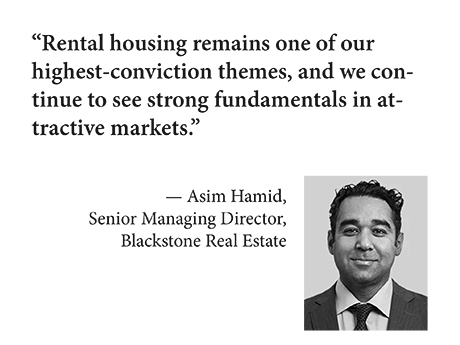
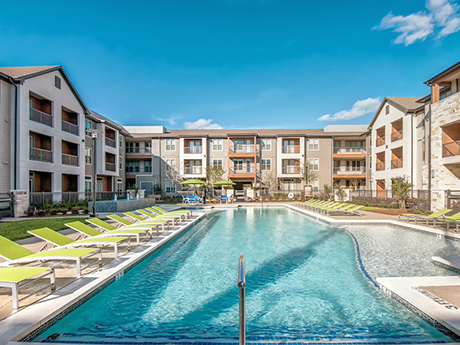
CHICAGO AND NEW YORK CITY — Equity Residential (NYSE: EQR) has agreed to acquire an 11-property apartment portfolio from Blackstone (NYSE: BX) for $964 million. The acquisition is the largest U.S. multifamily purchase by any public real estate investment trust in the past seven years, according to reports by The Wall Street Journal.  The portfolio includes four properties totaling 1,357 units in Atlanta; four properties totaling 1,237 units in the Dallas/Fort Worth metropolitan area; and three properties totaling 978 units in Denver. Further details on the communities were not disclosed.  The properties were attractive to Equity Residential — one of the largest owners of multifamily assets in the U.S. with 79,738 units across 299 properties — due to their locations in markets where the Chicago-based firm is targeting growth, as well as the properties’ appeal to high-end renters. The acquisition is expected to close in the third quarter and will include separate transactions with Blackstone Real Estate Income Trust, Blackstone Real Estate Partners and Blackstone Property Partners. Eastdil Secured, RBC Capital Markets, Santander and Sumitomo Mitsui Banking Corporation (SMBC) acted as Blackstone’s financial advisors in the transaction. Simpson Thacher & Bartlett served as Blackstone’s legal counsel. Neal Gerber & Eisenberg, Hogan …

FacebookTwitterLinkedinEmail

CHICAGO — During a conference call held yesterday, executives of Equity Commonwealth (NYSE: EQC) announced that the Chicago-based office REIT is going to wind down its operations and liquidate its four remaining office assets. David Helfand, president and CEO of Equity Commonwealth, cited “uniquely challenging market conditions” as the impetus behind the move as the company was previously pursuing a major acquisition that ultimately wasn’t executed. “After working through our pipeline, we have been unable to consummate a compelling transaction,” said Helfand, who noted that the firm had also been trying to sell three of its remaining office properties as discussed in the first-quarter earnings call. “As a result, our board of trustees has determined that it’s advisable and in the best interest of our shareholders to proceed with the wind down of our operations and the liquidation of our assets in order to maximize value for shareholders.” Equity Commonwealth was founded in 1986 by Barry Portnoy under the name CommonWealth REIT. In 2014, the late REIT champion and billionaire investor Sam Zell took over operations of the company alongside a new board of directors, including Helfand. The REIT was rebranded to Equity Commonwealth and began trading on the New …

FacebookTwitterLinkedinEmail
Oaks-on-Marketplace

Newton’s second law of physics holds that what goes up must come down, but unlike objects in freefall, retractions in real estate cycles tend to unfold with varying degrees of pace and severity.   In the case of multifamily investment sales in Texas, it’s been clear for some time that the market is in a much different place than it was in late 2021 and early 2022, the latter period being when rate hikes began. In that golden era of multifamily investment sales, owners routinely achieved record highs of rent growth and brokers closed deals at legendarily high prices and low cap rates.  What isn’t so clear is whether the market has bottomed out yet with regard to those metrics. Attaining clarity on that subject will remain difficult until deal volume rebounds and gives owners and brokers enough data to accurately establish trendlines.  Like everything else in commercial real estate, the question of when deal volume will rebound is tied to movement in interest rates — unless maybe it isn’t. For as the world has seen over the past six months, what the Federal Reserve implies it will do and what it actually does aren’t always in sync. Some brokers …

FacebookTwitterLinkedinEmail
Grand-Living-at-The-Grove-Austin

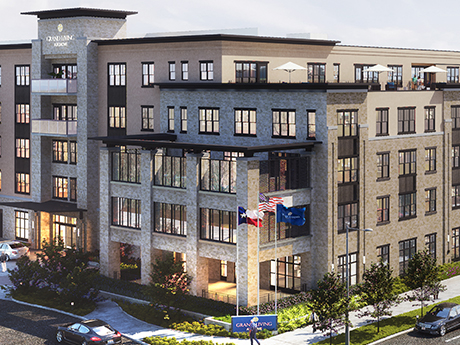
By Jane Adler Post-pandemic, senior living owners and operators are rightfully focused on regaining occupancy and stabilizing their assets. Expansion opportunities have mostly been limited to acquisitions of troubled properties purchased at a discount. Inflation, relatively high interest rates, a tight labor market and even tighter capital markets have largely sidelined ground-up development.   But contrarian players believe now is the right time to build. Much of the existing stock of seniors housing is 20-plus years old, and baby boomers are just over the horizon. A development that breaks ground today will be ready to welcome the first wave of boomers who turn 80 in two years. New projects will face less competition too because of today’s difficult development environment.  “This is the perfect time to put a shovel in the ground,” says Anders Pesavento, senior vice president of capital markets at Ryan Cos. The Minneapolis-based development and investment firm has four seniors housing projects slated to break ground this year that are valued at approximately $385 million.  The lack of new supply and strong demand supports the case for building now, emphasizes Pesavento. “We believe we will be rewarded.” The volume of seniors housing units under construction is at …

FacebookTwitterLinkedinEmail

NOVI, MICH. — Novi-based cold storage REIT Lineage Inc. has launched its initial public offering (IPO) of 47 million shares of its common stock, valuing the company at around $19 billion. In addition, the underwriters of the offering will have a 30-day option to purchase from the company up to 7 million additional shares of its common stock at the IPO price, which is expected to be between $70 and $82 per share. The company expects its stock to be listed on the Nasdaq under the ticker symbol “LINE.” Morgan Stanley, Goldman Sachs & Co. LLC, BofA Securities, J.P. Morgan and Wells Fargo Securities are acting as joint lead book-running managers for the proposed offering. Lineage claims to be the world’s largest global temperature-controlled warehouse REIT with a network of more than 480 facilities totaling over 84 million square feet and 3 billion cubic feet of capacity across North America, Europe and Asia-Pacific.

FacebookTwitterLinkedinEmail