

NEW YORK CITY — Los Angeles-based Thorofare Capital has funded a $4.2 million adaptive reuse loan for a mixed-use property located in Brooklyn’s Bushwick neighborhood. The undisclosed borrower plans to implement a capital improvement program at the property, located at 599 Johnson Ave., to convert the asset into entertainment, food and beverage and retail use.
SPARTANBURG, S.C. — Grandbridge Real Estate Capital has closed a $27.4 million loan for the conversion of a historic textile mill in Spartanburg into Drayton Mills Loft Apartments. Bill Mattice and Phillip Cox of Grandbridge originated the 40-year loan. Tim Duncan led Grandbridge’s FHA/HUD team to utilize federal historic tax credits and South Carolina historic mill tax credits in conjunction with Grandbridge’s HUD 221(d)(4) construction to perm product. Drayton Mills Loft Apartments is a partnership between Pacolet Milliken Enterprises and TMS Development. Originally built in 1902, the repurposed property will house 279 apartment units and feature two historic water towers on the site. The property is located roughly one mile from downtown Spartanburg.

LOS ANGELES – A 150,000-square-foot building in Los Angeles that formerly served as a Coca Cola production facility will soon undergo an adaptive reuse. The five-story, red-brick industrial building is located at 963 East 4th Street in Downtown Los Angeles’ Arts District. The property is being converted into a mixed-use, Class A creative office building. The redesign will utilize the building’s large, high-volume, 35,000-square-foot floor plates, in addition to its 14-foot ceilings, expansive windows and panoramic rooftop views. Current plans include 70,000 square feet of retail and restaurant space situated on the street and lower levels. A new flagship restaurant is planned for the east end of the building, which faces Traction Avenue, and for the west end, which faces the main entry and courtyard. Construction should be complete in the fourth quarter of next year. The redesign will highlight the building’s original brick façade. It will feature new, operable dual-glazed windows and a large atrium lobby. It will also include a newly constructed, 10,000-square-foot rooftop penthouse that will be surrounded by a landscaped rooftop deck with an outdoor kitchen, firepit and entry court park. The adaptive reuse is being carried out by HLW International. The building is owned by …

WINSTON-SALEM, N.C. — Co-developers Pennrose Properties LLC and C.A. Harrison Cos. LLC have opened Plant 64 Apartment Homes, a $54 million adaptive reuse project in downtown Winston-Salem. Originally built in 1916 as one of the oldest R.J. Reynolds tobacco buildings, the 423,000-square-foot project has been renovated to feature 242 one-, two- and three-bedroom apartments. Plant 64’s amenity package includes controlled access entry, a roof terrace with grills, outdoor theater, fitness center, swimming pool and a sports court. Bonaventure Property Management is managing Plant 64. Financing was provided by Bank of America N.A., Nationwide Insurance and Stonehenge Capital.
RICHMOND, VA. — Walker & Dunlop has arranged $33.5 million in permanent debt for the refinance of Miller & Rhoads, an adaptive reuse project of the historic Miller & Rhoads department store in Richmond. The project is located next to the Richmond Convention Center and features 133 residential units, a 250-room Hilton Garden Inn and more than 20,000 square feet of retail space. Andrew Coleman and Stephen Farnsworth of Walker & Dunlop led the team that structured the seven-year fixed-rate loan with two years interest-only payments on behalf of the borrower, HRI Properties LLC. HRI plans to invest $8 million to convert the existing hotel to a full-service Hilton property by the end of 2015. The property was originally built between 1888 and 1909 as a one-room store and is considered a significant historic structure in the Grace Street Commercial Historic District.

WEST ORANGE, N.J. — Prism Capital Partners is preparing to kick off construction of the 21-acre Edison Village, a $230 million adaptive reuse project in West Orange Township. The project will feature the addition of 331 residential units, 18,000 square feet of retail space and a parking structure. The project is an industrial-to-residential transformation of the historic Thomas Edison Invention Factory and Commerce Center. The transformation is the largest non-waterfront adaptive-reuse development in New Jersey. The township named Bloomfield, N.J.-based Prism the designated redeveloper of the project back in December 2006. The company completed a large portion of demolition and site work in 2008 prior to the recession and received the go-ahead to resume the development in fall 2012. “Since industrial structures of this type are few and far between in suburban New Jersey, Edison Village truly represents a distinctive project,” says Edwin Cohen, principal partner of Prism. “The design, by Minno & Wasko Architects and Planners, takes advantage of existing architectural features to incorporate ceiling heights ranging from 14 feet to 16 feet and 10-foot windows that will let in abundant natural light.” Thomas Edison constructed the factory complex in 1913, and it served as the manufacturing operation site …
LOS ANGELES — Grubb & Ellis has brokered the $3.2 million sale of 15 units within the 40-unit Pan American Lofts, located at 253 S. Broadway in downtown Los Angeles. Originally constructed in 1894, the building was converted to condominiums in 2007. Grubb & Ellis’ Richard Plummer, Michael Ross and Andrew Harper represented the seller, Phoenix Realty Group, in the multifamily transaction; the buyer, Pacifica Enterprises, represented itself.
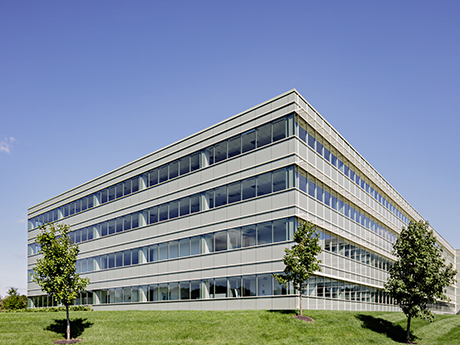
— By Julian Freeman, Dave Wensley and Gabe Pitassi — With steep vacancy rates impacting traditional office markets due to the headwinds of higher interest rates, short-term economic uncertainty and long-term remote/hybrid work uncertainties, underutilized traditional office buildings may become liabilities before the end of their anticipated economic life. Owners of these properties may consider a conversion — an adaptive reuse or repurposing — to access higher rents and occupancy rates. In view of nationwide housing shortages, especially in California, converting office to multifamily has received much attention as a logical move. However, such a conversion is not always viable from a financial, structural, legal or location perspective. An alternative option may be to repurpose an office building for life sciences use. Such a conversion, while posing its own unique challenges, may provide more realistic options than a conversion to residential use for many owners and properties. Challenges in converting to residential Converting an office building to residential use presents challenges on multiple fronts. Zoning laws vary based on property location and usage, and the property may need to be rezoned to a different classification to allow multifamily uses. Rezoning requires local government approval and public hearings, which can take months …
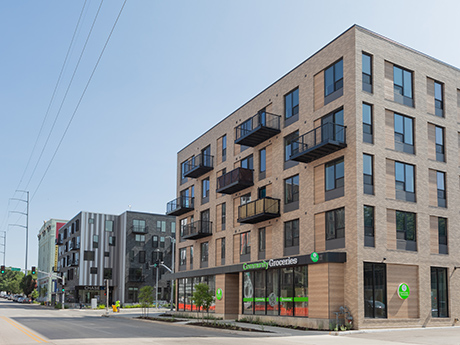
By Doug Stockman, Helix Architecture + Design Straddling two states, Kansas City is one of the country’s most distinctive real estate markets. Since 1992, our firm has designed workplace, cultural, higher education and multifamily projects of all types in the city, with specialized expertise in adaptive reuse. We see multifamily as the most active segment in 2026. Compared with other states, Missouri’s support for new housing projects is about average. Kansas is near the bottom, because the state lacks the revenue to incentivize housing. Inventory on the Kansas side is also less, with most multifamily housing located outside the city. Looking ahead, low-income housing tax credit (LIHTC) incentives will ideally accelerate Kansas City’s biggest market demand — affordable housing. The Kansas City Affordable Housing Set-Aside Ordinance presents some obstacles. To receive city subsidies, multifamily developments must have 12 or more units, 20 percent of which need to be affordable for households earning 60 percent or less of the area median income (AMI). Alternately, developers can pay $100,000 into the city’s Affordable Housing Trust Fund. Further, developers must navigate a complex process of zoning approvals and community engagement meetings that culminates with a city council hearing. If approved, developers on the Missouri …
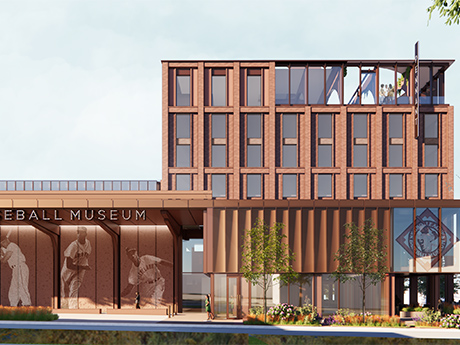
By Graham Smith, Multistudio A national shift is underway, and it starts with how cities listen. Across the country, communities and development teams are rethinking how reinvestment happens in legacy neighborhoods shaped by deep cultural identity but burdened by decades of underinvestment. These districts often hold irreplaceable history, yet for years they were sidelined by capital markets that prioritized scale, speed and uniformity over context and continuity. Historically, redevelopment in these areas followed a familiar pattern: projects designed first and explained later. Too often, that sequence displaced cultural institutions, local businesses and social networks that gave neighborhoods their meaning. Today, rising expectations around equitable development and renewed interest in urban cores are forcing a different calculus. Community engagement is no longer a step at the end of a project. It is a strategic input that shapes outcomes, reduces risk and strengthens long-term value. Intentional reinvestment Kansas City offers a timely example of how intentional process can align with market opportunity. After years of downtown population growth, expanded transit infrastructure and rising global visibility ahead of the 2026 FIFA World Cup, long deferred reinvestment became feasible. Local leaders recognized that this momentum created an opportunity to reinvest in the historic 18th …